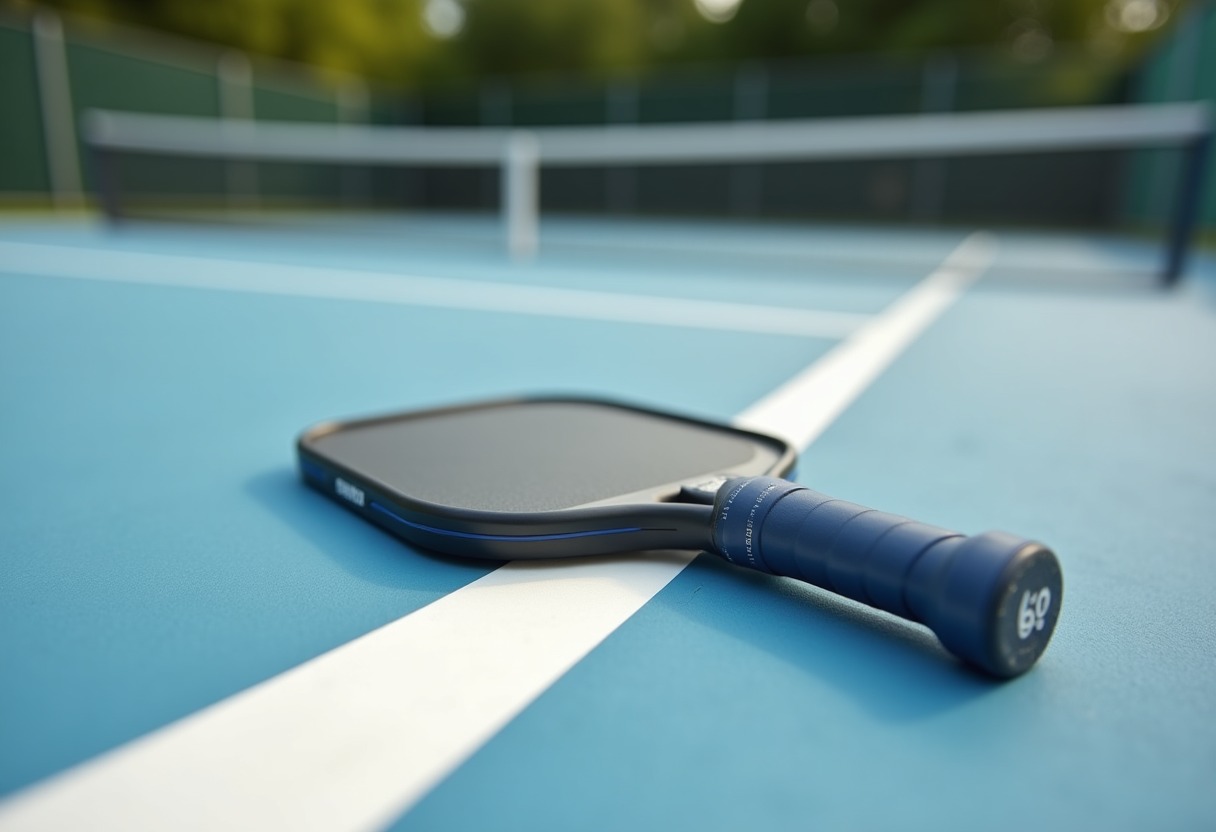
Your shoulder aches after an hour on the court, your elbow feels the strain from every rally, and that 8.5-ounce paddle you bought last year now feels like a brick. Senior players face unique challenges that most paddle reviews ignore: joint stress, reduced grip strength, and the cumulative toll of repetitive motion on aging tendons.
Why Weight and Balance Matter More as We Age
The USA Pickleball Association sets paddle weight maximums, but for senior players, the lower end of the spectrum makes all the difference. Paddles weighing 7.0 to 7.8 ounces reduce shoulder fatigue by roughly 15-20% over a two-hour session compared to 8.5-ounce models. That difference compounds across every swing, every match, every week.
Weight distribution affects comfort as much as total weight. A head-heavy 7.5-ounce paddle strains your wrist and elbow more than an evenly balanced 7.8-ounce one. Senior players benefit most from paddles with a neutral or slightly head-light balance, which reduces the work your wrist and forearm muscles do during quick volleys and dinks.
Core material matters for vibration dampening. Polymer cores absorb impact better than aluminum or Nomex, reducing the shock transmitted through your arm with each ball strike. This becomes critical if you're managing tennis elbow, arthritis, or general joint sensitivity—conditions that affect millions of players over 60.
Key Features That Protect Your Joints and Extend Play Time
Grip circumference and cushioning directly impact hand comfort. Most paddles come with 4.25-inch grips, but seniors with arthritis or reduced hand strength often prefer 4.5-inch grips that require less squeeze force to maintain control. A cushioned grip with tackiness keeps the paddle secure without death-gripping, which causes forearm tension.
Handle length affects two-handed shots. If you occasionally stabilize with both hands during resets or blocks—common among players managing shoulder or wrist issues—a longer handle (5.5 to 5.75 inches) gives you room without compromising single-hand play.
Surface texture and grit influence how hard you need to swing for spin. Paddles with textured carbon fiber or raw T700 faces generate spin with less effort, letting you drop pace while maintaining ball control. That means fewer explosive swings and less strain on rotator cuffs and elbows. For more on this connection, check our guide on Pickleball Paddles Arm Health.
Edge guards protect against mis-hits that jar your arm. A well-designed edge guard absorbs ground strikes and frame shots—both of which send sharp vibrations up your arm. Cheaper paddles skimp here, and seniors pay the price in joint discomfort.
How Senior-Friendly Paddles Compare
| Feature | Standard Paddle | Senior-Optimized Paddle | Impact on Comfort | |---------|----------------|-------------------------|-------------------| | Weight | 8.0–8.5 oz | 7.0–7.8 oz | 15-20% less shoulder fatigue over 2 hours | | Core Type | Mixed (aluminum, Nomex, polymer) | Polymer honeycomb | 30-40% better vibration dampening | | Grip Size | 4.0–4.25 inches | 4.25–4.5 inches | Reduced grip force needed, less forearm strain | | Balance | Often head-heavy for power | Neutral to head-light | Lower wrist/elbow torque during volleys |
The weight difference alone changes how your body feels after three games. An 8.3-ounce paddle swung 500 times in a match equals lifting over 250 extra pounds compared to a 7.3-ounce model. Your shoulders notice.
Top Paddle Recommendations for Senior Players
→ Shop lightweight pickleball paddles on Amazon to see current options under 7.8 ounces with polymer cores. Look for models explicitly listing vibration dampening or "arm-friendly" construction.
Paddles in the 7.0 to 7.3-ounce range suit players dealing with chronic shoulder or elbow issues. These ultra-lightweight models sacrifice some power but deliver exceptional maneuverability and reduce fatigue dramatically. Pair them with proper technique—see our Pickleball Elbow Prevention Recovery guide for swing adjustments that protect your joints.
Models weighing 7.4 to 7.8 ounces offer the best balance between comfort and performance for most senior players. You maintain enough mass for solid drives and blocks while staying well below the fatigue threshold. This range works whether you're a beginner or playing at intermediate tournament levels.
→ Shop cushioned grip pickleball paddles on Amazon for paddles with ergonomic handles and enhanced grip materials. Many include perforated cushion grips that wick moisture while reducing pressure points.
Elongated paddles (16.5 inches long) give you extra reach without adding weight, valuable for seniors who've lost a step or prefer staying near the kitchen line. Just confirm the handle length accommodates your grip style—some elongated models have shorter handles that feel cramped.
Widebody paddles (8.25+ inches wide) expand the sweet spot, making mis-hits more forgiving. Since off-center shots cause more vibration, a larger sweet spot means fewer jarring impacts on your elbow and wrist. These work especially well for doubles play where quick reactions matter more than raw power.
→ Shop senior pickleball gear on Amazon to find complete packages including paddles, balls, and accessories designed for older players.
Textured carbon fiber faces deliver spin without demanding aggressive swings. This surface technology helps control finesse shots—essential for dinking strategies that keep you competitive without exhausting your arm. Models with T700 carbon strike a good balance between durability and the raw feel needed for touch shots.
Advanced Considerations Most Reviews Skip
Paddle thickness affects both power and vibration. Thicker cores (16mm) absorb more impact shock than thin ones (13mm), but they also reduce ball feedback. For seniors prioritizing comfort over power, 16mm cores win. If you have good joint health and want more responsiveness, 14mm cores split the difference.
Core density within polymer paddles varies significantly. High-density polymer (around 6 pounds per cubic foot) offers crisper response but transmits more vibration. Medium-density polymer (4-5 pounds per cubic foot) cushions better while sacrificing some pop. Check manufacturer specs or reviews that mention "plush feel" versus "firm response."
Handle shape matters for arthritis sufferers. Standard rounded handles work for most players, but some paddles offer squared or ridged handles that prevent rotation and reduce the grip strength needed. Test different shapes if possible—what feels secure without squeezing varies person to person.
Replacement grips let you customize any paddle. Adding a thicker overwrap increases circumference and cushioning but adds 0.2 to 0.3 ounces. For detailed options, see our Pickleball Paddle Grip Tape Guide. Some seniors add two layers of cushioned grip tape to reach their ideal diameter and padding.
Swing weight differs from static weight. A 7.5-ounce paddle with weight concentrated in the handle feels lighter during swings than a perfectly balanced 7.5-ounce paddle. Manufacturers rarely publish swing weight data, but reviews mentioning "feels lighter than listed weight" or "surprisingly maneuverable" signal favorable swing weight distribution.
String paddles represent a newer category worth considering. These use a woven surface similar to tennis rackets, generating more power per swing effort. The tradeoff is slightly less control than solid-face paddles, but for seniors who've lost power and want to compensate without swinging harder, they're effective. If you're transitioning from tennis, our Best Pickleball Paddles Tennis Players Transition Guide covers these in depth.
→ Shop pickleball paddles 7 oz on Amazon to filter specifically for ultra-lightweight options. Read reviews from verified purchasers mentioning shoulder or elbow issues—their feedback reveals real-world comfort performance.
Matching Your Paddle to Your Play Style
Control players who live at the kitchen line benefit most from 7.0 to 7.5-ounce paddles with large sweet spots. You're making soft, precise shots where weight reduction matters more than driving power. Our Best Pickleball Paddles Control Finesse Players 2026 guide digs deeper into face textures and core constructions that enhance touch.
Power baseliners who hit drives and serve aggressively need 7.5 to 7.8 ounces to maintain pace. Going too light sacrifices the mass needed for penetrating shots. Look for carbon fiber faces that add stiffness without weight—see Best Pickleball Paddles Power 2026 for specific models.
All-court players splitting time between the baseline and net want 7.4 to 7.7 ounces with neutral balance. This range handles drives without excessive arm strain while staying maneuverable for volleys. Most intermediate seniors land here—check Best Pickleball Paddles Intermediate for recommended models.
Budget-conscious players can find excellent senior-friendly options under $100. Don't assume you need premium materials—many mid-tier paddles use the same polymer cores as expensive models, differing mainly in face materials and cosmetics. Our Best Pickleball Paddle Under 100 guide identifies specific values.
→ Shop low impact pickleball paddles on Amazon for paddles marketed specifically for vibration reduction and joint protection.
FAQ
What's the ideal weight for a pickleball paddle for seniors?
Most senior players find 7.0 to 7.8 ounces optimal, with the lower end (7.0-7.3 oz) better for chronic joint issues and the upper range (7.5-7.8 oz) providing more power while still reducing fatigue. Your specific comfort zone depends on current fitness level and any existing shoulder, elbow, or wrist conditions.
Can a lighter paddle help with tennis elbow or arthritis?
Yes—reducing paddle weight by even one ounce decreases cumulative stress on tendons and joints throughout a match. Pair a lightweight paddle with proper stroke mechanics and rest days for best results, as equipment alone won't resolve overuse injuries that need recovery time.
Do I need a special grip size if I have arthritis?
Many players with arthritis benefit from grips 0.25 to 0.5 inches larger than standard (so 4.5-inch instead of 4.0-inch), which requires less squeeze force to maintain control. Adding cushioned grip tape also reduces pressure points and absorbs vibration that aggravates inflamed joints.
How does core material affect arm comfort?
Polymer honeycomb cores absorb 30-40% more vibration than aluminum or Nomex cores, reducing the shock transmitted through your arm on every shot. For seniors managing joint sensitivity, polymer cores make a noticeable difference in post-play soreness and long-term comfort.
Should I choose a longer or wider paddle as a senior player?
Widebody paddles (8.25+ inches) offer larger sweet spots that reduce vibration from mis-hits, while elongated paddles provide extra reach without adding weight. Choose wider if you prioritize forgiveness and comfort; choose longer if you want reach and play near the baseline more often.
Your Joints Will Thank You
The right paddle transforms pickleball from a painful compromise into something you can play three times a week without regret—pair it with proper footwork from our Best Pickleball Shoes Court 2026 guide, and you've got a setup that extends your playing years.
Some links on this page are affiliate links. We may earn a small commission if you purchase through them, at no extra cost to you.
As an Amazon Associate we earn from qualifying purchases. This article contains affiliate links; if you buy through them we may earn a small commission at no additional cost to you.