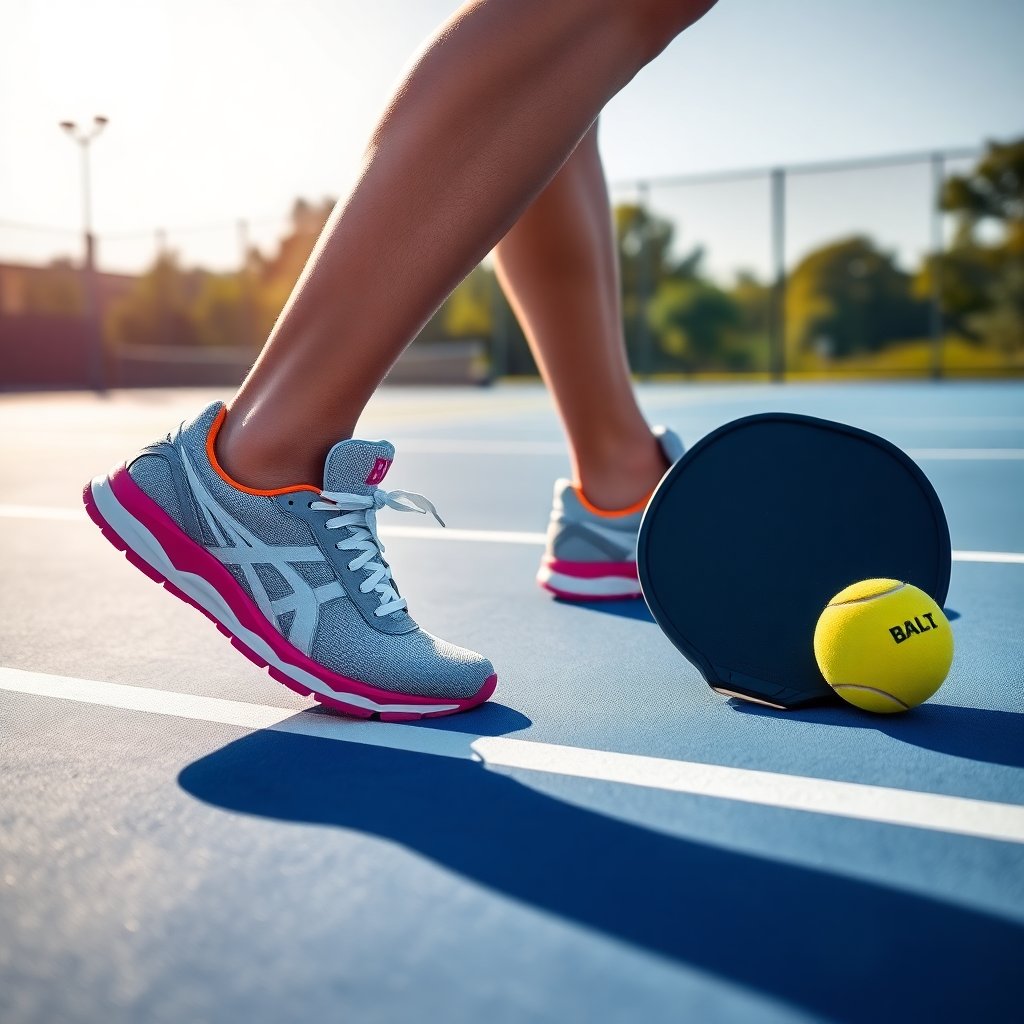
Running shoes don't cut it on the pickleball court. The lateral movements, quick direction changes, and stop-and-go nature of pickleball demand footwear built for court sports. The right pair reduces injury risk, improves your footwork, and keeps you comfortable through a two-hour session.
Here's what to look for and the best options in 2026.
Why Court Shoes Matter
Pickleball is hard on your feet and ankles for specific reasons:
Lateral movement — The split-step and side-shuffle movements that dominate pickleball are exactly what running shoes aren't designed for. Running shoes are engineered for forward motion — they have almost no lateral support. Court shoes have reinforced lateral support to prevent ankle rolls during side-to-side cuts.
Non-marking soles — Indoor courts require non-marking rubber soles. Outdoor courts benefit from more aggressive herringbone tread for grip on hard court surfaces.
Quick-response cushioning — Pickleball involves bursts of acceleration and abrupt stops. You need cushioning that's responsive without being so soft it collapses under lateral load. The thick foam in modern running shoes is actively bad for court play — it feels unstable when moving sideways.
Toe protection — Dragging your back foot on serves and aggressive shots wears through regular shoes fast. Court shoes have reinforced toe caps designed specifically for this wear pattern.
Heel braking — Backing up at the kitchen line — that distinctive pickleball shuffle — puts unique stress on the heel and outer sole edge. Court shoes account for this; running shoes don't.
1. Best Overall: Dedicated Pickleball Shoes
Several major athletic brands now make pickleball-specific shoes — they're not just rebranded tennis shoes. True pickleball shoes optimize for low-to-ground stability, wide toe boxes, and heel braking for the characteristic backward shuffle at the net.
True pickleball-specific shoes from ASICS, New Balance, and K-Swiss have emerged as top performers in 2026. They feature:
- Full-length rubber outsole optimized for pickleball court surfaces
- Padded ankle collar for lateral stability
- Breathable mesh upper with reinforced zones at lateral stress points
- Torsional stability shank in the midsole
- Extra toe cap reinforcement
→ Shop pickleball shoes on Amazon
Price range: $80–$140
2. Best Tennis Shoes for Pickleball
Tennis shoes are the most common alternative to dedicated pickleball shoes, and they work excellently. The lateral support, court traction, and durability of a quality tennis shoe translates directly to pickleball.
Hard-court tennis shoes are the right category (as opposed to clay or grass court models). They'll work on both indoor and outdoor pickleball surfaces.
The ASICS Gel-Rocket series (around $65) is the most recommended budget court shoe in the pickleball community. The Nike Air Zoom Vapor line and Wilson Rush Pro are popular mid-range options that serve double duty for tennis and pickleball players.
What to avoid: Avoid tennis shoes with extremely thick, soft cushioning (like max-cushion running shoe-hybrid models). You want court feel underfoot — the ability to sense the surface and respond quickly.
→ Shop tennis court shoes for pickleball on Amazon
Price range: $65–$150
3. Best Budget Option Under $80
You don't need to spend $150+ to play pickleball well. Several brands offer solid court shoes under $80 that check the essential boxes: non-marking sole, adequate lateral support, and breathable upper.
The ASICS Gel-Rocket (~$65) and K-Swiss Court Smash (~$70) are both well-regarded in this category. Both offer proper court construction without the premium price. They're not as durable as more expensive options, but they're appropriate for recreational players who play once or twice per week.
At this price point, expect less durability in the outsole — budget court shoes typically last 6–12 months of regular play before the outsole wears significantly. If you play 3+ times per week, consider investing in the next tier.
→ Shop pickleball court shoes under $80 on Amazon
4. Best for Wider Feet
Standard athletic shoe lasts run narrow to medium. If you have wider feet, an ill-fitting court shoe will cause blistering and fatigue — especially during long sessions. Look for brands and models that offer wide width options or are known for a naturally wider last.
New Balance consistently delivers the widest selection of wide-width court shoes, with 2E (wide) and 4E (extra wide) options across multiple court shoe lines. ASICS also offers several wide-width court shoe options. Both brands are well-represented in the pickleball community specifically for this reason.
A proper fit means a thumb's width of space at the toes and no lateral foot overhang on the midsole when standing.
→ Shop wide-width court shoes on Amazon
5. Best Indoor Court Shoes
Indoor pickleball on gym floors requires non-marking gum rubber soles. Outdoor shoes with aggressive tread can leave marks on gym floors and may not grip synthetic hardwood the same way.
The best indoor court shoes have a smooth, flat herringbone outsole pattern that grips gym flooring without sliding. Volleyball shoes are an excellent crossover option for indoor play — the ASICS Gel-Rocket (volleyball) and Mizuno Wave Lightning series are proven performers on gym floors and work extremely well for pickleball.
→ Shop indoor court shoes for pickleball on Amazon
Comparison Table
| Shoe Type | Best For | Price Range | Indoor/Outdoor | Durability | |---|---|---|---|---| | Dedicated pickleball shoe | Serious recreational players | $80–$140 | Both | ⭐⭐⭐⭐½ | | Hard court tennis shoe | Tennis/pickleball crossover players | $65–$150 | Both | ⭐⭐⭐⭐ | | Budget court shoe | Beginners, casual players | $50–$80 | Both | ⭐⭐⭐ | | Wide-width court shoe | Players with wider feet | $70–$130 | Both | ⭐⭐⭐⭐ | | Indoor volleyball shoe | Gym/indoor court players | $70–$120 | Indoor only | ⭐⭐⭐⭐ |
Fitting Tips
Try on in the afternoon — Your feet swell throughout the day. Trying shoes in the afternoon gives you a more accurate fit for the dimensions your feet will be during active play.
Bring your court socks — The thickness of your playing socks matters significantly. Don't size with thin everyday socks and then play with thick athletic socks — you'll get blisters.
Break them in before competition — Court shoes need 3–5 sessions to break in properly. The materials need to flex and mold to your foot pattern. Playing your first tournament in brand-new shoes is a recipe for blisters and discomfort.
Check the outsole warranty — Some brands offer 6-month outsole durability warranties on court shoes. Worth factoring in if you play multiple times per week.
Tighten them properly — Court shoes need to be tied firmly, especially around the midfoot. A loose court shoe is worse than a running shoe for lateral support because the slop inside the shoe transfers lateral force directly to your ankle.
Signs Your Shoes Need Replacing
Court shoes wear in ways that aren't always obvious. Beyond the visible outsole wear, look for:
- Loss of cushioning: The midsole has compressed and your feet feel the court impact more directly
- Lateral sole wear: The outer edge of the sole is wearing down, reducing lateral stability
- Upper breakdown: The upper mesh or leather is separating at stress points, meaning lateral support is gone
- Slipping on the court: If you're sliding during direction changes, the outsole texture is worn smooth
Most players should replace court shoes every 6–12 months depending on play frequency. High-frequency players (4+ times/week) may need to replace every 4–6 months.
FAQ
Can I play pickleball in running shoes?
Technically yes, but it's not recommended. Running shoes have poor lateral support and thick, unstable midsoles that increase ankle roll risk. For casual once-in-a-while play, running shoes are fine. For regular play, court shoes are worth the investment — both for performance and injury prevention.
Do I need different shoes for indoor vs outdoor pickleball?
Not necessarily — most hard court tennis shoes and dedicated pickleball shoes work on both. What matters is the sole: non-marking rubber for indoor gym floors, more aggressive tread for outdoor asphalt/concrete. Some players keep two pairs, but a versatile hard-court shoe handles both.
How much should I spend on pickleball shoes?
$65–$100 is the sweet spot for most recreational players. Budget options under $65 exist but often sacrifice durability or lateral support. Above $100, you're paying for better materials, longer durability, and marginal performance gains that matter more for competitive players.
Are women's pickleball shoes different from men's?
Yes — women's court shoes are built on a narrower last, have a lower heel-to-toe drop in many models, and are sized differently. Both work for pickleball; just make sure you're shopping in the right gender category for the fit. Some neutral-width models also come in both men's and women's sizing.
What's the difference between an outsole and a midsole?
The outsole is the rubber bottom that contacts the court — this provides traction and is where wear is most visible. The midsole is the foam layer above the outsole that provides cushioning. Both degrade with use; the midsole often compresses out before the outsole shows obvious wear.
Bottom Line
For most recreational players, a quality tennis shoe designed for hard courts is the best all-around choice — they're widely available, proven for lateral movement, and work on both indoor and outdoor pickleball surfaces. As the sport grows, dedicated pickleball shoes are improving rapidly and are worth considering for serious players who prioritize optimized fit.
→ Browse all pickleball court shoes on Amazon
If you're building out your full setup, our best portable pickleball nets guide covers everything you need to set up a court anywhere — a natural next purchase once your footwear is sorted. And once you're on the court, our beginner's guide to pickleball covers the rules and strategy you need to start playing well fast.
As an Amazon Associate we earn from qualifying purchases. This article contains affiliate links; if you buy through them we may earn a small commission at no additional cost to you.