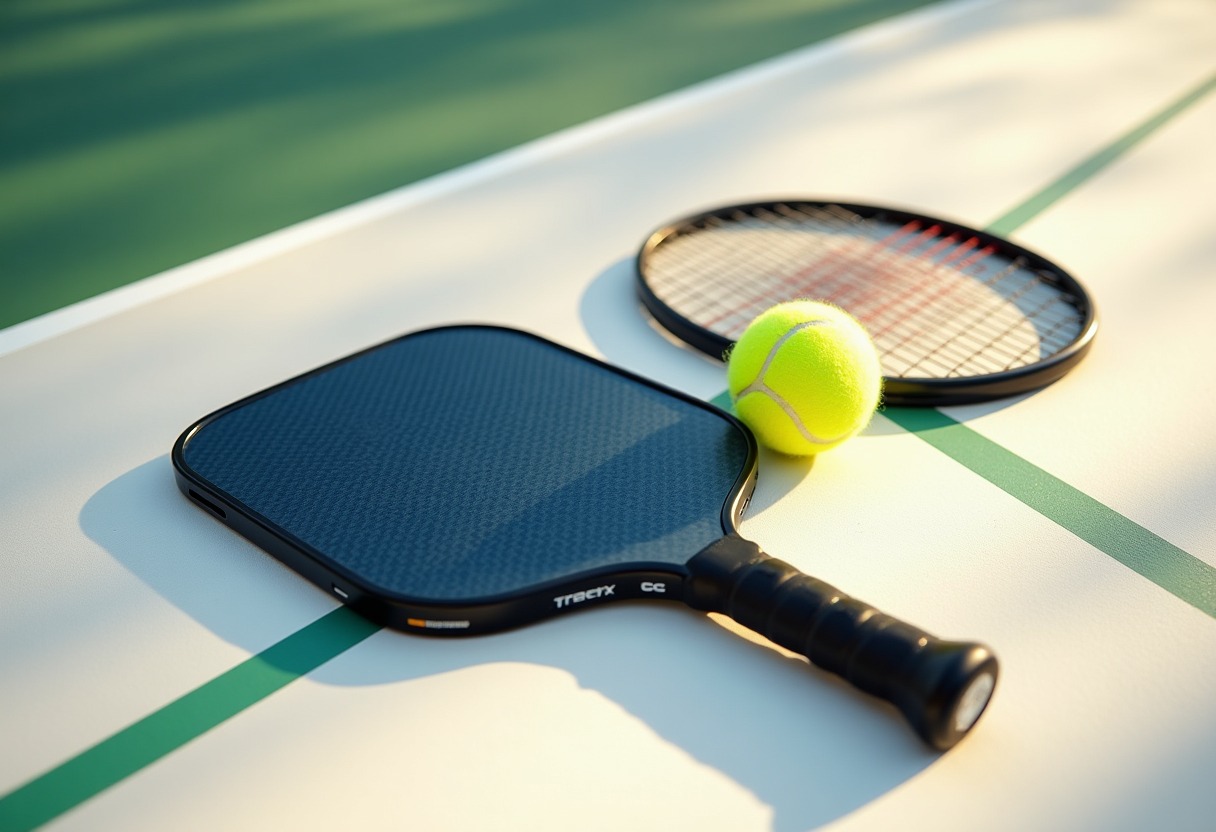
Tennis players switching to pickleball face a frustrating reality: standard pickleball paddles feel stubby, cramped, and nothing like the racquet you've spent years mastering. The good news? Paddle manufacturers have caught on, and elongated designs with tennis-friendly features now exist that actually respect your muscle memory instead of fighting it.
Why Tennis Players Need Different Paddles
Your tennis background gives you massive advantages in pickleball—court sense, footwork, spin awareness—but standard paddle dimensions work against your ingrained mechanics. According to USA Pickleball regulations, maximum paddle length is 17 inches combined length and width, which has led manufacturers to create elongated paddles specifically for players with racquet sports backgrounds.
Tennis players naturally generate power from an extended contact point. Standard 8-inch wide by 15.75-inch long paddles force you to shorten your stroke and adjust your wrist position unnaturally. Elongated paddles measuring 16 to 16.5 inches long with narrower faces (7.5 to 8 inches wide) preserve more of your natural swing path. The extra length also increases your effective reach by 0.5 to 1 inch—not massive, but noticeable when you're defending lobs or stretching for drop shots at the kitchen line.
Grip size matters more than most tennis converts expect. Tennis handles typically measure 4.25 to 4.625 inches in circumference. Most pickleball paddles ship with 4 to 4.5-inch grips. That quarter-inch difference throws off your grip pressure and wrist angle. Many tennis players immediately add overgrip or replace the factory grip entirely to match their tennis racquet dimensions. Check our Pickleball Paddle Grip Tape Guide for specific build-up techniques.
What Makes a Paddle Tennis-Friendly
Beyond shape and grip, construction determines whether a paddle feels responsive or dead to someone used to string beds. Here's what separates paddles built for tennis players from generic options:
Surface texture and grit: Tennis players rely on brushing the ball for topspin and slice. Raw carbon fiber or textured surfaces grip the ball better than smooth polymer faces. Paddles with 3K or 12K carbon weave patterns provide the friction needed for spin without requiring extreme head speed. Thermoformed paddles with textured surfaces offer the most spin potential—similar to the bite you get from polyester tennis strings.
Core stiffness: Tennis racquets flex through the stringbed. Pickleball paddles flex through the core material. Polymer honeycomb cores (the most common) offer a softer feel that tennis players often describe as mushy. Nomex or carbon fiber cores provide a firmer response closer to a tightly-strung racquet. The tradeoff: stiffer cores vibrate more, which can aggravate tennis elbow if you're already dealing with it. See our Pickleball Elbow Prevention Recovery guide if arm pain is a concern.
Weight distribution: Tennis racquets balance between 12 to 15 inches from the handle butt. Elongated pickleball paddles typically balance around 7 to 8 inches up. This head-light balance helps with maneuverability at net but reduces plow-through on groundstrokes. Paddles weighing 8.2 to 8.7 ounces provide enough mass for controlled power without excessive arm fatigue—comparable to swinging a midweight racquet.
Tennis vs Standard Pickleball Paddle Comparison
| Feature | Standard Pickleball Paddle | Tennis-Oriented Paddle | Why It Matters for Tennis Players | |---------|---------------------------|------------------------|-----------------------------------| | Length | 15.5-15.75 inches | 16-16.5 inches | Preserves reach and contact point height | | Width | 7.5-8.5 inches | 7-7.75 inches | Narrower face mimics racquet head shape | | Grip Circumference | 4-4.25 inches | 4.25-4.5 inches (or customizable) | Matches tennis racquet grip sizes | | Sweet Spot | Center-weighted | Extended toward top third | Accommodates higher contact points from tennis swings | | Core Type | Polymer honeycomb | Nomex, carbon fiber, or hybrid | Firmer feel closer to string bed response | | Surface Texture | Smooth to lightly textured | Raw carbon, grit-applied, or textured coating | Enables spin generation through brushing motion |
Top Paddle Picks for Tennis Players
Elongated Power Paddles: If you're a baseline player who hits with topspin and likes pace, look for → Shop elongated pickleball paddles on Amazon with carbon fiber faces and polymer cores. These combine the length you need with enough pop to finish points from mid-court. The CRBN Power series and Selkirk Vanguard Power Air are current standouts—both measure 16.5 inches long and feature textured carbon surfaces. Weight ranges from 8.0 to 8.4 ounces, which feels substantial without crossing into arm-punishing territory.
Thermoformed Control Options: Former tennis players who relied on precision over power should consider → Shop thermoformed pickleball paddles on Amazon. The manufacturing process fuses the paddle into a single piece, creating an enlarged sweet spot and consistent response across the face. The Joola Ben Johns Hyperion and Engage Pursuit Pro are both 16+ inches long with exceptional touch for dinking and third-shot drops. These excel if you're the player who won tennis matches through placement rather than overwhelming pace. See our Best Pickleball Paddles Control Finesse Players 2026 for more precision-focused options.
Maximum Length Tournament Paddles: The 16.5-inch category represents the longest legal paddles under current regulations. → Shop 16 inch pickleball paddles on Amazon if reach is your priority. Six10 and HEAD offer models in this range that specifically target tennis converts. The extra length shines when defending lobs and attacking high balls—shots where tennis instincts kick in. The downside: these feel less maneuverable in fast exchanges at the kitchen line compared to standard-length paddles.
Customizable Grip Paddles: Some manufacturers like ProKennex and Gamma offer paddles with removable base grips or extra grip material included. → Shop tennis grip pickleball paddle on Amazon for options that let you build the handle to your preferred size. This matters more than most tennis players realize until they play their first three-hour session with a grip that's too small. Blisters and grip fatigue are common complaints during the transition period.
Spin-Focused Options: If you grew up brushing heavy topspin on clay courts, you'll want maximum surface texture. Check our Best Pickleball Paddles Spin 2026 guide, then look for → Shop power pickleball paddles on Amazon with raw carbon fiber or grit-coating. The Bread & Butter Filth and Diadem Icon are current favorites among players who generate spin. Both are available in elongated shapes and provide the ball-biting surface texture that makes drop shots and lobs dip aggressively.
For budget-conscious players exploring options, our Best Pickleball Paddle Under 100 guide includes several elongated models that won't break the bank during your transition period.
Transition Strategy: What Tennis Players Get Wrong
Most tennis players pick up pickleball assuming their existing skills transfer directly. They do—but specific adjustments accelerate your learning curve and prevent bad habits.
Shorten your backswing: Tennis groundstrokes start with the racquet behind your body. Pickleball doesn't give you that time or space. Start your stroke with the paddle already in front of you. The compact swing feels restrictive initially, but it's necessary for the faster exchange rate at the kitchen line. Your paddle face should rarely drop below your waist except on emergency gets.
Adjust your grip pressure: Tennis players typically grip racquets at 4 to 5 out of 10 pressure. Pickleball paddles have no strings to absorb shock, so a death grip causes arm fatigue and reduces feel. Aim for 3 out of 10—firm enough to control the paddle but loose enough to feel the ball on contact. This lighter grip also helps with the touch shots that dominate advanced pickleball play.
Rethink your serve: Your tennis serve is illegal in pickleball. The ball must be struck below waist level with an underhand motion, per USA Pickleball serving rules. Most tennis players initially struggle with the diminished serve advantage. Focus on placement and spin rather than power—you're starting a point, not trying to ace your opponent. Deep serves to the backhand and wide serves that pull opponents off court work better than pace.
Master the kitchen line: Tennis net play happens 10 to 15 feet from the net. Pickleball's kitchen (non-volley zone) puts you 7 feet away with your toes on the line. This proximity changes everything about volleys and reactions. Soften your hands and think "reset" rather than "put away." The How To Dink guide covers the shots that frustrate tennis players most during their first month.
Unlearn the approach shot mentality: Tennis rewards approaching the net behind a forcing shot. Pickleball's kitchen rule makes charging the net after a drive less effective. The Third Shot Drop Pickleball Guide explains the signature shot that replaces the tennis approach—a soft, high-arcing ball that lands in the opponent's kitchen, allowing you to advance without giving them an easy attack.
For a complete breakdown of the two sports' differences, see Pickleball Vs Tennis. Understanding what doesn't transfer is as important as recognizing what does.
Gear You'll Need Beyond the Paddle
Your tennis shoes work fine initially, but dedicated court shoes matter once you're playing multiple times per week. Check our Best Pickleball Shoes Court 2026 guide—pickleball's lateral movement pattern differs from tennis's linear sprinting. Shoes with reinforced toe caps and gum rubber soles last longer on the abrasive court surface.
Balls make a bigger difference than most tennis players expect. Indoor and outdoor balls have different hole patterns and weights. Our Best Pickleball Balls Outdoor 2026 guide covers tournament-approved options. Most recreational tennis players are shocked by how quickly cheap balls crack—invest in quality balls if you're serious about the sport.
If you're setting up a home practice area, portable nets have improved dramatically. The Best Pickleball Nets Portable 2026 roundup includes regulation-height options that set up in under three minutes. Having a net at home accelerates your transition—you can practice serves and kitchen-line resets without booking court time.
FAQ
Do tennis players have an advantage in pickleball? Yes, tennis players typically advance faster than complete beginners due to existing court awareness, footwork, and understanding of spin. However, the sports differ enough that your tennis level doesn't directly translate—a 4.5 tennis player might start pickleball at a 3.0 or 3.5 level. The advantage shows most in rallies and shot selection, less so in serve effectiveness or net play.
What size pickleball paddle should a tennis player use? Most tennis players benefit from elongated paddles measuring 16 to 16.5 inches long, which preserve more natural reach and contact point height. Grip circumference should match your tennis racquet—typically 4.25 to 4.5 inches. Add overgrip if the factory grip feels too small, as most paddles ship with 4 to 4.25-inch handles.
Can I use my tennis racquet grip on a pickleball paddle? Not directly, but you can replicate the feel by building up the paddle grip with multiple overgrips or replacing the factory grip with cushioned replacement grips. Most tennis players add one or two overgrips immediately to match their preferred handle size and tackiness.
How long does it take tennis players to get good at pickleball? Expect three to six months of regular play (2-3 times per week) to reach a solid recreational level where you're competitive in local leagues. Tennis players often plateau around the 3.5 level until they fully adapt their game to pickleball's unique strategies—the kitchen line exchanges and soft game don't come naturally to players who built their skills on power and pace.
Should tennis players start with control or power paddles? Start with a balanced or control-oriented paddle even if you played powerful tennis. Pickleball rewards touch and placement more than pace, and learning with too much power encourages bad habits—mainly hitting the ball too hard in situations that call for finesse. Once you understand when to hit and when to reset, you can graduate to a power paddle if your playing style warrants it.
Make the Switch Worth Your Time
Tennis players bring valuable skills to pickleball, but succeeding requires equipment that respects your muscle memory rather than fighting it—elongated paddles with proper grip sizing make the transition significantly smoother than forcing yourself to adapt to paddles designed for players without racquet sports backgrounds.
Some links on this page are affiliate links. We may earn a small commission if you purchase through them, at no extra cost to you.
As an Amazon Associate we earn from qualifying purchases. This article contains affiliate links; if you buy through them we may earn a small commission at no additional cost to you.