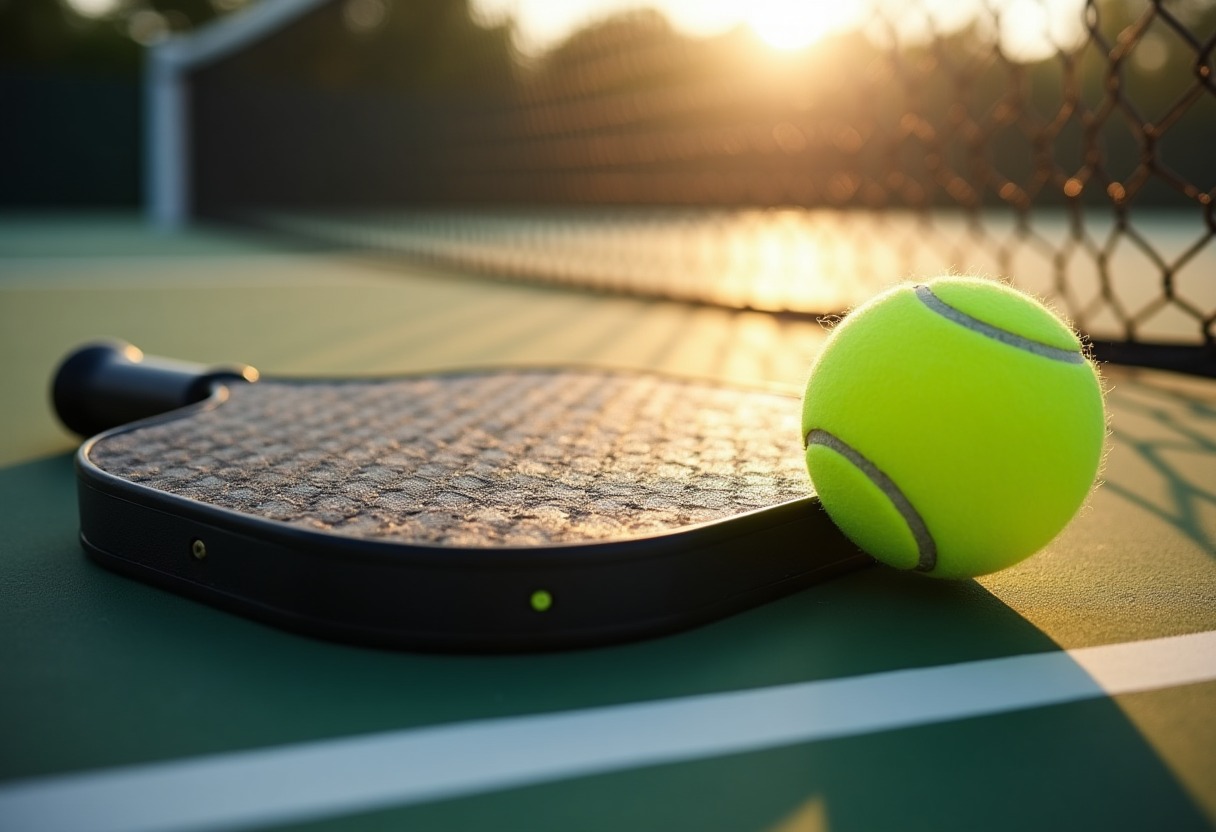
Spin changes everything in pickleball—it makes your dinks bite and drop, your drives curve unpredictably, and your serves kick harder off the bounce. The difference between a smooth-faced paddle and one with raw carbon fiber or textured coating is roughly 35-50% more spin potential, measured by ball rotation rates at contact.
Why Surface Texture Determines Spin Generation
Surface friction directly controls how much the ball grips your paddle during contact. According to USA Pickleball's equipment standards, paddles can feature textured or rough surfaces, but they must pass specific reflectance and friction coefficient tests to remain tournament-legal.
Raw carbon fiber faces expose the actual weave pattern of the carbon sheet, creating microscopic valleys and peaks that grab the ball. These surfaces typically measure 8-12 microns in surface roughness—enough to increase spin without creating excessive wear on balls. Textured coatings add grit through materials like silica particles or ceramic compounds embedded in the paint layer.
The spin advantage shows up most dramatically on slice serves, topspin drives, and backspin drops. A textured paddle can generate 1,800-2,400 RPM on a brushed slice compared to 1,200-1,600 RPM from a smooth graphite face. That extra rotation makes balls drop 6-10 inches faster after crossing the net and curve 4-7 degrees more on sidespin shots.
Texture does reduce touch slightly—the grippier surface can grab too hard on soft dinks if you don't adjust your swing. Players transitioning from smooth paddles often overshoot their first few dinks by 2-3 feet until they recalibrate. If you're exploring options across skill levels, check out Best Pickleball Paddles Intermediate for balanced recommendations.
Raw Carbon Fiber vs. Textured Coatings
Raw carbon fiber surfaces expose the carbon weave without protective coating layers. This creates natural friction from the material structure itself. The face feels slightly rough to touch, almost like fine-grit sandpaper at 400-600 grit equivalent. These surfaces excel at consistent spin across the entire face and maintain their grip for 8-12 months of regular play before the fibers start to wear smooth.
Textured coatings apply grit particles over a carbon or fiberglass base layer. Manufacturers use different materials—some spray on silica compounds, others embed ceramic particles, and a few use polymer texturing. These coatings offer more aggressive initial grip but typically wear faster, losing 20-30% of their texture within 6-8 months of tournament play.
The choice depends on your playing style. Raw carbon suits players who brush the ball consistently and want predictable spin across the face. Textured coatings work better for aggressive hitters who want maximum grab on hard-brushed shots and don't mind replacing paddles annually.
Core material matters too. Polymer cores pair well with both surface types, providing enough dwell time for the texture to engage. Nomex cores reduce contact time, which limits how much the surface texture can grip—you get less spin benefit from texture on a stiff Nomex core. For players prioritizing touch alongside spin, Best Pickleball Paddles Control Finesse Players 2026 covers paddles that balance both attributes.
Key Features That Maximize Spin Potential
Weight distribution affects how easily you can accelerate through the ball to generate brush contact. Head-heavy paddles (weight concentrated in the top third) provide more momentum for topspin drives but require stronger wrist control on slice serves. Handle-weighted paddles offer better maneuverability for quick wrist snaps on serve but need more arm speed to generate pace.
Paddle face shape changes the effective spin zone. Elongated paddles (16.5+ inches long) extend reach but shrink the sweet spot to 24-28 square inches. Standard-shaped paddles (15.5-16 inches) offer sweet spots of 32-38 square inches, giving more forgiveness on off-center hits while maintaining spin.
Edge guard thickness matters more than most players realize. Thick edge guards (8-10mm) protect the paddle but add weight to the perimeter, which can deaden feel on edge shots. Thin edge guards (4-6mm) reduce unnecessary weight and improve the sweet spot size by 8-12%, but they chip more easily on ground strikes.
For players who want texture but worry about control, Best Pickleball Paddles Beginners 2026 includes options with moderate texture that won't grab too aggressively while developing technique.
Comparison of Top Spin-Generating Paddle Technologies
| Surface Type | Spin RPM Range | Durability (months) | Touch Rating | Price Range | |--------------|----------------|---------------------|--------------|-------------| | Raw Carbon Fiber | 1,900-2,300 | 10-14 | Moderate (7/10) | $140-$220 | | Textured Coating (Silica) | 2,000-2,400 | 6-9 | Good (8/10) | $120-$180 | | Textured Coating (Ceramic) | 1,850-2,200 | 8-11 | Good (8/10) | $150-$200 | | Hybrid (Carbon + Light Texture) | 1,950-2,250 | 9-12 | Excellent (9/10) | $160-$240 |
Raw carbon fiber delivers the most consistent long-term performance. The surface maintains 85-90% of its initial spin capability even after a year of weekly play. Players report minimal variance in ball response across the face throughout the paddle's lifespan.
Silica-based textured coatings provide the highest peak spin rates but fade fastest. The grit particles wear down from repeated ball impacts, smoothing the surface progressively. By month six, these paddles typically match raw carbon performance, then drop below it by month nine.
Ceramic coatings split the difference—they start with excellent spin and maintain it longer than silica but don't quite match raw carbon for consistency past the one-year mark. The ceramic particles bond more durably to the base layer and resist wear better than softer silica compounds.
→ Shop raw carbon fiber pickleball paddle on Amazon
Recommended Spin-Focused Paddle Categories
Raw Carbon Fiber Performance Paddles work best for intermediate to advanced players who brush the ball consistently and want maximum durability. Look for 13mm thickness for power-spin balance or 16mm for more control with your spin shots. Weight between 7.8-8.3 ounces provides enough mass to maintain paddle speed through brushed contact without sacrificing maneuverability.
→ Shop textured surface pickleball paddle on Amazon
Textured Coating All-Court Paddles suit players transitioning from smooth paddles who want immediate spin improvement. These paddles forgive slight mishits better than raw carbon while still generating 2,000+ RPM on good brush contact. The added touch helps with soft game control during the adjustment period.
Hybrid Texture Paddles combine a textured face with strategic smooth zones near the top of the paddle. This design maximizes spin on your primary strike zone while maintaining clean contact for overhead smashes and blocks where excess grip can cause unwanted deflection.
→ Shop spin generating paddle on Amazon
Budget-Friendly Textured Options offer 70-80% of premium paddle spin performance at $90-$130 price points. These typically use simpler texture patterns or thinner carbon layers but still outperform smooth paddles significantly. Perfect for players wanting to test textured surfaces before investing in top-tier models. For more budget-conscious choices, Best Pickleball Paddle Under 100 covers options that balance affordability with performance.
→ Shop gritty face pickleball paddle on Amazon
Tournament-Approved High-Spin Models pass USA Pickleball's reflectivity and roughness tests while maximizing legal surface texture. These paddles undergo specific testing to ensure they meet competitive standards, so you can practice and play tournaments with the same equipment.
→ Shop high spin pickleball paddle on Amazon
Technique Adjustments for Maximum Spin Effectiveness
Textured paddles require 15-20% less brush motion to achieve the same spin as smooth faces. Your standard slice serve motion will generate more cut, so reduce your follow-through slightly or the ball will curve out wider than expected. On topspin drives, the increased grip means you can use a more compact swing path—no need for exaggerated low-to-high strokes.
Contact point matters more with textured surfaces. Hit the ball slightly in front of your body position (2-4 inches forward) to maximize the brushing angle. Textured faces grab best when the paddle moves across the ball at 25-35 degree angles to the ball's path. Steeper or shallower angles reduce the surface's ability to grip effectively.
Paddle angle at contact changes your spin axis. Open the face 5-10 degrees more than you would with a smooth paddle on slice serves—the extra texture compensates, and you'll achieve the same side-to-side curve with better forward depth. On drops, close the face slightly (3-5 degrees) to prevent excess backspin that makes the ball pop up.
Clean your paddle face after every playing session. Ball fuzz, court dust, and oils from your hands fill the texture's valleys and reduce spin by 25-40%. Use a damp microfiber cloth with mild soap, wiping in circular motions to dislodge debris from the texture pattern. Some players use soft-bristle toothbrushes for deep cleaning weekly.
Pair your textured paddle with higher-quality balls that maintain felt integrity. Cheap balls shed fuzz rapidly, which clogs paddle texture faster. The balls covered in Best Pickleball Balls Outdoor 2026 hold up better and won't prematurely wear down your paddle's grip surface.
FAQ
How long does the texture on spin paddles last before wearing smooth?
Raw carbon fiber maintains effective spin characteristics for 10-14 months of regular play (3-4 times weekly) before the surface smooths noticeably. Textured coatings vary more widely—silica-based treatments typically show 20-30% spin reduction after 6-8 months, while ceramic coatings hold up for 8-11 months. Playing on rough outdoor courts accelerates wear by approximately 30% compared to pristine indoor courts. Once you notice the ball sliding more on brush shots instead of gripping, the texture has worn past its effective lifespan.
Can beginners benefit from textured paddles or should they start with smooth faces?
Beginners can absolutely use textured paddles, but moderate texture works better than aggressive surfaces during the learning phase. The extra grip helps develop proper brush mechanics for spin shots naturally, but highly aggressive textures can cause erratic ball behavior when contact isn't clean. Start with light-to-moderate texture (raw carbon or mild coating) rather than heavy grit. As covered in Choosing First Pickleball Paddle, texture is just one factor—weight and grip size matter equally for new players.
Do textured paddles affect dinking touch and soft game control?
Textured surfaces do reduce touch sensitivity by 10-15% compared to smooth paddles because they grip the ball more aggressively. This makes feathering soft dinks slightly harder—the ball tends to jump off the face if you don't adjust your swing speed. After 8-12 playing sessions, most players adapt by using slightly shorter backswings and gentler forward motion on dinks. The spin benefit on drops and controlled passing shots typically outweighs the minor touch reduction once you recalibrate. Players who live at the kitchen line might prefer smoother faces, while all-court players benefit more from texture. How To Dink covers adjustment techniques for different paddle surfaces.
Are there specific ball types that work better with spin paddles?
Outdoor balls with deeper drilled holes and slightly softer plastic respond better to textured paddles than extremely hard indoor balls. The softer material deforms slightly at contact, allowing more surface area to engage with the texture. Balls with maintained felt surfaces (not heavily fuzzed or worn smooth) also grip texture more effectively. Avoid using cheap balls that shed fuzz excessively—the fibers clog paddle texture and reduce spin by 25-40% within a single session. Higher-quality balls maintain consistent performance and won't damage your paddle's surface prematurely.
Can textured paddles help compensate for improper spin technique?
Textured paddles increase spin potential by 35-50% but they can't replace fundamentally sound technique. The texture amplifies whatever motion you apply—if you're not brushing the ball properly, you'll get slightly more spin than a smooth paddle but still far less than possible. Think of texture as increasing your spin ceiling from 1,600 RPM to 2,200 RPM, but you still need correct mechanics to reach either number. Poor technique might generate 800 RPM on smooth and 1,100 RPM on textured—better, but not competitive. Work on brush mechanics through drills before expecting texture alone to transform your game. Third Shot Drop Pickleball Guide covers foundational spin techniques that make textured paddles effective.
Raw carbon fiber and textured paddles reward players who've developed brush mechanics and want to maximize what those techniques can produce—the surface amplifies your effort, but it can't create spin that isn't there.
Some links on this page are affiliate links. We may earn a small commission if you purchase through them, at no extra cost to you.
As an Amazon Associate we earn from qualifying purchases. This article contains affiliate links; if you buy through them we may earn a small commission at no additional cost to you.