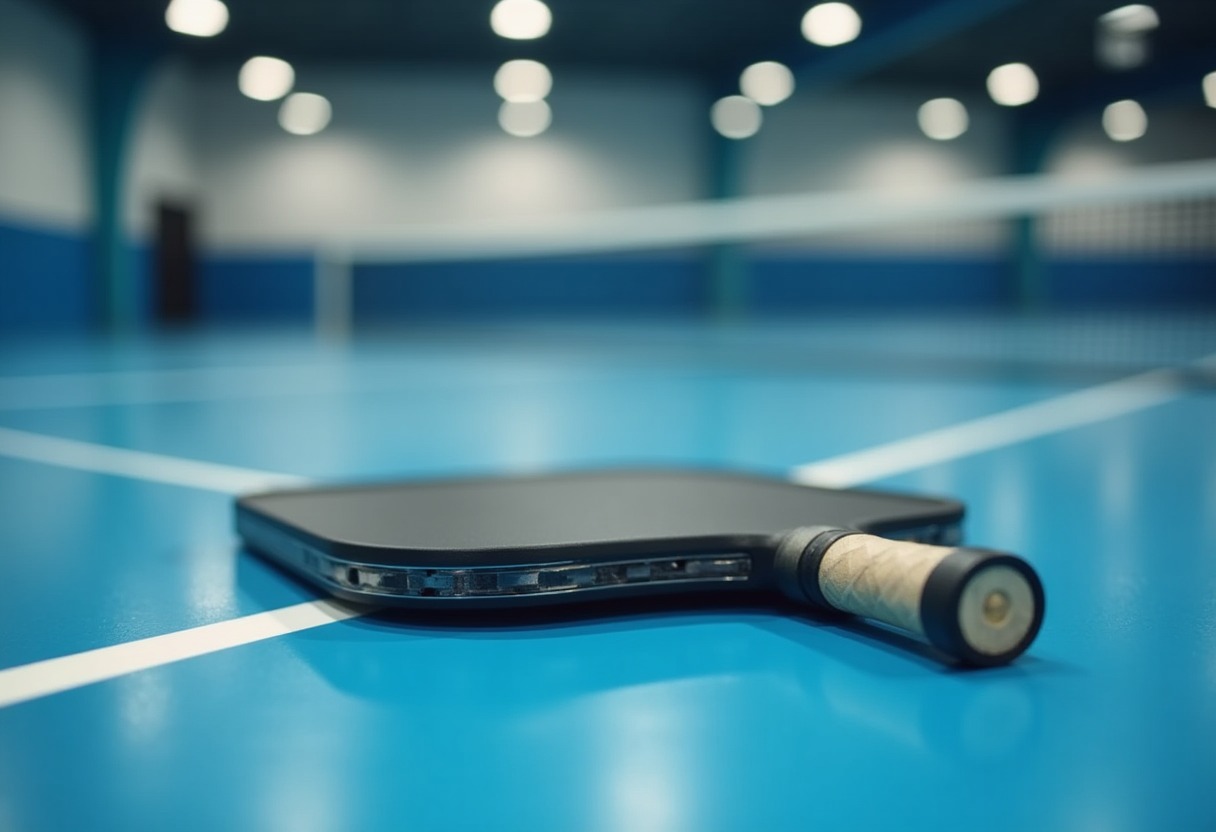
Your tennis background helped you pick up pickleball basics quickly, but that 8.5-ounce aluminum paddle from your starter set feels clunky during fast exchanges at the net. Intermediate players face a unique challenge: you've outgrown beginner gear but need paddles that won't overwhelm your developing technique while adding the precision and power required for competitive play.
Why Paddle Selection Matters More at Intermediate Level
Intermediate players experience the steepest learning curve in pickleball. You're mastering complex shots like the third shot drop and developing consistent dinking patterns, but your current paddle might be limiting your progress. According to USA Pickleball's player development guidelines, players at skill levels 3.0-3.5 benefit most from equipment upgrades that enhance feel and control without sacrificing forgiveness.
The sweet spot for intermediate paddles weighs between 7.6-8.2 ounces, offering enough mass for power generation while maintaining the maneuverability needed for quick hands battles. Your grip strength has developed enough to handle slightly heavier paddles, but you still need forgiving face materials that won't punish minor mishits.
Most importantly, intermediate players start competing in tournaments where paddle specifications matter. All competitive paddles must meet USA Pickleball approval standards, limiting total length plus width to 24 inches and surface roughness to specific friction coefficients.
Key Features That Define Intermediate-Level Paddles
Weight distribution separates intermediate paddles from beginner models. While entry-level paddles often feature head-heavy balance for easier power generation, intermediate paddles shift toward neutral or slightly head-light balance. This change supports better control during extended rallies and reduces arm fatigue during longer playing sessions.
Face materials become critical at this level. Graphite faces provide excellent touch sensitivity for drop shots and dinks, while carbon fiber offers slightly more power with maintained control. Avoid paddles with purely fiberglass faces at this stage—they lack the precision feedback needed for shot development.
Core construction directly impacts how the paddle feels during play. Polymer honeycomb cores offer the best balance of power and control for developing players. Nomex cores provide more power but can feel harsh on off-center hits, while aluminum cores lack the soft feel needed for finesse shots.
Edge guard design matters more than many players realize. Thin edge guards reduce overall paddle weight and improve balance, while thicker guards add durability but can create unwanted vibrations on mishits.
Top Intermediate Paddle Categories Compared
| Paddle Type | Weight Range | Best For | Price Range | Skill Level | |-------------|--------------|----------|-------------|-------------| | Graphite Control | 7.6-7.9 oz | Finesse players, soft game development | $80-$150 | 3.0-3.5 | | Carbon Fiber All-Around | 7.8-8.1 oz | Balanced power and control | $120-$200 | 3.0-4.0 | | Hybrid Composite | 7.7-8.0 oz | Players transitioning from power to control | $90-$160 | 2.5-3.5 | | Lightweight Graphite | 7.3-7.6 oz | Players with arm issues, quick hands | $100-$180 | 3.0-3.5 |
Recommended Intermediate Paddle Categories
Graphite Control Paddles excel for players focusing on finesse game development. These paddles feature responsive graphite faces over polymer cores, typically weighing 7.6-7.9 ounces with excellent touch sensitivity. → Shop graphite pickleball paddles on Amazon for options that enhance your soft game while maintaining enough power for aggressive shots.
Carbon Fiber All-Around Models serve players seeking balanced performance across all shots. These paddles combine carbon fiber faces with polymer cores, weighing 7.8-8.1 ounces for versatile play styles. The carbon construction provides slightly more power than graphite while maintaining excellent control characteristics. → Shop carbon fiber pickleball paddles on Amazon to find paddles that grow with your game.
Mid-Weight Tournament Ready Options work best for competitive intermediate players. These → Shop USAPA approved paddles on Amazon meet all tournament specifications while offering the performance characteristics needed for skill development. Look for weights around 7.8-8.0 ounces with neutral balance points.
Lightweight Performance Models benefit players with tennis elbow concerns or those preferring faster paddle head speed. → Shop 7.8 oz pickleball paddles on Amazon typically offer the sweet spot between control and maneuverability for most intermediate players.
Upgrade Path Paddles bridge the gap between intermediate and advanced play. These higher-end models feature premium materials and construction techniques that won't become limiting factors as skills improve. → Shop intermediate pickleball paddles on Amazon offers various options across different price ranges.
Advanced Considerations Most Players Miss
Grip size becomes more critical as stroke mechanics improve. Intermediate players often overlook how grip circumference affects wrist action and paddle control. Measure your grip size properly: 4 1/4 inches works for most men, while 4 1/8 inches suits most women. Adding grip tape can fine-tune feel and size.
String gauge compatibility matters for players considering paddle modifications. While you can't string pickleball paddles like tennis rackets, some advanced models feature removable cores or adjustable weight systems that allow customization as your game evolves.
Seasonal considerations affect paddle choice more than most realize. Cold weather makes paddle faces feel stiffer, while hot conditions can soften polymer cores. Consider having two paddles if you play year-round outdoors—a slightly softer model for winter and a crisper-feeling paddle for summer play.
Court surface compatibility influences paddle selection. Indoor courts with smooth surfaces reward control-oriented paddles, while outdoor courts with textured surfaces benefit from slightly more powerful models that can drive through wind and surface friction. Match your primary paddle to where you play most often.
Breaking-in periods vary significantly between paddle types. Graphite faces feel consistent immediately, while carbon fiber paddles often require 10-15 hours of play to reach optimal performance. Budget time for this adjustment period when switching paddle types.
FAQ
How do I know when I'm ready to upgrade from my beginner paddle? You're ready for an intermediate paddle when you can consistently execute drop shots, maintain rally exchanges over 10 shots, and feel limited by your current paddle's responsiveness rather than struggling with basic shot execution. If you're hitting the ball cleanly but lacking precision placement, or if your paddle feels sluggish during quick exchanges, it's time to upgrade. Most players reach this point after 3-6 months of regular play, typically around skill level 2.5-3.0.
Should I prioritize power or control in my first intermediate paddle? Control should be your primary focus at the intermediate level, as developing touch and precision creates a stronger foundation for advanced play. Power can be developed through improved technique and positioning, but control requires paddle feedback and responsiveness that only comes from quality equipment. Choose a paddle that provides clear feedback on shot placement and allows you to feel the difference between center and off-center hits. You can always add power later through technique improvements and gradual equipment upgrades.
What's the ideal weight range for intermediate players moving up from beginner paddles? Most intermediate players perform best with paddles weighing 7.6-8.1 ounces, depending on your physical strength and playing style. If you're coming from a heavier beginner paddle (8.3+ ounces), dropping to 7.8 ounces will improve maneuverability while maintaining enough mass for power generation. Players with strong tennis backgrounds can often handle 8.0-8.1 ounces immediately, while those new to racket sports should start around 7.6-7.8 ounces. The key is finding a weight that doesn't cause arm fatigue during longer playing sessions while providing enough stability for consistent shot execution.
How much should I expect to spend on a quality intermediate paddle? Quality intermediate paddles typically cost $100-$180, with the sweet spot around $120-$150 for paddles that will serve you well through skill level 3.5-4.0. While you can find decent options for $80-$100, investing in the $120-$150 range usually provides better materials, construction quality, and longevity. Avoid spending over $200 at this stage unless you're certain about your playing style preferences—many features in premium paddles won't benefit intermediate players and that money is better spent on lessons or court time.
Can I use the same paddle for both indoor and outdoor play as an intermediate player? Yes, most intermediate players can successfully use one paddle for both environments, though small adjustments may help optimize performance. Choose a paddle with moderate power characteristics—not too soft for outdoor wind conditions, not too powerful for indoor precision shots. If you play primarily outdoors, lean slightly toward more powerful paddles to cut through wind and compensate for outdoor ball characteristics. Indoor-focused players should prioritize control and touch. A quality all-around paddle in the 7.8-8.0 ounce range with graphite or carbon fiber face will perform well in both settings.
The right intermediate paddle transforms your game from reactive to strategic, giving you the tools to execute the shots you're visualizing but couldn't quite achieve with beginner equipment.
Some links on this page are affiliate links. We may earn a small commission if you purchase through them, at no extra cost to you.
As an Amazon Associate we earn from qualifying purchases. This article contains affiliate links; if you buy through them we may earn a small commission at no additional cost to you.