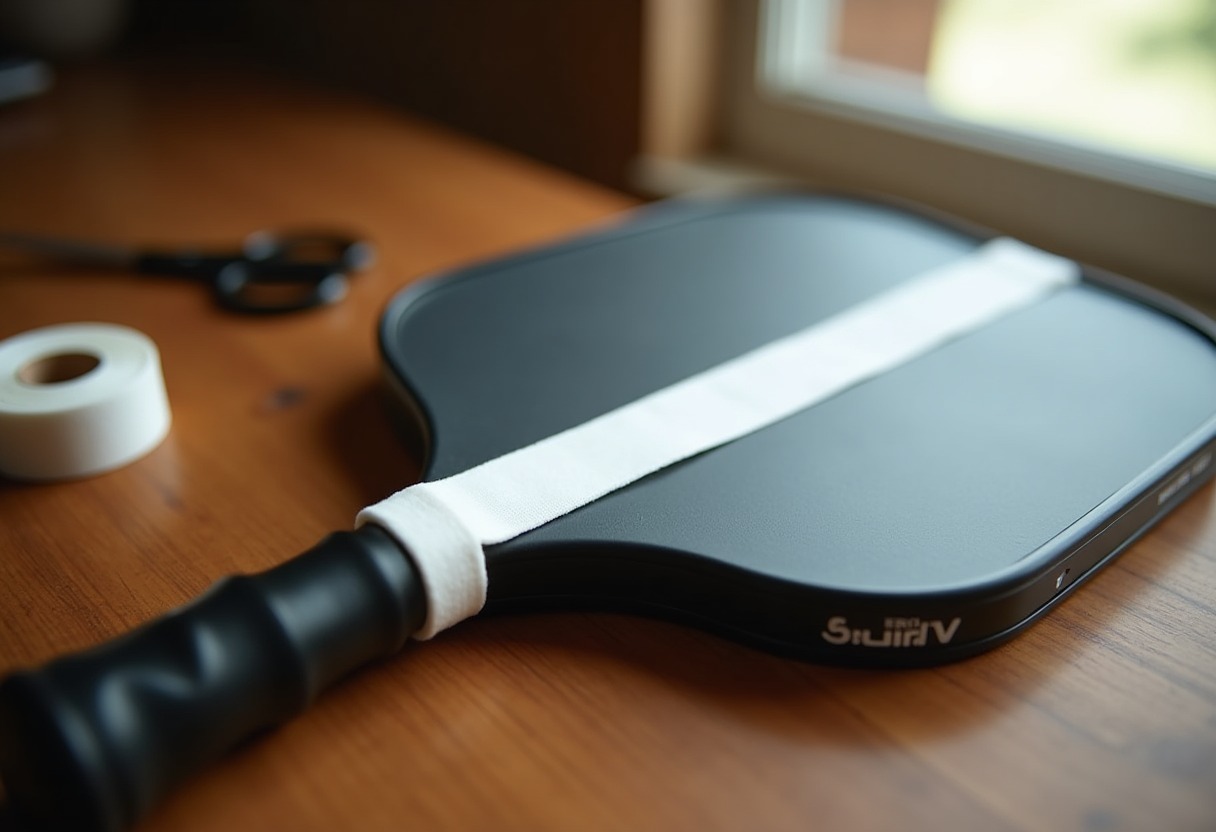
The grip is the only part of your paddle that actually touches you, and it's the part most players ignore until something goes wrong. A worn grip slips during dink rallies, makes you over-clench (which causes pickleball elbow), and quietly costs you points you blame on your shot mechanics. Replacing it takes about five minutes and costs less than $10.
How Grip Tape Actually Works
Modern paddles ship with one of two grip types out of the box:
- Cushioned grip (replacement grip): A thicker, padded base wrap glued or stapled to the paddle handle. This is the "real" grip — the one designed for the long haul.
- Overgrip (tour grip): A thin tacky wrap meant to go ON TOP of the cushioned grip. Replaceable in seconds, this is what serious players cycle through every few weeks.
Most stock paddles ship with just a cushioned grip and no overgrip. You can play this way indefinitely if you like the bare feel, but adding an overgrip is where almost every regular player ends up. The overgrip gives you fresh tackiness, customizable thickness, and sweat absorption — and when it wears out, you peel it off and put a new one on without touching the underlying paddle wrap.
When to Replace Your Overgrip
If you play 2–3 times per week, plan to replace your overgrip every 3–6 weeks. The signs:
- Slipping during the third shot drop or kitchen dinks. Sweat has saturated the fibers; the tackiness is gone. Even if it still feels grippy in dry conditions, anything humid will make it slip when you need it most.
- Visible darkening or wear patches. Look at the inside of the handle (the side facing your palm). If it's blackened or shiny, the foam padding has compressed.
- You're squeezing harder than you should. This is the subtle sign players miss. If you've started gripping tighter than you used to without noticing, your overgrip is failing and your brain is compensating. Pickleball elbow follows about 4–6 weeks later.
- The smell. A grip that's been sweated into for weeks smells like a gym bag. That's bacteria in the foam. Replace it.
The full cushioned grip (the underlying replacement grip) lasts much longer — typically 6–12 months for a regular player. Replace it when you can feel the handle's hard surface through the padding, or when the staples/glue have come loose and the grip is rotating on the handle.
Choosing the Right Overgrip
Overgrips come in three broad styles:
Tacky Overgrips
The most popular choice. They feel slightly sticky out of the package and grip your palm aggressively. Best for players who sweat moderately and want a "locked-in" feel.
- Tourna Grip XL is the original and still the standard among competitive players. Dry to the touch, gets tackier as you sweat into it. Around $10–$15 for a 3-pack.
- Wilson Pro Overgrip is the budget alternative — softer, more cushioned, but loses tackiness faster than Tourna.
Cushioned Overgrips
Thicker overgrips that prioritize comfort over precision. Good for players with hand pain or those who play long sessions. The trade-off is reduced "feel" — you're a bit further from the paddle face, so subtle paddle vibrations get muted.
- Gamma Supreme is a popular pick at this thickness range. Around $8 each.
Dry/Absorbent Overgrips
Designed for humid climates or heavy sweaters. These wick moisture instead of becoming tacky from it. They feel slightly chalky out of the package, which some players love and others hate.
- Yonex Super Grap is the standard.
- Head Hydrosorb Pro is more cushioned at the same dry-feel category.
→ Shop pickleball overgrips on Amazon
How to Wrap an Overgrip (Step by Step)
Wrapping an overgrip looks intimidating the first time and takes about two minutes once you've done it twice.
Step 1: Peel the New Overgrip
Most overgrips come pre-cut to length with a tapered start. Peel the protective film off. Locate the small finishing sticker that comes in the package — you'll need it at the end.
Step 2: Start at the Butt of the Handle
Place the tapered (narrow) end of the overgrip flush with the bottom edge of the handle. Some grips have a small adhesive strip on the tapered end to anchor it. Hold this in place with your non-dominant hand.
Step 3: Wrap Spirally Up the Handle
Wrap the overgrip around the handle at a slight angle, with each wrap overlapping the previous by about 1/8 inch (roughly 3mm). The right amount of overlap is the visual difference between a clean wrap and a sloppy one.
Keep tension consistent. Too loose and the grip will bunch up during play; too tight and you'll create lumpy ridges. Aim for "firm but not stretched white."
Step 4: Choose Your Direction
For right-handed players, wrap counterclockwise (looking down at the butt of the handle). This means as you grip the handle, the seam of the wrap runs away from your palm's direction of force, so it tightens rather than peeling under play. Left-handers wrap clockwise.
Step 5: Finish at the Top of the Handle
Stop about 1 inch below the throat of the paddle (where the handle meets the head). Cut excess tape at an angle so the final edge runs parallel to the wrap line. Apply the finishing sticker to lock the end in place — wrap it firmly all the way around so it can't peel up during play.
Step 6: Wipe Down
Run a dry cloth over the new grip to remove any factory residue and bed in the texture. You're done.
Common Mistakes
- Wrapping over an old, wet overgrip. Adding fresh tape on top of a sweat-saturated layer traps bacteria and makes the new grip feel mushy. Peel the old one off first, every time.
- Skipping the finishing sticker. That little piece of tape is what keeps the entire wrap from unraveling in the middle of a game. Use it.
- Over-stretching the grip. New overgrips don't need to be pulled tight to grip well; that's what the tacky adhesive layer is for. Stretching causes the wrap to relax over the next 24 hours, leaving you with a loose grip by the next session.
- Buying a "lifetime" grip on Amazon for $3. There's no such thing as a lifetime tacky grip. Material science doesn't allow it. Pay $4–$5 per overgrip and replace them regularly.
When You Actually Need a New Replacement Grip (Not Just Overgrip)
The cushioned base grip underneath your overgrip should be replaced when:
- You can feel the wooden or composite handle's edges through the padding.
- The grip has rotated on the handle and won't sit flat anymore.
- The staples or grip glue have come loose at the butt cap.
- It's been more than a year of regular play.
Replacement grips run $10–$20 and require pulling the butt cap off the paddle. Most players take it to a tennis or pickleball shop the first time for a $5–$10 install fee while they watch the process.
→ Shop pickleball replacement grips on Amazon
How to Tell If Your Grip Size Is Wrong (Bonus)
If you wrap a fresh overgrip and the paddle still feels uncomfortable — too thin and slippery despite the new grip, or too thick and you have to over-extend your fingers — the underlying handle size might not match your hand.
A quick fix: use one or two overgrips stacked on top of each other to add 1/16" of circumference each. This is how pro players fine-tune handle thickness without buying a new paddle. Our first paddle buyer's guide covers the grip-sizing finger test if you want to verify your hand-to-handle fit.
Bottom Line
A worn grip costs you more shots than a worn paddle face does. Buy a 3-pack of Tourna Grip XL, replace it every 4–6 weeks, and learn to wrap it yourself in two minutes. The total annual cost is under $50 — less than a single nice dinner — and it will save you from the slowly-creeping forearm pain that derails so many recreational players.
As an Amazon Associate we earn from qualifying purchases. This article contains affiliate links; if you buy through them we may earn a small commission at no additional cost to you.