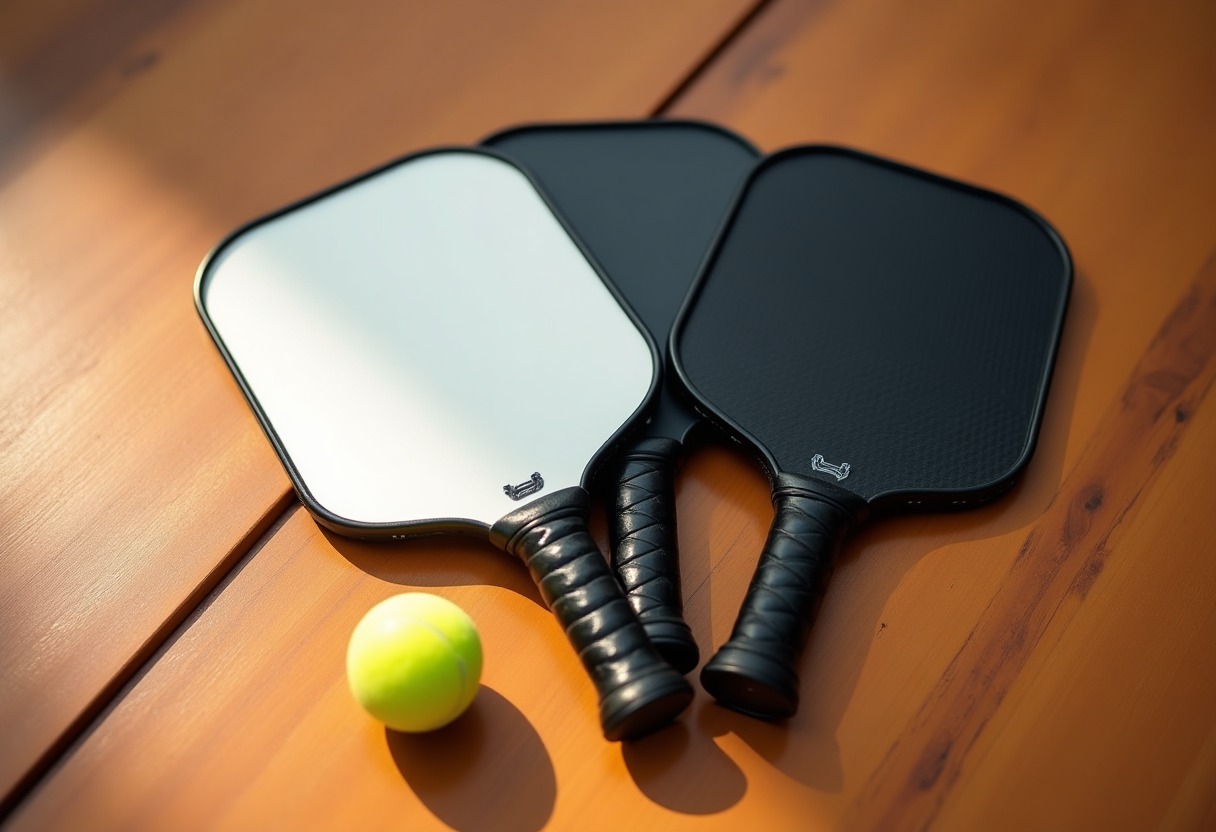
Walking into a pickleball shop or scrolling Amazon for your first paddle feels like staring at a wall of indistinguishable rectangles. Carbon fiber, polypropylene core, 7.6 vs 8.0 ounces, elongated vs widebody — the specs blur together fast. The good news: for your first paddle, three decisions matter and the rest is noise.
Why the First Paddle Matters (and Why It Doesn't)
Your first paddle shapes how quickly you fall in love with the sport. A paddle that's too heavy fatigues your forearm before you've played enough to learn placement. One that's too light sends balls flying when you mean to drop them softly into the kitchen. A grip that doesn't fit your hand creates blisters and elbow strain.
But here's the other side: nobody's first paddle is their forever paddle. Most players who stick with pickleball trade up within 6–12 months as they learn what they actually want — more spin, more control, more power, a longer reach. Spending $200+ on your first paddle is almost always a mistake. A $50–$90 paddle that fits you well will teach you the game just as effectively, and you'll have data on what to upgrade toward when you're ready.
The Three Specs That Actually Matter
1. Weight
Pickleball paddles range from about 6.8 ounces (very light) to 8.5 ounces (very heavy). For beginners, the sweet spot is 7.6 to 8.0 ounces — a "midweight" paddle.
- Light paddles (under 7.5 oz) give faster hand speed at the net, which sounds great until you realize the speed comes at the cost of power and stability. New players using light paddles tend to over-swing because the paddle doesn't generate its own pace.
- Heavy paddles (over 8.0 oz) generate effortless power and absorb miss-hits well, but they cause forearm fatigue and slow your reaction time during kitchen exchanges.
- Midweight (7.6–8.0 oz) is the safe starting zone for most players. You get enough mass to drive the ball without exhausting your arm in a long session.
If you have prior racquet sport experience (tennis, racquetball), you'll probably gravitate toward the heavier end. If you're new to racquet sports altogether or have wrist or elbow concerns, stay at 7.6–7.8 oz.
2. Grip Size
Grip circumference matters more than most beginners realize. A grip too large strains your wrist; one too small encourages over-gripping, which leads to tennis elbow / pickleball elbow over time. (We have a full guide on pickleball elbow prevention if you're already feeling soreness.)
The standard test: hold the paddle in your dominant hand with a relaxed grip. The index finger of your non-dominant hand should fit between your fingertips and the base of your palm. If your fingers touch your palm, the grip's too small. If there's clearly more than a finger's width of space, it's too big.
Most paddles ship with a 4.25" grip — fine for the average adult hand. If you have small hands, look for a 4" grip; for larger hands, 4.5" or you can add overgrip tape to bulk it up.
3. Surface Material
This is where the marketing gets noisy. There are three main face materials:
- Composite / fiberglass: The original modern paddle surface. Forgiving, decent spin, good for beginners. Most $40–$70 paddles use composite.
- Graphite: Lighter and stiffer than composite. Better feel, slightly less power. Mid-range price ($70–$120).
- Carbon fiber (T700 raw / textured): The current premium option. Excellent spin generation thanks to the textured surface, great control. $100+ for the entry tier.
For your first paddle, composite or graphite is plenty. Carbon fiber gives you more spin potential, but most beginners aren't generating enough swing speed for that texture to do meaningful work — you're paying for capability you can't yet use.
The Specs You Can Mostly Ignore (For Now)
Shape: Elongated paddles give more reach and power; widebody paddles give a bigger sweet spot. As a beginner, choose widebody — you'll mis-hit more often than you'd like, and a forgiving sweet spot keeps the ball in play.
Core thickness: 13mm cores feel softer and offer more control; 16mm cores feel stiffer and generate more power. Both are fine to learn on. If you're unsure, 16mm is the safer bet — it's the more common choice and gives you a feel for what "standard" power feels like.
Edge guard vs edgeless: Edge guards protect against court scrapes but add a tiny amount of vibration on shots near the edge. Edgeless designs (no plastic rim) feel cleaner but ding more easily. For a first paddle, edge-guarded is the practical choice.
Our Picks for Your First Paddle
Best Overall Under $50 — Franklin Sports X-40 Pro
The Franklin X-40 Pro is what most pickleball clubs hand out for demo days. Polypropylene honeycomb core, fiberglass face, 7.6 oz, 4.25" grip. It's USAPA-approved (you can take it to tournaments later if you want), has a forgiving sweet spot, and goes for around $40. The ball comes off it with enough pace to learn drives, but it's soft enough that you can develop your dink game without fighting the paddle.
→ Shop the Franklin X-40 Pro on Amazon
Best Step-Up Under $100 — Selkirk SLK Halo Control
Selkirk is one of the most respected names in pickleball, and their SLK line is the sub-brand for accessible-priced paddles built to a tournament-quality standard. The Halo Control is 7.8 oz, has a carbon fiber face (so you get textured spin even at this price point), and a 16mm polypropylene core. Around $89.
→ Shop the Selkirk SLK Halo on Amazon
Best for Players with Some Racquet Sport Background — JOOLA Ben Johns Hyperion
If you've played tennis, racquetball, or table tennis competitively before, your swing path and timing are ahead of most beginners. The JOOLA Hyperion (~$160 at full price; routinely available at $100–$120 on sale) gives you carbon fiber spin and a 14mm core that suits players who already know what a clean strike feels like.
→ Shop pickleball paddles on Amazon
For a wider list including value picks at every price tier, our best pickleball paddles under $100 guide covers the rest of the field.
What to Skip
- Generic $20 paddle sets from big-box retailers. Wood or hard plastic cores feel awful, transmit shock to your wrist, and will turn you off the sport before you find out you love it.
- Pro-level paddles ($200+) as your first purchase. Even if they perform better, you can't tell yet, and you'll outgrow your preferences within a year anyway.
- Buying based on a pro's endorsement. Ben Johns' signature paddle is built around Ben Johns' game. Yours isn't there yet.
When to Upgrade
You're ready for a second paddle when you can answer specific questions: "I want more spin on my third shot drop," "I'm losing hand battles at the net," "my serves don't have enough pace." Those answers point to specific paddle features (textured face, lighter weight, longer paddle, stiffer core). Without those answers, buying a more expensive paddle is just paying for placebo improvement.
Most committed players hit that point around month six. Some take longer. There's no rush — the best paddle for you in November might look completely different from the best paddle for you in May.
Bottom Line
Pick a midweight ($50–$90) paddle with a comfortable grip and a forgiving sweet spot. Play with it for at least three months before considering an upgrade. The hour you save by not over-researching is an hour you can spend actually playing — which is where you'll learn what you actually want from your next paddle.
As an Amazon Associate we earn from qualifying purchases. This article contains affiliate links; if you buy through them we may earn a small commission at no additional cost to you.