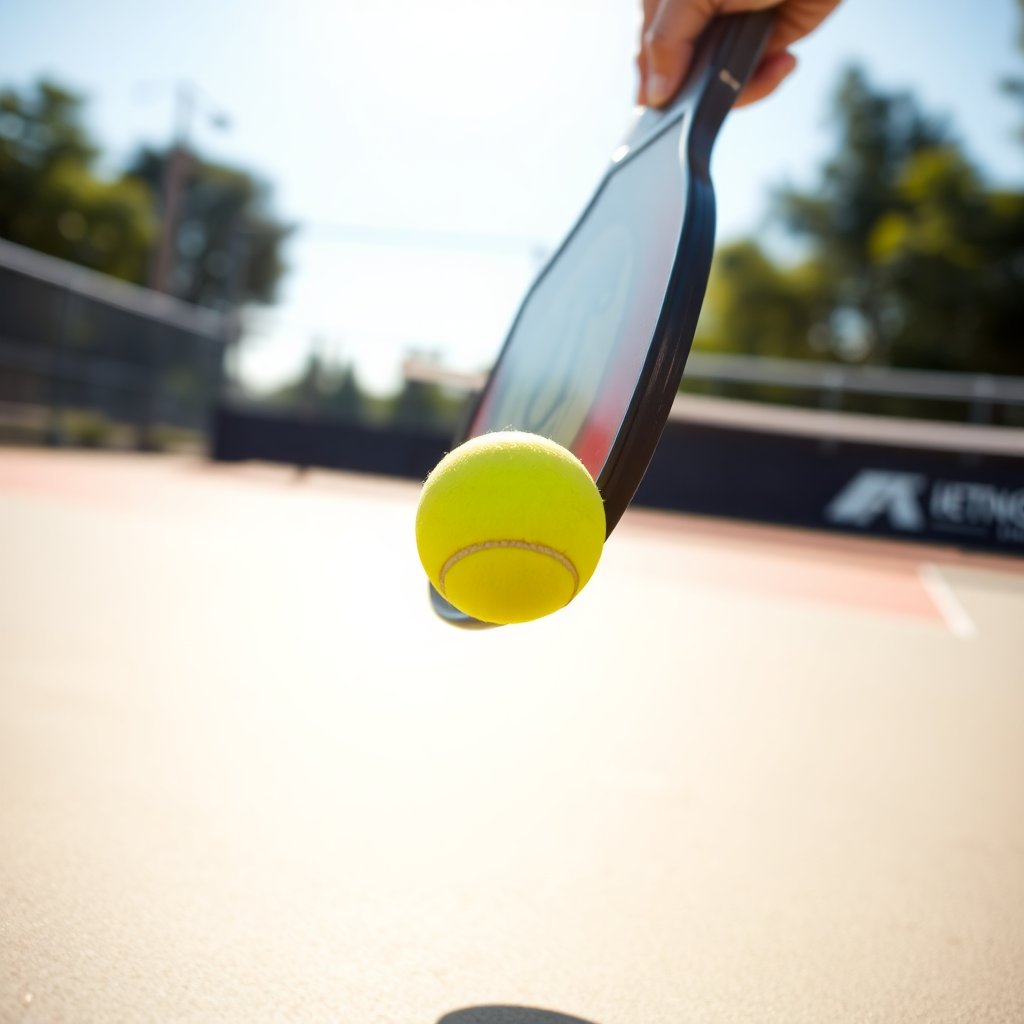
The paddle market has exploded in the last few years, and you'll see prices ranging from $30 to $250. The good news: you don't need to spend $200 to play well. The sub-$100 segment has improved dramatically — carbon fiber faces, thermoformed cores, and quality construction are no longer reserved for premium price points.
Here are the best paddles under $100 right now, with honest assessments of who each one is right for.
Our Top Picks Under $100
1. Selkirk SLK Halo — ~$89
The Halo is the easiest recommendation for new and intermediate players. It's lightweight (7.6 oz), has a generous sweet spot, and offers excellent control for dinking and placement shots. The carbon fiber face gives it a premium feel at a non-premium price.
The Halo comes in two versions: the Control (softer feel, more touch) and the Power (slightly stiffer for more pace off the paddle). Both are excellent for the price. The Control version is better for dink-heavy recreational play; Power is better if you favor the drive game.
Pros: Lightweight, forgiving, premium feel for the price, excellent for beginners to intermediate players
Cons: Less power than heavier paddles, not ideal if you love aggressive drives
→ Shop Selkirk SLK Halo on Amazon
2. Franklin Sports Pro — ~$49
If you want to try pickleball without committing to a big purchase, the Franklin Pro is legitimately good. It's not a toy or a beginner throwaway — it's a real paddle that holds up to regular play. Polymer core, solid construction, and widely available at sporting goods stores as well as Amazon.
The Franklin Pro is the most popular "first paddle" in the community for good reason. Dozens of people who started on one went on to play competitively. It won't hold you back; it'll just be the thing you look back on fondly when you upgrade.
Pros: Excellent price, surprisingly solid, great for testing the sport, widely available
Cons: Less control refinement than higher-end options, fiberglass face not as precise as carbon
→ Shop Franklin Sports Pro on Amazon
3. HEAD Radical Elite — ~$80
HEAD brings its tennis DNA to pickleball with the Radical Elite. It's a bit heavier (8.1 oz) which gives more power on drives, and the fiberglass face provides great spin potential. The handle shape borrows from tennis racquet design and feels natural for former tennis players switching to pickleball.
If you're coming from a tennis background, the Radical Elite will feel familiar in hand. The slightly larger grip circumference also works well for players with larger hands who find standard pickleball grips too thin.
Pros: Good power, excellent build quality, name-brand reliability, great for tennis converts
Cons: Heavier feel, less forgiving on off-center hits, fiberglass generates more power than touch
→ Shop HEAD Radical Elite on Amazon
4. Gamma Needle — ~$75
A strong mid-range option with a textured fiberglass surface that grips the ball well for spin generation. The elongated shape gives you more reach at the net, which some players love for extended dinking exchanges and cross-court angles. The narrower face also reduces wind resistance during swings slightly.
If you play a lot at the kitchen line and value reach over forgiveness, the Gamma Needle's elongated geometry is worth trying.
Pros: Good reach, textured face for spin, versatile, excellent mid-range value
Cons: Slightly smaller sweet spot due to elongated shape, forgiveness is reduced
5. Onix Graphite Z5 — ~$90
The Z5 is one of the most popular paddles ever made, and it's been updated over the years to stay competitive. Wide-body shape, graphite face, nomex honeycomb core. The wide body gives you the largest sweet spot in this roundup, which makes it extremely forgiving for beginners and recreational players who don't always hit the center.
The Nomex core is stiffer than polymer, which means more "pop" and a louder sound on contact. Some players love the feedback; others prefer the quieter, softer feel of polymer cores.
Pros: Time-tested design, great control, wide sweet spot, widely available, solid resale value
Cons: Older core technology, power players may want something newer, louder than polymer core paddles
→ Shop Onix Graphite Z5 on Amazon
Comparison Table
| Paddle | Weight | Face Material | Best For | Price | |---|---|---|---|---| | Selkirk SLK Halo | 7.6 oz | Carbon Fiber | All-around, beginners | ~$89 | | Franklin Sports Pro | 7.8 oz | Fiberglass | First paddle, casual play | ~$49 | | HEAD Radical Elite | 8.1 oz | Fiberglass | Tennis converts, power players | ~$80 | | Gamma Needle | 7.7 oz | Fiberglass (textured) | Net players, spin game | ~$75 | | Onix Graphite Z5 | 7.9 oz | Graphite | Wide sweet spot, forgiveness | ~$90 |
What to Look for Under $100
Weight
7.5–8.2 oz is the sweet spot for most players. Lighter paddles (under 7.5 oz) offer more control and reduce arm fatigue over long sessions — good for players with arm or elbow issues. Heavier paddles (over 8 oz) generate more power and can stabilize fast incoming shots at the net.
If you're unsure, go with something in the 7.6–7.9 oz range. You can always add lead tape to adjust later.
Face Material
Graphite and carbon fiber faces give you touch and control. The ball dwell time is slightly longer on carbon, which improves placement for dinking and soft shots. Best for control-oriented play.
Fiberglass faces give you more power and spin potential. The stiffer face generates more rebound energy, which means less work for your arm on hard shots. Better for aggressive, drive-heavy play.
Core Material
Polymer cores (polyethylene or polypropylene honeycomb) are the modern standard. They offer the best balance of control, touch, and cushioned feel. This is what most paddles in this price range use.
Nomex cores are stiffer and louder, with a more explosive pop on contact. Older technology, but some players — especially those who love a crisp, responsive feel — still prefer it. The Onix Z5 uses Nomex.
Grip Size
Standard grips run 4–4.25 inches in circumference. Larger hands may prefer 4.5 inches. Most paddles in this segment use a standard grip, but some brands offer L (4.25") and XL (4.5") options. A grip that's too small leads to over-gripping; too large reduces wrist action.
Handle Length
Standard handles are about 5 inches. Elongated paddles (like the Gamma Needle) have 5.5–6 inch handles that allow two-handed backhands and more reach. If you come from tennis and use a two-handed backhand, a longer handle is worth seeking out.
Who Should Spend More Than $100?
Under $100 is right for:
- Beginners learning the sport
- Recreational players who play 1–2x per week
- Anyone testing the sport before committing
Consider $100–$200 if:
- You play 3+ times per week
- You're playing in leagues or tournaments
- You want thermoformed construction or premium carbon fiber (14K weave, etc.)
- You've outgrown your current paddle and want meaningful improvement
The truth is, most recreational players will never "outgrow" a quality $80–$100 paddle. The limiting factor is always the player, not the equipment. Get comfortable, develop your skills, then upgrade when you know exactly what you want.
Tips for Buying Your First Paddle
Demo before you buy if possible. Many local pickleball communities have paddle demo programs through brands like Selkirk, Joola, and Paddletek. Try a few before committing.
Avoid sets with paddles AND balls AND a bag. The combo packs marketed as "complete pickleball sets" almost always use low-quality paddles that feel nothing like what real players use. Better to buy a standalone paddle and add quality balls separately.
Don't buy based on what the pros use. Professional players have custom specs — weight, balance, and surface texture — that differ significantly from the retail versions of their signature paddles. The retail versions are still good paddles; just don't assume you're getting the same thing.
FAQ
Do I need to spend $100+ to play competitive recreational pickleball?
No. Any paddle in this roundup is more than adequate for open play, recreational leagues, and most USAPA-level recreational tournaments. The difference above $100 is in consistency and marginal improvements to touch — not playability.
What's the difference between "control" and "power" paddles?
Control paddles favor softer cores and smaller faces, giving you better touch for dinking and placement shots. Power paddles use stiffer faces and heavier construction to generate more pace. Most recreational players do better with a control or balanced paddle — power is easier to generate than control.
How long does a pickleball paddle last?
Most paddles last 1–3 years of regular play before the face starts to deaden and lose its texture. Signs it's time to replace: balls fly long without apparent changes in your form, the face surface feels smooth rather than slightly textured, or the edge guard has cracked.
Should beginners start with a heavy or light paddle?
Lighter is generally better for beginners. Less fatigue, easier to maneuver, better for developing touch at the kitchen line. Heavier paddles (for power) make more sense once you've established your swing mechanics.
Can I add lead tape to adjust paddle weight?
Yes, and it's common. Adding lead tape to the top of the paddle face adds swing weight and power. Adding it to the sides increases stability. Start with 1–2 grams and test before adding more.
The Bottom Line
Start with the Franklin Sports Pro if you're brand new and not sure you'll stick with the sport. Move up to the Selkirk SLK Halo or Onix Z5 once you know you love it. If you're a tennis player getting into pickleball, the HEAD Radical Elite will feel most natural.
You can play great pickleball on any of these paddles. Don't let gear anxiety slow you down from getting on the court — that time is better spent playing than researching.
When you're ready to level up your kit, check out our complete beginner's guide to pickleball for everything you need to get started, and our best pickleball shoes guide for the court footwear that protects your ankles.
As an Amazon Associate we earn from qualifying purchases. This article contains affiliate links; if you buy through them we may earn a small commission at no additional cost to you.