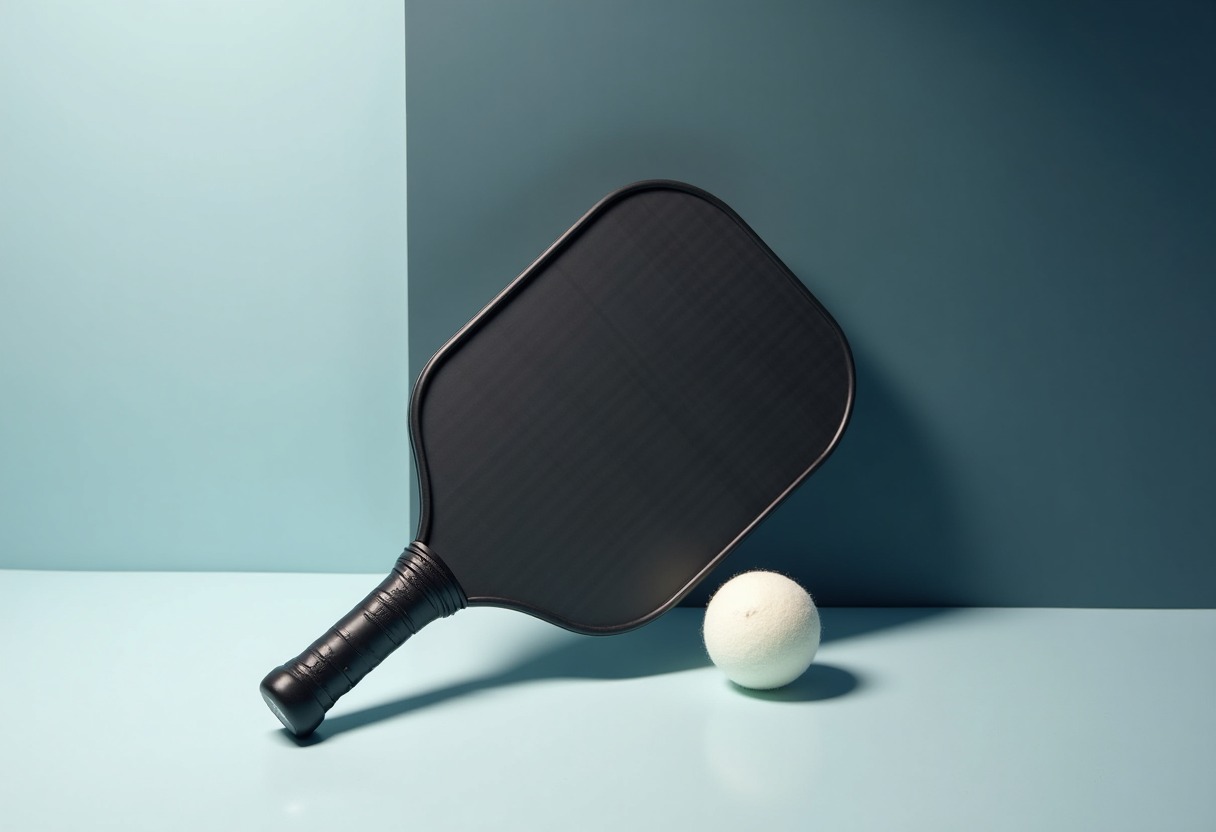
Control-focused pickleball players face a unique challenge: finding paddles that prioritize precision and touch over raw power. Most paddle manufacturers chase the power player market, leaving finesse players to sift through marketing claims to find equipment that actually enhances their tactical style.
Why Control Matters More Than Power in Modern Pickleball
The evolution of pickleball strategy has shifted dramatically toward placement and patience. According to USA Pickleball, rallies now average 14-18 shots at tournament levels, making consistent ball placement more valuable than occasional power shots. Control-oriented paddles excel in three critical areas: dink consistency, third shot drop execution, and soft volley placement.
Modern control paddles achieve their precision through specific design elements. Lower swing weights (typically 105-115) allow faster hand speed for touch shots. Textured surfaces create consistent spin without requiring excessive force. The sweet spot positioning closer to the handle provides better feel for close-net exchanges where most points are won or lost.
Temperature affects paddle performance differently based on construction materials. Graphite faces maintain consistent response across temperature ranges, while polymer cores provide dampening that reduces mishits during cold morning play when balls feel harder.
Essential Features That Define Control-Focused Paddles
Weight distribution determines how a paddle feels during extended play. Control paddles concentrate mass toward the handle rather than the head, creating a swing weight between 105-115. This balance allows quick wrist adjustments during rapid exchanges at the kitchen line.
Core thickness directly impacts ball dwell time—the milliseconds the ball stays in contact with the paddle face. Thicker cores (16mm-20mm) extend dwell time, giving players more opportunity to direct shots precisely. Thinner cores sacrifice some control for increased pop, which benefits power players but hinders finesse specialists.
Surface texture affects spin generation and ball grip. Moderate textures work best for control players, providing enough grip for consistent spin without grabbing the ball excessively. Overly textured surfaces can make soft shots unpredictable, while smooth faces offer insufficient spin for effective drops and dinks.
Handle length and grip circumference influence wrist positioning and shot execution. Longer handles (5.25"-5.5") provide two-handed backhand options and increased reach for defensive shots. Standard 4.25" grips suit most hand sizes, but players with smaller hands often benefit from 4" or 4.125" circumferences for better control.
Edge guard weight affects the paddle's overall balance point. Heavier edge guards shift weight toward the paddle head, reducing control characteristics. Lightweight edge guards or edgeless designs maintain the head-light balance that control players prefer.
Paddle Material Technologies for Enhanced Touch
| Material | Control Rating | Durability | Price Range | Best For | |----------|---------------|------------|-------------|----------| | Graphite Face/Polymer Core | 9/10 | High | $120-250 | All-around control | | Carbon Fiber Face/Honeycomb Core | 8/10 | Very High | $150-300 | Tournament play | | Fiberglass Face/Polymer Core | 7/10 | Medium | $80-180 | Budget-conscious control | | Raw Carbon Face/Foam Core | 10/10 | Medium | $200-350 | Maximum finesse |
Graphite faces offer the most predictable response for control players. The material provides consistent flex characteristics that don't vary significantly with temperature changes. Graphite also delivers excellent ball feel, allowing players to sense exactly where contact occurs on the paddle face.
Carbon fiber construction pushes control capabilities further through increased stiffness and reduced vibration. The material's directional strength allows manufacturers to tune flex patterns specifically for control characteristics. Raw carbon surfaces provide maximum spin potential while maintaining the precise feel that finesse players demand.
Polymer cores represent the gold standard for control-oriented paddles. The material absorbs impact energy efficiently, reducing unwanted vibrations that can throw off shot placement. Polymer also provides consistent response across the entire face, eliminating dead spots that plague some honeycomb designs.
Honeycomb cores offer durability advantages but can create inconsistent ball response depending on ball contact location relative to cell structure. Nomex honeycomb provides firmer feel than aluminum honeycomb, which some control players prefer for better feedback during soft shots.
Top Control Paddle Recommendations by Playing Style
Precision Dinking Specialists need paddles that excel in close-range touch shots. Look for 7.8-8.2 oz paddles with thick polymer cores and moderate grip sizes. The → Shop control pickleball paddles on Amazon selection includes several models specifically designed for dinking consistency.
Third Shot Drop Masters benefit from slightly heavier paddles (8.0-8.4 oz) with longer handles for improved reach and stability. Carbon fiber faces provide the spin generation needed for effective drops from mid-court positions. These players should prioritize paddles with extended sweet spots for consistent contact on varying shot distances.
Defensive Counter-Punchers require quick-handling paddles that can transition from defense to offense rapidly. Lightweight models (7.6-8.0 oz) with head-light balance allow fast racquet preparation for defensive shots followed by aggressive placement opportunities. The → Shop finesse pickleball racquets on Amazon category features paddles optimized for this style.
All-Court Control Players need versatile paddles that perform across all shot types without sacrificing touch capabilities. Mid-weight paddles (8.0-8.3 oz) with balanced construction provide the stability for overhead shots while maintaining the feel required for soft game excellence.
Senior Players Focused on Placement often prefer lighter paddles (7.4-7.8 oz) that reduce arm fatigue during extended play. These paddles should feature comfortable grips and vibration-dampening technologies that ease joint stress. The → Shop lightweight pickleball paddles on Amazon selection offers several age-friendly options.
Advanced Control Techniques Most Players Miss
Grip pressure variation affects paddle control more than most players realize. Firm grips during power shots provide stability, but control shots require lighter grip pressure that allows the paddle face to absorb and redirect ball energy. Practice alternating between 6/10 grip pressure for soft shots and 8/10 for drives within the same point.
String bed theory applies to pickleball paddles through core compression characteristics. Softer cores act like lower string tensions, providing more dwell time and ball control. Firmer cores behave like higher tensions, offering more immediate ball response but requiring precise timing for control shots.
Sweet spot mapping involves understanding how ball contact location affects shot outcome. Control paddles typically feature sweet spots positioned closer to the handle than power paddles. Mark contact points during practice sessions to identify your paddle's optimal control zone.
Weight customization allows fine-tuning of existing paddles for improved control characteristics. Adding lead tape to the handle shifts balance toward a more head-light configuration. Small amounts (2-4 grams) can significantly improve control without dramatically altering swing feel.
Environmental adaptation requires understanding how temperature and humidity affect paddle performance. Cold conditions make balls harder and reduce polymer core effectiveness. Warm conditions soften balls and increase core responsiveness. Adjust shot selection and paddle angle based on playing conditions for consistent control.
The → Shop textured paddle surface on Amazon options provide enhanced spin generation for players who want to add variety to their control-based game. Similarly, the → Shop carbon fiber pickleball paddles on Amazon category offers premium options for tournament-level control players.
Understanding proper paddle care extends the life of control-focused equipment. Store paddles at room temperature to prevent core degradation. Clean textured surfaces with mild soap to maintain consistent ball grip. Replace grips when they become slippery to ensure consistent hand positioning during control shots.
Consider complementary equipment that supports control-based play styles. Our guide to Best Pickleball Balls Outdoor 2026 helps select balls that respond predictably to touch shots. The How To Dink tutorial provides specific techniques that work best with control-oriented paddles. For players developing their control game from scratch, Best Pickleball Paddles Beginners 2026 offers entry-level options with control characteristics.
FAQ
What weight range works best for control-focused pickleball paddles? Control paddles typically perform best between 7.6-8.4 ounces, with most players finding their sweet spot around 8.0-8.2 ounces. Lighter paddles (7.6-7.9 oz) offer quick maneuverability for rapid-fire dinking exchanges but may lack stability on harder shots. Heavier control paddles (8.2-8.4 oz) provide more stability and power when needed but require stronger wrists for extended soft game rallies. The key is matching paddle weight to your physical capabilities and playing style rather than following arbitrary recommendations.
How does paddle core thickness affect control and touch shots? Thicker cores (16mm-20mm) provide superior control characteristics by extending ball dwell time and dampening vibrations that can throw off shot placement. The additional thickness creates a softer feel that helps players sense ball contact location more precisely, crucial for consistent dink placement and soft volleys. Thinner cores (11mm-13mm) offer quicker ball response but sacrifice some forgiveness on off-center hits. Most serious control players gravitate toward 16mm cores as the optimal balance between touch and responsiveness.
Should control players choose graphite or carbon fiber paddle faces? Graphite faces offer the most predictable control characteristics with consistent flex patterns and excellent ball feel across all shot types. Carbon fiber provides enhanced spin generation and slightly better durability but can feel less forgiving on mishits. Raw carbon surfaces maximize spin potential for advanced players who can consistently find the sweet spot. For most control-focused players, quality graphite faces provide superior touch and forgiveness, while carbon fiber works better for tournament players who prioritize maximum spin generation over forgiveness.
What grip size promotes better control for finesse shots? Standard 4.25" grips work well for most control players, but smaller circumferences (4" or 4.125") often improve touch shot precision by allowing more precise wrist control. Larger grips (4.375" or 4.5") can reduce control accuracy by limiting wrist flexibility during soft shots. The grip should feel secure without requiring excessive squeezing, as overly tight grips reduce touch sensitivity. Players with smaller hands typically achieve better control with 4" grips, while larger hands may prefer 4.25" for optimal comfort and control balance.
How does paddle balance point affect control shot execution? Head-light balance (balance point closer to the handle) significantly improves control shot execution by allowing faster paddle head speed and better maneuverability during close-net exchanges. Control paddles typically balance 6-7 inches from the handle bottom, compared to 7-8 inches for power paddles. This head-light configuration reduces swing weight, making it easier to execute precise dinks, drops, and soft volleys with consistent placement. Head-heavy paddles provide more power but sacrifice the quick reactions and precise placement that control players depend on for their strategic advantage.
Master your finesse game with equipment designed for precision, not just power—your opponents will notice the difference in every carefully placed shot.
Some links on this page are affiliate links. We may earn a small commission if you purchase through them, at no extra cost to you.
As an Amazon Associate we earn from qualifying purchases. This article contains affiliate links; if you buy through them we may earn a small commission at no additional cost to you.