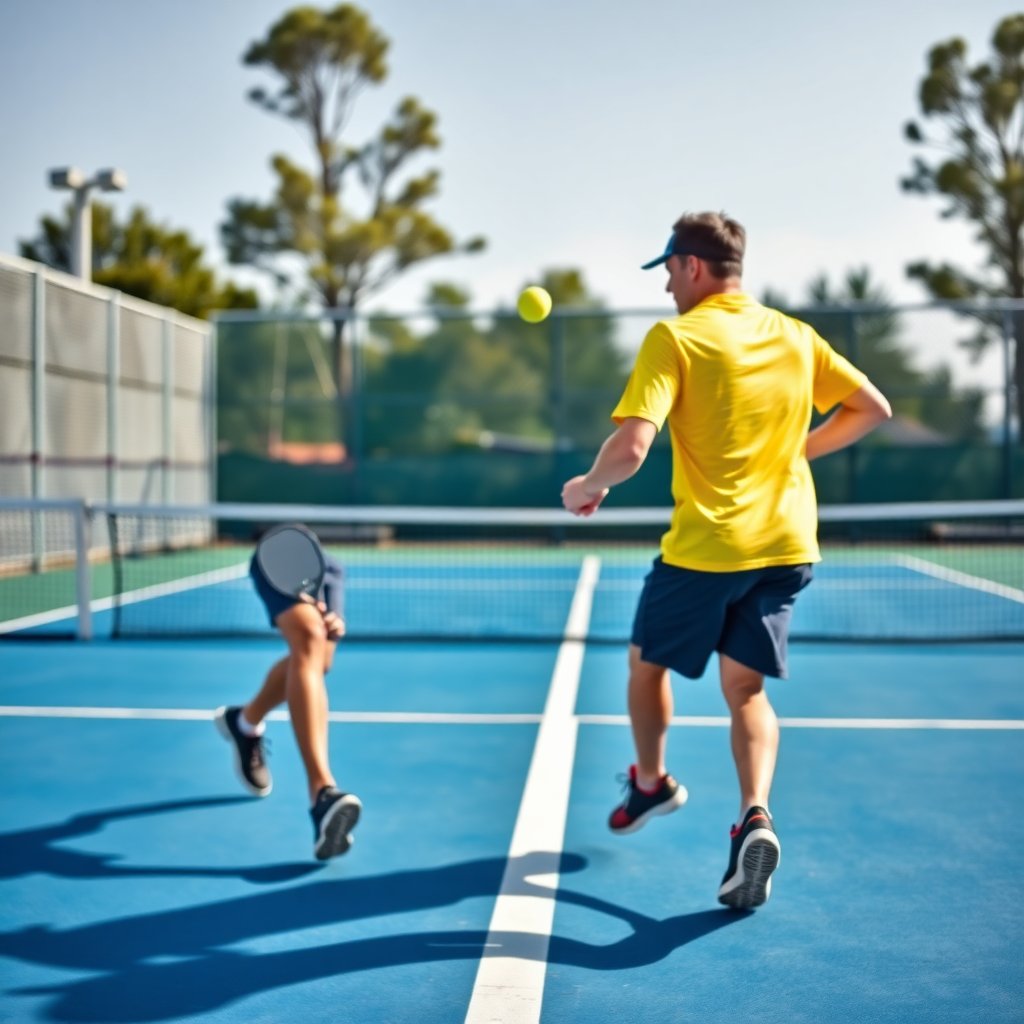
The two sports share a net, a court (sort of), and an overhead serve argument — but they're quite different experiences. Whether you're a tennis player curious about pickleball, or someone picking their first racquet sport from scratch, here's an honest comparison of what each offers.
Learning Curve
Pickleball wins for beginners. Most people can sustain a rally on their third or fourth session. The smaller court means less ground to cover, the paddle is easier to control than a strung racquet, and the underhand serve removes one of the hardest skills in tennis.
Tennis has a steeper entry ramp. The serve alone takes months to develop real consistency. The court is much larger and requires significantly more footwork and conditioning. Consistent groundstrokes require real repetition — most casual tennis players spend years before they feel comfortable in a full game.
That said — the skills you build in tennis (footwork, ball tracking, court awareness, soft hands) transfer extremely well to pickleball. Former tennis players often pick up pickleball faster than complete beginners. The cross-court strategy, the approach shot concept, and the net game all translate directly. Many former tennis players find pickleball immediately intuitive at a strategic level, even if the mechanics of the paddle feel unfamiliar.
Edge: Pickleball for beginners and faster gratification.
Court Size and Movement
Pickleball court: 44 feet long, 20 feet wide. About the size of a badminton court, or roughly a quarter of a tennis court. You're always close to the action.
Tennis court: 78 feet long (baseline to baseline), 36 feet wide for doubles. The distance from baseline to baseline is enormous compared to pickleball. Court coverage is a significant physical challenge.
The proximity in pickleball creates a different type of game — quick exchanges at the kitchen, fast hands, dinking precision. The distance in tennis creates power-based baseline rallies and athletic court-running challenges.
For players with knee, hip, or joint concerns, pickleball's smaller court is a significant advantage. There's less sprinting, less lateral ground to cover, and less load on joints per point.
Cost
Pickleball is cheaper to start.
| Item | Pickleball | Tennis | |---|---|---| | Paddle/Racquet | $50–$90 starter paddle | $70–$200 beginner racquet | | Balls | $15 for a 6-pack | $8–$15 for a can of 3 | | Shoes | $65–$100 court shoes | $65–$100 court shoes | | Court access | Often free at public parks | Free public courts + private clubs ($15–$30/hr) | | Lessons | Optional to start | More often needed for fundamentals |
A solid pickleball starter setup runs $100–$150 total. You could be fully equipped for under $150 with a quality paddle, a pack of balls, and a good pair of court shoes.
Tennis requires a racquet ($70–$200 for a decent beginner option), balls, and court time. While many parks have free public courts, private club memberships and lessons add up quickly if you pursue the sport seriously.
Both sports have communities that offer "bring your own nothing" intro sessions — worth checking before spending anything.
→ Shop pickleball starter kits on Amazon
Social Scene
Pickleball is exceptionally social. Open play sessions are a core part of the culture in a way that doesn't exist in tennis. You show up, get matched with whoever's there, rotate partners and opponents every game, and leave having met a dozen people. It's more like a social club than a competitive sport for most recreational players.
The welcoming nature of the pickleball community is genuinely one of the sport's strongest selling points. Experienced players actively help beginners. Nobody takes it too seriously. The atmosphere is inclusive.
Tennis tends toward more structured pairs and set partnerships. Finding open play tennis exists but is less culturally embedded. Tennis clubs often have a more formal, hierarchical social structure. The sport can feel more competitive and less welcoming to newcomers.
For anyone who values the social aspect of sport — meeting people, casual play, community — pickleball has a clear edge.
Physical Demands
Tennis is more physically demanding in terms of court coverage and explosive movement across longer distances. A 90-minute tennis match is a serious cardio workout that taxes your legs, shoulders, and core significantly. Professional tennis players are elite athletes.
Pickleball is less aerobically demanding for most players, especially at the recreational level. The smaller court means less running, and the slower pace of dinking exchanges reduces cardiovascular load. That said, competitive pickleball is genuinely athletic — fast hands, explosive side-to-side movement at the kitchen, quick split-steps, and demanding reaction time requirements.
Pickleball is also gentler on joints. The underhand serve protects the shoulder. The shorter court reduces the sprinting load on knees. This is a real reason why pickleball skews older in demographics — it's accessible to players who can no longer sustain the physical demands of tennis.
For fitness: Tennis gives you a harder workout.
For longevity: Pickleball is easier on the body.
Technique and Skill Development
Tennis has more technical complexity. The serve alone has dozens of variables — grip, toss, rotation, pronation. Groundstrokes require precise footwork and full-body rotation. Volleys, overheads, slice, topspin — each requires dedicated practice to develop.
Pickleball has its own technical depth that becomes apparent at higher levels. The dink, the third-shot drop, the speed-up, the reset — these are precision shots that take years to master. But the entry barrier is lower. You can play a real game before mastering technique.
For competitive players who enjoy technical skill development, both sports offer rich learning journeys. Pickleball's ceiling is higher than most beginners expect.
Can Former Tennis Players Use Their Skills?
Yes, significantly. Tennis skills that transfer directly to pickleball:
- Footwork and split-step — identical in both sports
- Soft hands at the net — tennis net play translates directly to pickleball kitchen play
- Cross-court strategy — same geometric principles apply
- Reading spin — pickleball uses less spin than tennis but spin awareness helps
Tennis skills that don't transfer (and may create bad habits in pickleball):
- Full groundstroke swing — pickleball requires much shorter backswings. Tennis players often overhit initially.
- Big serve motion — the pickleball serve is underhand. Your tennis serve mechanics don't apply.
- Volley technique — pickleball volleys are softer and more controlled than tennis volleys. The block technique used at the pickleball kitchen is different from punching a tennis volley.
Most tennis players need 3–5 sessions to recalibrate before they feel natural on a pickleball court.
Which Should You Choose?
Choose pickleball if:
- You want to be playing a real game quickly (within 2–3 sessions)
- You value the social, open-play culture
- You have joint concerns or want a sport that's gentler on the body
- You're new to racquet sports entirely
- You want to meet new people and build a community around the sport
Our complete pickleball beginner guide is the fastest path from zero to your first real game. And our best pickleball paddles under $100 guide helps you find the right starting paddle without overspending.
Choose tennis if:
- You love the full-court athletic challenge and want serious cardio
- You have existing racquet skills you want to build on
- You're drawn to the individual competition structure
- You want to develop deep technical skills over years
Choose both if:
- You're already into one and curious about the other
- You want sport variety across different seasons (many tennis players switch to indoor pickleball in winter)
The skills transfer surprisingly well in both directions. Many competitive tennis players play serious recreational pickleball; many competitive pickleball players have tennis backgrounds. Either way — get on a court. You'll figure out which one has your heart pretty quickly.
FAQ
Is pickleball just tennis for old people?
This stereotype is fading fast. While pickleball's accessibility has made it popular with older players, the sport is rapidly growing among all age groups. The majority of new players added in the last three years skew under 40. Professional pickleball players are athletic and competitive. The sport has depth — it just has a low entry barrier.
Can I use a tennis racquet to play pickleball?
No. Pickleball requires a paddle — a solid surface, not strung. You cannot play with a tennis racquet. Paddles also have size/weight limits for official play.
Which sport has better TV coverage and a professional scene?
Tennis remains the bigger professional sport globally with the Grand Slams, ATP/WTA Tour, and decades of history. Pickleball's professional circuit (PPA, MLP) is growing rapidly with major TV deals and increasing prize money, but it's still in its early stages compared to professional tennis.
Can I play pickleball on a tennis court?
Yes, and many people do. A regulation tennis court fits up to four pickleball courts using temporary lines and portable nets. Many parks use their tennis courts this way for pickleball open play. It's how the sport grew before dedicated courts became widespread.
Which is harder — pickleball or tennis?
Depends what you mean. Tennis has a higher entry difficulty — harder to learn. But advanced pickleball at the competitive level is genuinely hard — soft game precision, speed-up defense, and kitchen battles require thousands of hours of practice to master. Both sports are easy to start and hard to master.
The Bottom Line
Both sports are worth playing. If you're choosing one to start, pickleball offers faster fun, a better social scene, and lower physical demands. If you already play tennis and are curious about pickleball, give it three sessions before you judge — the first one will feel weird, but by the third you'll understand the appeal.
→ Shop pickleball starter gear on Amazon
As an Amazon Associate we earn from qualifying purchases. This article contains affiliate links; if you buy through them we may earn a small commission at no additional cost to you.