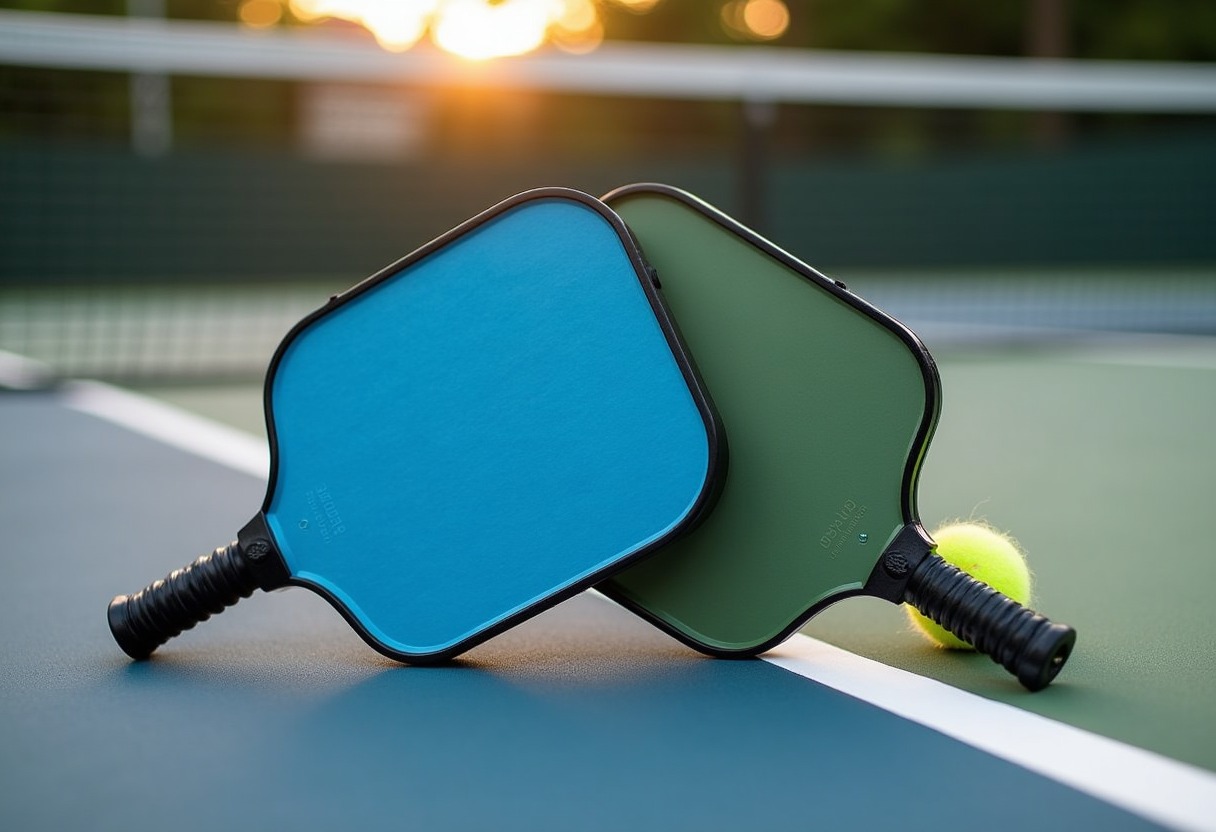
Doubles play demands different gear than singles. You're covering half the court, defending poaches at the net, and executing soft touch shots from the kitchen line for minutes at a time. The paddle that crushed drives from the baseline in singles might leave you scrambling in doubles when your partner expects you to own the middle and handle rapid-fire exchanges.
Why Doubles Paddles Prioritize Different Features
Singles players chase power and reach. Doubles players need consistency, forgiveness, and court coverage without sacrificing touch. According to USA Pickleball tournament data, over 80% of sanctioned events include doubles divisions, making it the dominant format—yet most paddle marketing focuses on power specs that matter more in singles.
Doubles strategy centers on controlling the kitchen line. You're not blasting winners from the baseline; you're resetting hard drives, placing dinks cross-court, and handling poaches aimed at your body. That requires a larger sweet spot, predictable deflection angles, and enough control to keep balls low over the net when you're rushed.
Wide body paddles typically measure 8.25 to 8.5 inches across, compared to 7.5 to 8 inches for standard shapes. That extra width increases the hitting surface by 12-15%, giving you more margin for error on volleys when your partner pulls you wide or opponents attack the middle. Elongated paddles stretch 16.5 inches or longer, adding reach—useful in singles but awkward for the quick hands required at the net in doubles.
What Makes a Paddle Excel in Doubles
Weight distribution matters more than total weight. A paddle balanced toward the handle (low swing weight) lets you react faster to net exchanges. Head-heavy paddles generate power but slow down your hands when you're defending poaches or handling body shots. Most elite doubles players choose paddles between 7.8 and 8.3 ounces with neutral to handle-weighted balance.
Core material defines touch. Polymer cores absorb impact better than aluminum or Nomex, giving you finer control on resets and dinks. A thicker core (16mm) softens the feel further but reduces power—exactly what you want when placement beats pace. Thinner cores (11-13mm) add pop for drives and serve returns but sacrifice some forgiveness.
Face texture creates spin, which curves dinks away from opponents and pulls soft returns short. Paddles with raw carbon fiber or textured fiberglass faces grab the ball longer than smooth surfaces, letting you brush aggressive topspin on drops or slice backspin on defensive blocks. If your pickleball doubles strategy relies on crafty placement over raw speed, texture matters.
Paddle Feature Comparison for Doubles
| Feature | Why It Matters in Doubles | Ideal Spec | Trade-Off | |---------|---------------------------|------------|-----------| | Paddle Width | More surface area for volleys and middle coverage | 8.25–8.5 inches | Less reach horizontally | | Core Thickness | Touch and control on resets and dinks | 16mm | Lower power on drives | | Weight | Quick hands at the net vs. stability on blocks | 7.8–8.2 oz | Heavier = more stable but slower | | Balance Point | Reaction speed on fast exchanges | Handle-weighted or neutral | Less drive power | | Face Texture | Spin for angled dinks and topspin rolls | Raw carbon or textured | Slightly less control on flat hits |
Weight tolerance between partners creates frustration. If you swing a 7.6-ounce paddle and your partner uses an 8.4-ounce paddle, your net positioning and timing won't sync during middle exchanges. Match paddle weights within 0.3 ounces if you play regularly with the same partner.
Recommended Paddle Types for Doubles Play
Wide Body Control Paddles
These paddles prioritize the sweet spot and forgiveness. Look for polymer cores, widths above 8 inches, and neutral balance points. They handle net scrambles, soft exchanges, and defensive resets without punishing off-center hits. Perfect for teams that control points through placement rather than overpowering opponents. → Shop wide body pickleball paddles on Amazon
Polymer Core 16mm Paddles
Thick cores dampen hard drives into manageable pace, letting you redirect power back low over the net. They reduce vibration on mishits, which saves your elbow during long tournament days. These paddles shine when opponents attack you with pace—you absorb it and counter with placement. Players transitioning from the Best Pickleball Paddles Beginners 2026 guide often choose these for added control. → Shop control pickleball paddles on Amazon
Textured Face Paddles
Raw carbon fiber or textured fiberglass surfaces add spin without extra effort. Brush up on dinks and they dive short; slice under blocks and they float deep. Spin opens angles that flat shots can't reach, especially cross-court dinks that curve away from the opponent's backhand. If you've mastered how to dink fundamentals, texture takes your game further.
Lightweight Quick-Reflex Paddles
Paddles under 7.8 ounces speed up your hands for rapid volleys and body blocks. They sacrifice some mass for maneuverability, which matters when opponents target the middle or you're defending poaches. Best for players with strong wrist strength who don't need paddle weight to stabilize hard hits. → Shop lightweight pickleball paddles on Amazon
Elongated Reach Paddles (with Caution)
Lengths above 16.25 inches add reach but narrow the hitting surface, reducing forgiveness. They work for doubles if you're primarily defending lobs or reaching wide volleys, but most experienced doubles players avoid them because net exchanges demand width over length. Singles converts often start here before switching to wider paddles once they grasp doubles positioning. Check the Best Pickleball Paddles Intermediate post if you're upgrading.
Advanced Doubles Considerations Most Posts Miss
Matching Sweet Spot Heights with Your Partner
If you're 5'6" and your partner is 6'2", your contact points sit at different heights. Paddles with larger sweet spots positioned higher on the face (near the center or slightly above) help taller players. Shorter players benefit from sweet spots closer to the throat, where they naturally make contact. Test paddles at the net and notice where most volleys land on the face—that's your target zone.
Grip Size Affects Net Positioning
A thicker grip (4.5 inches or larger) gives more stability on blocks but slows down grip changes for backhand volleys. Thinner grips (4.0 to 4.25 inches) speed up rotations but reduce power absorption. Most doubles specialists use 4.25-inch grips as the sweet spot for quick hands without sacrificing block stability. If you're adding Pickleball Paddle Grip Tape Guide builds, test grip size at the net before committing.
Core Temperature Changes Performance
Polymer cores stiffen in cold weather, reducing touch. If you play outdoors year-round, store your paddle in a temperature-controlled bag between matches. A paddle that felt perfect in July might feel board-like in January without this adjustment. Conversely, extreme heat softens cores, creating mushy feedback. Check out Best Pickleball Bags 2026 for insulated options.
Paddle Rotation During Long Matches
Some tournament doubles players bring two identical paddles and swap every three games. Fresh grips maintain tackiness during humid conditions, and rotating paddles prevents one from absorbing too much sweat or compression during extended rallies. This matters more for intermediate and advanced players logging 4+ hours on court during tournament days.
Doubles Paddle Choices for Former Tennis Players
Tennis players transitioning to pickleball initially chase power because that's what worked at the baseline. Doubles pickleball punishes that instinct—net exchanges reward soft hands, not pace. Former tennis players should read Best Pickleball Paddles Tennis Players Transition Guide and prioritize control over power for their first doubles-specific paddle. The adjustment feels awkward for 5-10 matches, then suddenly everything clicks.
FAQ
What makes a paddle better for doubles than singles?
Doubles paddles prioritize larger sweet spots, wider hitting surfaces, and control-focused cores. Singles paddles emphasize power and reach. The best pickleball paddles for doubles help you handle fast net exchanges and place soft shots with consistency, while singles paddles maximize baseline drive speed.
Should both doubles partners use the same paddle?
Not necessarily, but matching weight and balance helps synchronize net positioning. If you both swing paddles within 0.3 ounces and similar balance points, your timing on middle balls improves. Different skill levels or play styles might justify different paddles, as long as weight is close.
How wide should a doubles paddle be?
Aim for 8.25 to 8.5 inches wide. This width increases your hitting surface by 12-15% compared to standard paddles, giving more forgiveness on volleys and middle coverage. Wider than 8.5 inches sacrifices too much reach horizontally, while narrower paddles reduce margin for error at the net.
Does core thickness really matter in doubles?
Absolutely. A 16mm polymer core provides softer touch and better control on resets and dinks compared to thinner 11-13mm cores. Thick cores absorb hard drives, letting you redirect pace instead of fighting it. If your doubles game involves lots of kitchen-line exchanges, core thickness matters more than any other spec.
Can I use an elongated paddle for doubles?
You can, but most experienced doubles players prefer wider paddles over elongated ones. Elongated paddles (16.5+ inches) reduce hitting surface width, making net volleys less forgiving. They work if you're defending lobs or need extra reach, but width beats length for most doubles situations. Read Best Pickleball Paddles Control Finesse Players 2026 for control-focused alternatives.
Doubles pickleball rewards paddles that keep balls in play, place shots with precision, and handle net scrambles without punishing slight mishits—choose width, control, and touch over baseline power every time.
Some links on this page are affiliate links. We may earn a small commission if you purchase through them, at no extra cost to you.
As an Amazon Associate we earn from qualifying purchases. This article contains affiliate links; if you buy through them we may earn a small commission at no additional cost to you.