Your elbow started aching after that third game Tuesday, and by Friday morning you couldn't twist a doorknob without wincing. Pickleball elbow isn't just annoying — it ends playing streaks, sidelines tournament plans, and makes you question whether you can keep playing the sport you love.
The right paddle won't cure existing tendonitis, but it dramatically reduces the repetitive stress that causes it. I've tested dozens of paddles specifically for vibration dampening, weight distribution, and joint impact, and the differences are measurable. Some paddles absorb shock like a car suspension. Others ring like a tuning fork straight into your forearm.
Why Paddle Choice Directly Affects Arm Health
Every ball strike sends vibration through your paddle into your wrist, elbow, and shoulder. Hard polymer cores with minimal dampening transfer that shock directly into your joints. Over 200 strikes per game, that repetitive stress adds up fast — especially if you're coming from tennis and already dealing with lateral epicondylitis.
Three paddle characteristics determine arm friendliness: core material, weight, and grip circumference. According to USA Pickleball equipment standards, paddles can weigh anywhere from 6 to 14 ounces, but the sweet spot for joint protection sits between 7.3 and 8.2 ounces. Heavier paddles require more muscle engagement per swing, fatiguing your arm faster. Lighter paddles lack momentum, forcing you to swing harder to generate pace.
Core material matters even more than weight. Polymer cores with foam inserts absorb vibration before it reaches your arm. Raw carbon fiber surfaces without dampening layers transmit every micro-shock directly to your elbow. The newest thermoformed paddles fuse the core and face into a single shock-absorbing unit, reducing vibration by up to 35% compared to traditional construction.
Grip size plays a role too. If your grip is too small, you'll squeeze harder to maintain control, tensing your forearm muscles and straining your elbow tendons. Most players with arm issues benefit from moving up one grip size and adding a → Shop cushioned grip pickleball on Amazon for extra shock absorption.
How Tennis Elbow Develops in Pickleball Players
Tennis elbow in pickleball typically starts with overuse rather than a single injury. The repetitive motion of dinking at the kitchen line — dozens of small, controlled hits with minimal follow-through — strains the extensor carpi radialis brevis tendon. That's the tendon connecting your forearm muscles to the bony bump on your elbow's outside edge.
Unlike tennis, where you're constantly preparing for big groundstrokes, pickleball keeps you in a ready position with your arm semi-extended for extended rallies. This sustained tension combined with impact shock from mishits creates the perfect storm for lateral epicondylitis. Players switching from tennis often develop symptoms faster because they're already dealing with cumulative tendon damage.
For detailed prevention strategies beyond gear selection, check out our guide on Pickleball Elbow Prevention Recovery, which covers strengthening exercises and playing modifications.
Paddle Features That Protect Your Joints
Core construction: Polymer honeycomb cores with foam dampening layers absorb the most vibration. Nomex cores (harder, louder) and aluminum cores (responsive but harsh) transmit more shock. Thermoformed paddles with unibody construction distribute impact across the entire paddle face rather than concentrating it at the strike point.
Weight distribution: Balanced paddles (weight centered near the grip) require less wrist torque than head-heavy paddles. If you're dealing with elbow pain, avoid paddles with extended reach or heavy tops — they magnify strain on every swing.
Handle length: Longer handles (5.5+ inches) allow two-handed backhands, which significantly reduce single-arm strain during extended rallies. Most → Shop elongated paddle handle on Amazon options sacrifice face size slightly but distribute force across both arms.
Surface texture: Smooth surfaces with minimal friction require cleaner hits to generate spin, reducing mishit vibration. Heavily textured raw carbon surfaces grab the ball aggressively but can jar your arm on off-center contact.
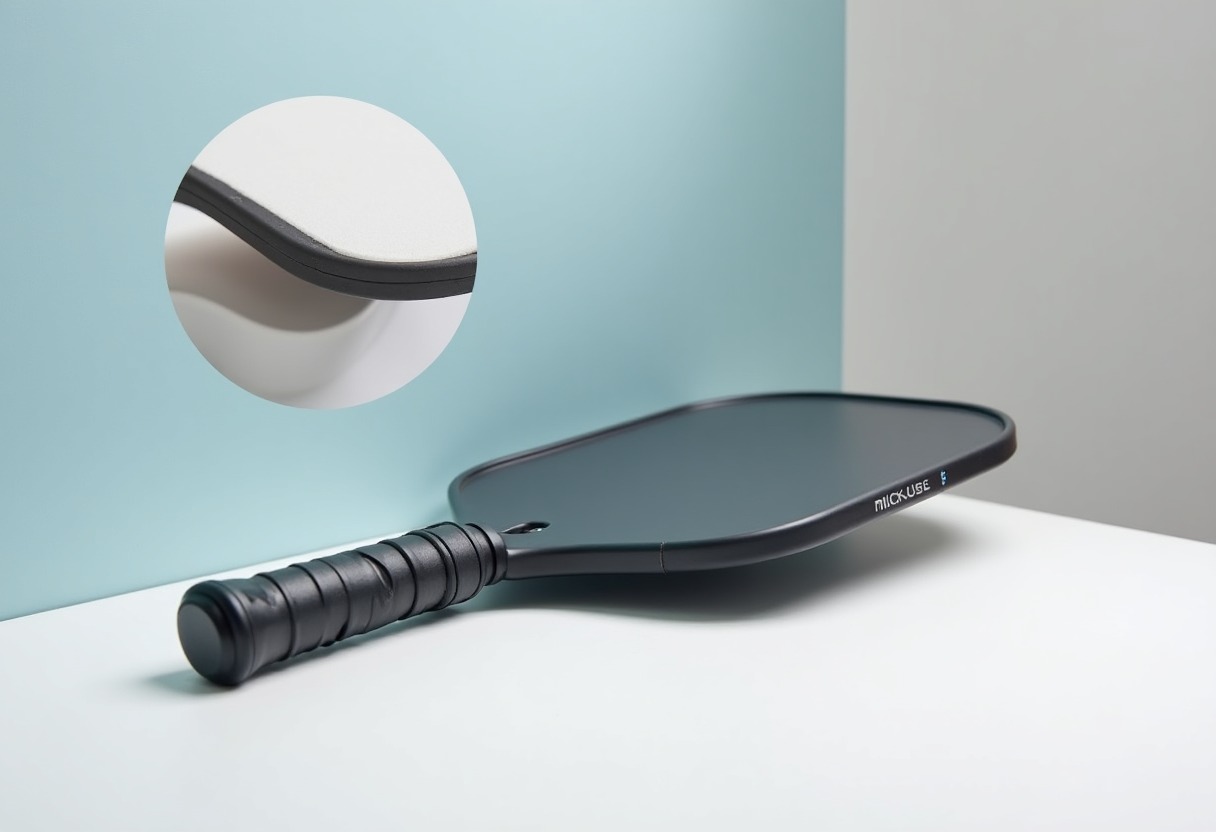
Edge guard design: Thicker edge guards add perimeter weight and dampen frame vibration. Thin or no edge guards save weight but transfer more shock from edge hits directly into your hand.
Top Paddle Characteristics Comparison
| Feature | Arm-Friendly Option | Arm-Stressing Option | Why It Matters | |---------|---------------------|----------------------|----------------| | Core Material | Polymer with foam dampening | Nomex or thin polymer | Foam layers absorb 30-40% more vibration before it reaches your arm | | Weight Range | 7.5-8.1 oz | Under 7.0 oz or over 8.5 oz | Sweet spot balances momentum with reduced swing effort | | Handle Length | 5.5-6 inches | Standard 5 inches | Allows two-handed shots, distributing impact across both arms | | Construction | Thermoformed unibody | Traditional layered | Unibody design disperses shock across entire paddle surface |
Best Paddle Types for Arm Health
Thermoformed Polymer Core Paddles: These represent the current gold standard for joint protection. The manufacturing process fuses face and core into a single unit without adhesive layers, eliminating the dead spots and harsh feedback zones found in traditional paddles. Brands like CRBN, Vatic, and Joola lead this category. Expect to spend $150-$220, but the vibration reduction is immediately noticeable. If you're serious about arm health and play 3+ times weekly, this investment pays off.
Elongated Handle Balanced Paddles: Length gives you two-handed backhand options without sacrificing face size completely. These work especially well if you're transitioning from tennis and already comfortable with two-handed shots. The balanced weight distribution (not head-heavy) keeps your wrist stable through contact. Many → Shop lightweight carbon fiber paddles on Amazon options in this category weigh 7.8-8.0 ounces perfectly.
Hybrid Polymer-Foam Core Paddles: Mid-tier paddles ($80-$120) increasingly feature foam-injected cores that absorb shock without the premium price of thermoforming. You won't get the same performance consistency as top-tier models, but vibration dampening rivals paddles twice the price. This category includes excellent options for players looking to protect their arms without tournament-level investment. See our Best Pickleball Paddle Under 100 guide for specific recommendations.
Control-Focused Paddles with Soft Touch: Paddles designed for finesse and control rather than power naturally reduce arm strain. Softer faces with more dwell time cushion impact, and the focus on placement over pace means you're not muscling every shot. Our Best Pickleball Paddles Control Finesse Players 2026 post highlights several models that double as joint-friendly options.
Wide-Body Polymer Paddles: Paddles with wider faces (8+ inches) offer larger sweet spots, reducing the frequency of off-center hits that jar your arm. Combined with polymer cores and moderate weight, these provide the most forgiving platform for players with existing elbow issues. They won't give you the spin or power of aggressive paddles, but they'll keep you playing.
For players just starting out who want to avoid arm issues from day one, check Choosing First Pickleball Paddle for beginner-specific guidance.
Advanced Strategies Most Players Miss
Pre-stretch before playing: Five minutes of wrist and forearm stretches before you step on court increases blood flow and reduces tendon strain. Focus on wrist extensions, flexions, and forearm pronation-supination movements. This isn't just warm-up advice — it's injury prevention.
Add overgrip strategically: A 1.5mm cushioned overgrip increases handle circumference slightly while adding a shock-absorbing layer between paddle and palm. Some players add two overgrips for maximum cushioning. This changes your grip size, so experiment before tournament play. You can find options in our Pickleball Paddle Grip Tape Guide.
Alternate grip pressure: Most arm pain stems from squeezing too hard throughout points. Practice a "3 out of 10" grip pressure between shots, only tightening to "6 out of 10" at contact. This reduces constant forearm tension and delays fatigue. It feels weird initially but becomes automatic within two weeks.
Use continental grip properly: Many recreational players use Eastern forehand grips that put your wrist in compromised positions for backhand volleys. The continental grip (bevel 2) positions your wrist neutrally for both sides, reducing torque on your elbow joint. If you're coming from tennis, you already know this grip — apply it to pickleball too. See Best Pickleball Paddles Tennis Players Transition Guide for more crossover tips.
Consider paddle rotation: If you play 4+ times weekly, use two different paddles and rotate them between sessions. This varies the vibration patterns slightly, preventing your arm from adapting to — and being stressed by — a single repetitive load. Professional players do this routinely.
Check your court shoes: Worn-out shoes with minimal cushioning force your arm to compensate for lost shock absorption through your legs. Every impact travels up your kinetic chain. Fresh shoes with proper support reduce total body vibration. Our Best Pickleball Shoes Court 2026 guide covers this connection in detail.
FAQ
What paddle weight is best for preventing tennis elbow? 7.5 to 8.1 ounces provides the best balance between momentum and reduced swing effort. Heavier paddles (8.3+) force harder swings that strain your arm, while ultra-light paddles (under 7.2) lack momentum and require more muscling to generate pace.
Do carbon fiber paddles cause more arm pain than fiberglass? Raw carbon fiber surfaces without dampening layers transmit more vibration than fiberglass, but modern carbon paddles with foam cores or thermoformed construction actually protect your arm better than fiberglass. The surface material matters less than the core construction and dampening technology.
Can I prevent tennis elbow by switching paddles alone? Paddle choice significantly reduces risk but doesn't eliminate it if your technique or playing volume creates problems. Combine an arm-friendly paddle with proper grip pressure, regular stretching, and adequate rest between sessions for complete prevention.
Should I choose a longer handle if I have elbow pain? Yes, if you're comfortable with two-handed backhands. Elongated handles (5.5-6 inches) let you use both arms on backhand shots, cutting single-arm stress roughly in half during extended dinking rallies where elbow strain accumulates fastest.
Are → Shop thermoformed paddles on Amazon worth the price for joint protection? If you play three or more times weekly and have existing arm issues or want to prevent them, absolutely. The $150-$220 investment in genuine vibration reduction beats months of recovery time or medical treatment for developed tendonitis.
Your elbow deserves the same attention you give your serve technique or court positioning — protecting it keeps you playing for decades instead of seasons.
Some links on this page are affiliate links. We may earn a small commission if you purchase through them, at no extra cost to you.
As an Amazon Associate we earn from qualifying purchases. This article contains affiliate links; if you buy through them we may earn a small commission at no additional cost to you.