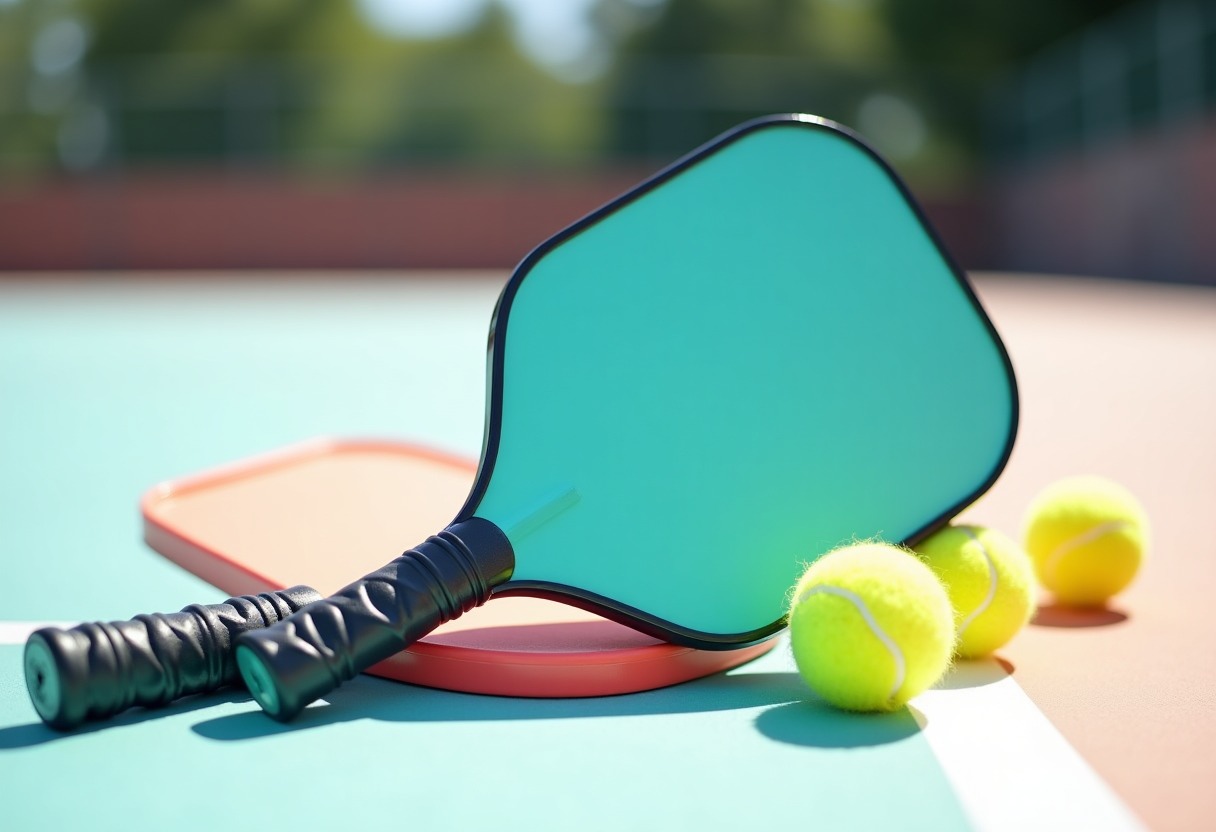
Most women find standard pickleball paddles too heavy and thick-gripped for comfortable extended play. The difference between a 9-ounce paddle with a 4.5-inch grip and a 7.5-ounce paddle with a 4-inch grip affects your wrist strain, reaction time, and control at the net more than any marketing copy about "power cores" ever will.
Why Paddle Weight and Grip Size Matter for Women Players
Average hand size differs between men and women by roughly 0.8 inches in length and 0.6 inches in width, according to anthropometric data from USAPICKLEBALL. This translates to real performance differences on court. A grip that's too thick forces your hand to overwork during every swing, leading to fatigue in the forearm flexors and increased risk of lateral epicondylitis—what most players call pickleball elbow.
Paddle weight creates similar issues. Standard paddles range from 7.8 to 8.5 ounces, but many women perform better with paddles in the 7.0 to 7.8-ounce range. Lighter paddles allow faster hand speed for resets and blocks, which matters more in modern pickleball than raw power. The tradeoff: you sacrifice some momentum on drives and serves, but most intermediate and advanced women players find this exchange worthwhile for improved maneuverability at the kitchen line.
Grip circumference typically ranges from 4 to 4.5 inches on stock paddles. Women with smaller hands generally perform best with 4 to 4.125-inch grips. You can reduce grip size with thinner replacement grips, but you can't effectively increase it beyond about 1/16 inch without affecting paddle balance. For more on customizing your grip, check out our Pickleball Paddle Grip Tape Guide.
What Makes a Paddle Suitable for Women Players
Calling a paddle "women's" is mostly marketing unless it addresses specific ergonomic factors. Here's what actually matters:
Weight distribution affects how a paddle feels more than total weight. A 7.8-ounce paddle with head-heavy balance can feel heavier than an 8.2-ounce paddle with even weight distribution. Look for paddles with balance points 3.5 to 4 inches from the handle end for better maneuverability.
Handle length between 5 and 5.5 inches works best for two-handed backhands without forcing awkward grip adjustments. Shorter handles reduce reach but improve control for one-handed players.
Core material determines both weight and performance. Polymer cores (Nomex honeycomb) deliver consistent feel at lighter weights. Aluminum cores reduce weight but can transmit more vibration. Carbon fiber cores offer excellent touch but typically add cost.
Surface texture impacts spin generation. Raw carbon fiber faces provide maximum spin with minimal effort, which benefits players who rely on finesse over power. Fiberglass faces offer a larger sweet spot with slightly less spin potential. For players focusing on placement and control, see our guide to the Best Pickleball Paddles Control Finesse Players 2026.
Comparing Key Specs for Women-Friendly Paddles
| Spec Category | Ideal Range | Why It Matters | Tradeoff | |--------------|-------------|----------------|----------| | Weight | 7.0-7.8 oz | Reduces arm fatigue, increases hand speed | Less power on drives and serves | | Grip Circumference | 4.0-4.125 inches | Prevents overgripping, reduces forearm strain | May require custom grip tape | | Balance Point | 3.5-4 inches from handle | Improves maneuverability at net | Slightly less reach on overheads | | Handle Length | 5-5.5 inches | Accommodates two-handed backhands | Shorter reach compared to elongated paddles | | Core Type | Polymer honeycomb | Quieter, better touch, consistent weight | Less pop than Nomex cores | | Face Material | Raw carbon fiber or fiberglass | Carbon adds spin, fiberglass enlarges sweet spot | Carbon costs more, fiberglass wears faster |
Top Paddle Categories for Women Players
Lightweight Power Paddles (7.3-7.6 oz)
These → Shop lightweight pickleball paddles on Amazon balance reduced weight with enough mass for aggressive baseline play. They work well for players transitioning from tennis who want familiar power without the arm strain of heavier paddles. The sweet spot sits slightly higher on the face, which suits players who take balls early and prefer a more compact swing.
Look for elongated shapes (16.5 inches long) if you want extra reach without adding weight. Standard shapes (16 inches) provide better control at the net. If you're new to the sport, our Choosing First Pickleball Paddle guide covers the fundamentals.
Control-Focused Lightweight Paddles (7.0-7.4 oz)
→ Shop pickleball paddles small grip on Amazon designed for finesse players who prioritize placement over pace. These paddles excel at soft hands, resets, and kitchen exchanges. The lighter weight allows quick adjustments when your opponent speeds up the ball.
Carbon fiber faces on these paddles generate significant spin with minimal effort—critical for effective third shot drops and dinking sequences. Players with a history of tennis elbow or shoulder issues often prefer this category. For additional injury prevention strategies, read our Pickleball Elbow Prevention Recovery post.
Balanced All-Court Paddles (7.4-7.8 oz)
→ Shop women's pickleball paddles on Amazon that split the difference between power and control. These work for recreational players and competitive doubles specialists who need versatility. The mid-weight design provides enough stability for blocking hard drives while maintaining maneuverability for quick hands battles.
Polymer cores in this category deliver the most consistent performance across different temperature ranges. If you play both indoor and outdoor pickleball, this versatility matters more than you'd expect.
Ultra-Lightweight Options (6.8-7.2 oz)
→ Shop 7-8 oz pickleball paddles on Amazon represent the lightest production paddles available. These suit players with chronic arm pain, seniors prioritizing joint health, or advanced players who've developed exceptional paddle speed and want maximum quickness.
The main limitation: you'll notice reduced stability when blocking hard drives or countering fast hands exchanges. These paddles reward precise timing and technique over raw athleticism. Many tournament players in the 4.0+ range use these successfully, though they require adjustment if you're coming from heavier equipment. See our Best Pickleball Paddles Advanced Players guide for more performance-focused options.
Thin Grip Customizable Paddles (Stock 4.0-4.125 inches)
→ Shop thin grip pickleball paddles on Amazon come with smaller stock grips or include multiple grip size options. These save the hassle of immediately replacing factory grips or building up grip size with tape.
Some manufacturers offer pallets (the handle core) in multiple sizes, which provides better feel than adding layers of grip tape. This approach maintains the intended balance point and weight distribution the paddle was designed around.
Features Most Women's Paddle Guides Miss
Swingweight matters more than static weight. Two paddles listed at 7.6 ounces can feel completely different mid-swing based on where mass is distributed. Swingweight measures rotational inertia—how much effort it takes to move the paddle through an arc. Head-light paddles reduce swingweight, making them feel lighter during play than their scale weight suggests.
Grip shape varies between manufacturers. Some paddles feature rounded grips; others use flattened sides or octagonal profiles. Rounded grips allow easier grip changes mid-point. Flattened grips provide better indexing for consistent face angle. Order from retailers with good return policies so you can test grip feel before committing.
Temperature affects paddle performance. Polymer cores stiffen in cold weather, reducing touch and increasing vibration. If you play year-round in varying climates, test your paddle in conditions that match your typical playing environment. Many women report that paddles feeling perfect indoors become uncomfortably harsh outdoors in 50-degree weather.
Noise restrictions impact core choice. Some communities and facilities ban louder paddles. Polymer cores with fiberglass faces generally pass noise tests easily. Carbon fiber faces tend to produce sharper sounds that may exceed local limits. Check your local rules before investing in premium carbon-faced paddles.
Handle ergonomics include more than circumference. Cushioned grips reduce palm fatigue during long sessions. Perforated grips improve moisture wicking. Some handles include slight contouring for index finger placement. These details sound minor until you've played three hours in humid conditions with a slick, hard grip.
For additional comfort, proper footwear matters as much as paddle choice. Our Best Pickleball Shoes Court 2026 guide covers court-specific shoe selection.
Budget Considerations Across Skill Levels
Entry-level players should budget $60-$90 for quality paddles that won't hold back skill development. These typically weigh 7.8-8.2 ounces but deliver consistent performance while you develop fundamentals. Our Best Pickleball Paddles Beginners 2026 post covers this category thoroughly.
Intermediate players improving rapidly benefit from $100-$150 paddles offering better materials and tighter manufacturing tolerances. This price point delivers genuine performance improvements in spin generation, sweet spot size, and vibration dampening. Check out our Best Pickleball Paddle Under 100 guide for value-focused options.
Advanced and tournament players find meaningful differences in $150-$250 paddles featuring premium cores, optimized balance points, and competition-grade face materials. At this level, personal preference and playing style matter more than specs on paper.
Avoid paddles under $40 unless you're testing whether you enjoy pickleball before committing. Low-cost paddles use inferior materials that create bad habits—dead spots encourage hitting harder rather than learning proper technique, and harsh vibration masks the feedback you need to develop touch.
FAQ
Do women really need different paddles than men?
No single paddle design suits all women or all men—hand size and playing style matter more than gender. Women with larger hands and aggressive baseline games often prefer the same paddles as male power players. The label "women's paddle" typically just indicates lighter weight and smaller grips, features that benefit many male players too, especially seniors and finesse-focused competitors.
What's the lightest pickleball paddle I can use in tournaments?
USA Pickleball rules don't specify minimum weight, only maximum dimensions and approved materials. Production paddles range down to about 6.8 ounces, though anything under 7.2 ounces significantly reduces stability when blocking hard shots. Most competitive women players use paddles between 7.3 and 7.9 ounces for optimal balance between maneuverability and power.
Can I make my current paddle lighter?
Removing lead tape or edge guard can reduce weight by 0.2-0.5 ounces, but you can't significantly lighten a heavy paddle without damaging it. If your current paddle causes arm fatigue, invest in a properly weighted replacement rather than trying modifications. Proper paddle weight prevents injury and improves performance more than any single technique adjustment.
Should I choose a longer paddle for more reach?
Elongated paddles (16.5+ inches) provide 1-2 inches additional reach but reduce the sweet spot size and increase swingweight. Women with smaller hands often struggle with the larger swing arc required. Standard length paddles (15.5-16 inches) offer better control for most players under 5'6" tall. If you play doubles and focus on net play, standard length works better than elongated.
How often should I replace my paddle?
Face material degrades with play time, reducing spin generation and enlarging dead spots. Recreational players (2-3 times weekly) typically replace paddles every 18-24 months. Competitive players (4+ times weekly) notice performance decline after 8-12 months. Replace immediately if you develop cracks, delamination between core and face, or rattling sounds indicating core damage. Carbon fiber faces maintain performance longer than fiberglass but cost more upfront.
Finding Your Perfect Paddle
The best pickleball paddle for women balances weight, grip size, and performance characteristics with your specific hand dimensions and playing style—not marketing claims about "women's technology" or pink color schemes. Start with weight under 7.9 ounces and grip circumference under 4.25 inches, then refine based on whether you prioritize power, control, or all-court versatility.
Some links on this page are affiliate links. We may earn a small commission if you purchase through them, at no extra cost to you.
As an Amazon Associate we earn from qualifying purchases. This article contains affiliate links; if you buy through them we may earn a small commission at no additional cost to you.