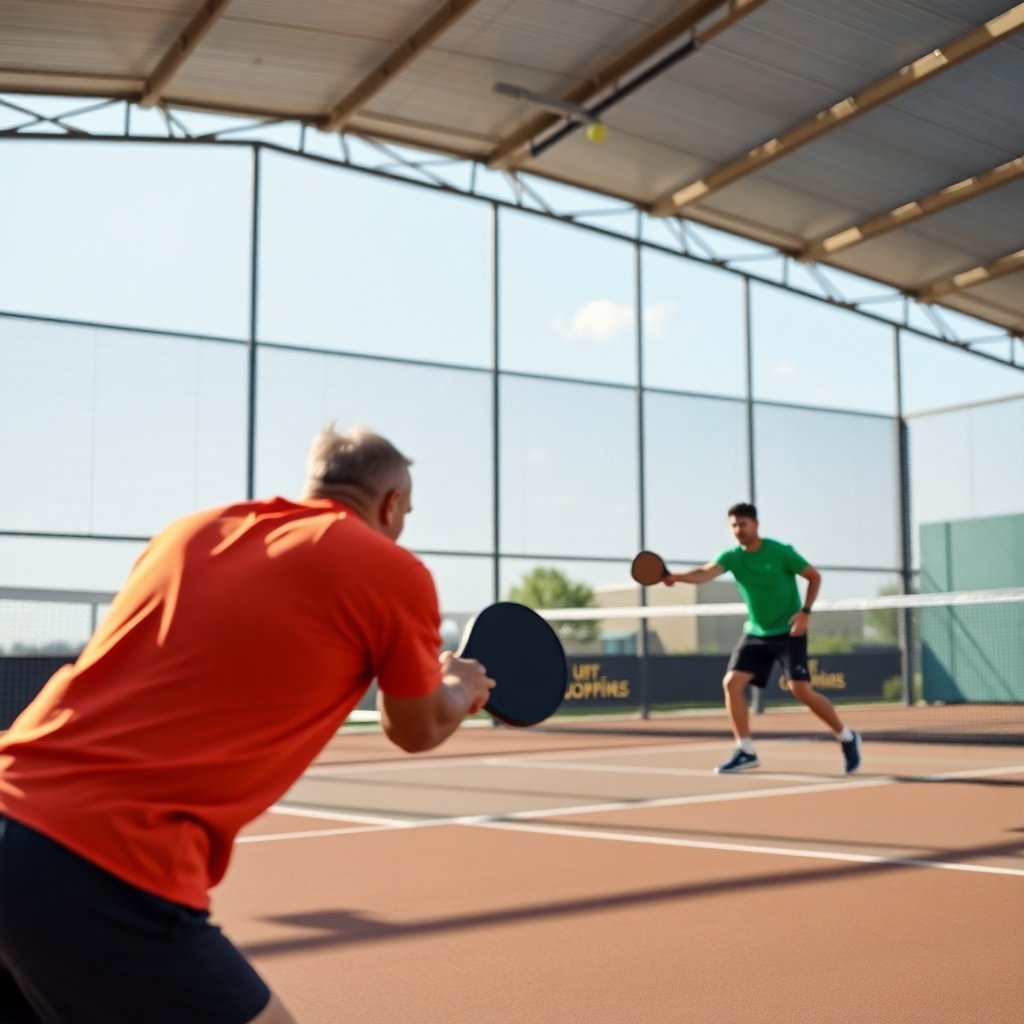
You grabbed a pack of outdoor balls for your indoor session, and now the ball is bouncing weird and flying erratically. Sound familiar? The indoor vs outdoor distinction in pickleball matters more than most new players expect.
This isn't just about location — it's about the ball, the surface, your gear, and even your strategy. Here's a complete breakdown of what changes and what you need to know to play well in both environments.
The Ball Is the Biggest Difference
The most important variable in indoor vs outdoor pickleball is which ball you're using. They're not interchangeable.
Outdoor balls have 40 smaller holes distributed evenly across the surface. The tighter hole pattern reduces wind drag and keeps flight predictable even in a breeze. They're also harder and heavier, which means a faster, more powerful game with a lower bounce. The Dura Fast 40 is the outdoor tournament standard — you'll see it on outdoor courts at every level.
Indoor balls have 26 larger holes. They're softer and lighter, which creates a slower, more controlled game with a higher, truer bounce. The Onix Pure 2 is the go-to indoor ball. Softer also means quieter — a real consideration in gymnasium settings where noise echoes.
Using the wrong ball for the environment doesn't just feel off — it fundamentally changes the way the ball bounces, reacts to spin, and travels through the air. An outdoor ball indoors is bouncing fast and low when you expect the higher, more predictable indoor bounce. An indoor ball outdoors gets pushed by the wind unpredictably and bounces differently on hard outdoor court surfaces.
Always match your ball to your setting. Carry both types if you play in multiple environments.
→ Shop outdoor pickleball balls on Amazon
→ Shop indoor pickleball balls on Amazon
Court Surfaces
Outdoor courts are typically asphalt or concrete, sometimes with a cushioned sports surface coating (the rubberized surface you see on many public courts). Harder surfaces mean the ball bounces lower and faster. The court texture is also more abrasive — balls wear faster outdoors, and shoes with durable outsoles matter more here.
Indoor courts are usually wood gymnasium floors or sport tile. The softer surface means a higher, more consistent bounce. Wood floors also require non-marking shoes — check before you play. Leaving scuff marks on a gym floor gets you thrown out of facilities fast.
Some facilities use dedicated pickleball court tiles over concrete — these behave similarly to wood gym floors for bounce purposes but are more durable for outdoor-style conditions.
How Your Game Needs to Adapt
Playing Outdoors
Wind changes everything. Even a light breeze can push a lob wildly off course or create unexpected float on a shot that would normally land in. Adjust accordingly:
- Keep the ball lower to minimize wind exposure
- Take pace off lobs — if you're going to lob, hit it faster and flatter than you would indoors
- Play more conservative dinks in wind; the ball will behave less predictably
- Be ready for unpredictable bounces, especially as the ball ages and becomes irregular
Sun is another outdoor variable. Court orientation matters — east-west courts create sun problems at certain times of day. Know where the sun is and adjust your serve position and toss accordingly.
Temperature affects the ball's behavior. Cold weather makes outdoor balls stiffer and less responsive; hot weather makes them more lively. Balls also crack in cold weather — carry a few extras for cold-day sessions.
Playing Indoors
The game slows down. The softer ball and higher bounce create a more deliberate pace. Dinking battles tend to be longer and more nuanced. This can be great for working on technique — the extra time indoors gives you a fraction more reaction time to execute properly.
Touch becomes more important. The indoor ball rewards soft hands and placement. Aggressive power play that works outdoors can overpower your indoor shots. Dial back the pace and focus on placement.
Sound is amplified. Gym environments echo. The crack of hard shots rings out in a way that doesn't happen outdoors. This isn't a gameplay factor, but it's something to be aware of for gym etiquette — softer play is often appreciated in shared facilities.
Gear Adjustments
Shoes
Court shoes are important for both, but indoor shoes should have non-marking soles. Many court shoe lines have indoor-specific versions with gum rubber outsoles. If you're playing regularly in gyms, a dedicated pair of indoor court shoes is worth having.
Outdoor shoes can have more aggressive tread for grip on asphalt and concrete. The added traction helps on slightly wet or dirty court surfaces that are common outdoors.
→ Shop indoor court shoes for pickleball on Amazon
Paddle
Your paddle doesn't need to change between indoor and outdoor play, but be aware that paddle performance can vary slightly with temperature. Carbon fiber faces get slightly stiffer in cold outdoor conditions. If you play in both environments frequently and notice inconsistency, it's the ball — not the paddle — that's the main variable.
Clothing
Outdoor play in summer: Breathable, UV-protective fabric. Long outdoor sessions in direct sun are real physical conditions — moisture-wicking fabric and sun protection matter.
Indoor gyms: Can run cold in winter mornings. Layering is useful — start warm, strip down as you heat up. Indoor gyms in summer can be quite warm without AC. Breathable fabric is always a win.
Comparison Table
| Factor | Indoor | Outdoor | |---|---|---| | Ball | 26 holes, soft, lighter (Onix Pure 2) | 40 holes, hard, heavier (Dura Fast 40) | | Court surface | Wood or sport tile | Asphalt or concrete | | Bounce | Higher, more consistent | Lower, faster | | Game pace | Slower, more touch-oriented | Faster, more power-oriented | | Wind factor | None | Significant variable | | Shoe requirement | Non-marking gum rubber | Durable, tread grip | | Ball durability | Balls last longer | Balls crack, wear faster |
Which Is Better for Learning?
For beginners, indoor pickleball is often the better learning environment. The higher, more consistent bounce gives you a fraction more time to react and execute. The slower pace rewards the deliberate technique building that beginners need. And the controlled environment — no wind, consistent lighting, predictable court — removes variables that complicate learning.
Outdoor pickleball is where most people end up playing most often simply because there are more outdoor courts available at parks and recreation facilities. That's fine — just make sure you're using the right ball and adjusting your expectations for the faster, more variable game.
Building a Versatile Game
The best players move fluidly between indoor and outdoor without losing their game. The key is:
- Carry both ball types and use the right one for the environment
- Adjust your pace — indoor calls for touch, outdoor calls for adaptation
- Practice in both settings to build versatility
- Invest in proper footwear for each setting if you play in gyms regularly
The core skills transfer between settings — footwork, dinking, placement, patience. The adjustments are real but not drastic. Once you've played both enough to feel the differences, switching contexts becomes automatic.
FAQ
Can I use outdoor balls indoors or vice versa?
Technically yes, but you shouldn't if you can avoid it. Outdoor balls indoors bounce lower and faster than the game is designed for on gym surfaces. Indoor balls outdoors get pushed by wind and behave erratically. Always match ball to setting.
Do I need separate paddles for indoor and outdoor play?
No. Your paddle works in both environments. The ball and surface are the variables, not the paddle. If you notice your game feeling different between settings, it's almost always the ball.
Why are outdoor balls louder?
Outdoor balls are harder plastic with a denser construction, which creates a sharper, louder crack on contact. Indoor balls are softer, which creates a more muted sound. This is why gyms often require indoor balls — the noise reduction is significant in enclosed spaces.
Which type of pickleball do tournaments use?
Most USAPA-sanctioned indoor tournaments use approved indoor balls; outdoor tournaments use approved outdoor balls. Both have USAPA approval lists. The Onix Pure 2 (indoor) and Dura Fast 40 (outdoor) are the most common tournament standards.
Does the surface type affect strategy beyond bounce height?
Yes. Outdoor concrete/asphalt is slightly irregular — balls can skip unpredictably, especially with wind or at low angles. This makes consistent low shots slightly higher-risk outdoors. Indoors, the surface is smooth and predictable, so consistent low shots are higher percentage.
The Bottom Line
The indoor vs outdoor distinction matters most in three areas: the ball you use, the shoes you wear, and the pace you play at. Get these right and the transition between environments is straightforward.
If you're new to pickleball and building your gear kit, our complete beginner's guide covers everything you need — paddles, balls, shoes, and where to find courts. And once you're on the court, the how-to-dink guide will give you the foundation of the most important shot in the game.
As an Amazon Associate we earn from qualifying purchases. This article contains affiliate links; if you buy through them we may earn a small commission at no additional cost to you.