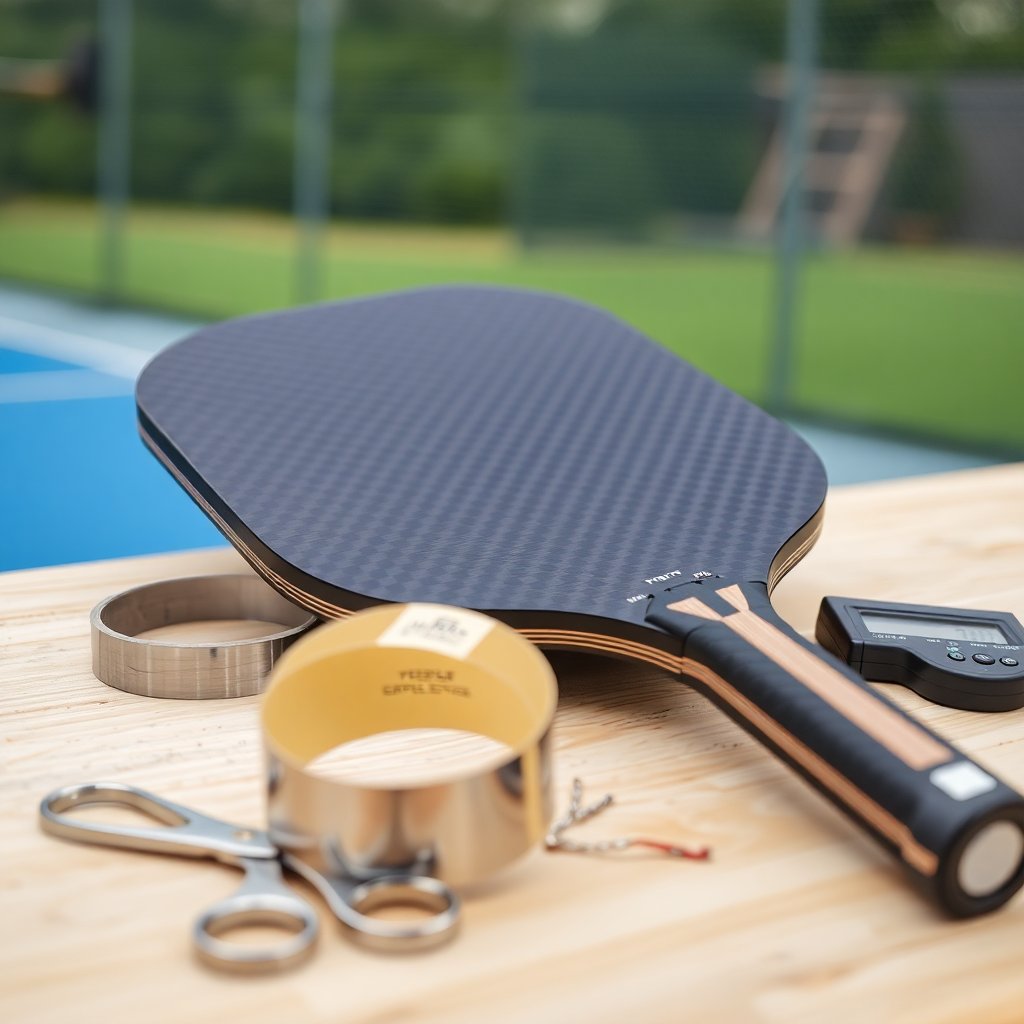
Most players never touch the paddle they bought. That is fine, but it leaves one of the cheapest upgrades in the sport on the table. A few dollars of lead tape, applied in the right spot, can make a light paddle more stable on blocks, add pop to drives, or shift the balance so the paddle feels quicker in hand battles. Pros and serious amateurs tinker with tape constantly, and the process is reversible if you do not like the result.
This guide explains what lead tape actually changes, where to put it, how much to start with, and what the USA Pickleball equipment rules say about it.
Affiliate disclosure: Served Ink earns a commission on qualifying purchases made through Amazon links in this article, at no extra cost to you.
What Lead Tape Actually Does
Adding weight to a paddle changes three things, and where you put the weight decides which one changes most.
Static weight. The number on the scale. More mass means more momentum through the ball and less deflection when a hard drive hits your paddle, but it also means more effort to swing and more strain on the arm over a long session.
Swing weight. How heavy the paddle feels when you swing it. Weight near the tip increases swing weight much more than the same weight near the handle. A higher swing weight usually means more power and plow-through, with slower hand speed.
Twist weight (stability). How much the paddle resists twisting when you hit off-center. Weight on the sides of the head increases twist weight, which effectively widens the sweet spot and makes mishits feel more solid.
A good rule of thumb: a few grams at the top changes how a paddle swings; a few grams on the sides changes how it forgives; a few grams in the handle changes how it balances.
Where to Put the Tape
Think of the paddle face as a clock, with the tip at 12 o'clock and the handle at 6 o'clock. Tape goes on the edge guard or just inside it, not across the hitting surface.
12 O'Clock (the Tip)
Effect: Raises swing weight, adds power and drive depth, makes the paddle feel more head-heavy.
Good for: Players with a light paddle who feel like their drives and serves lack depth, or who get pushed around in fast exchanges.
Watch out for: Slower hands at the kitchen line. Too much at the tip can also add stress to the elbow, so go slowly.
3 and 9 O'Clock (the Sides)
Effect: Increases twist weight and stability. Off-center blocks and resets stay truer, and the paddle twists less in your hand on mishits.
Good for: Players who frame balls or feel the paddle wobble on blocks, and anyone with a narrow, elongated paddle that feels unforgiving.
Watch out for: Placing tape too low on the sides acts more like handle weight and gives less stability benefit. Start around the widest part of the face.
2 and 10 O'Clock (Upper Corners)
Effect: A blend of the two above. Adds some power and some stability at the same time.
Good for: All-court players who want a little of everything. This is a popular starting point for elongated power paddles.
The Handle
Effect: Adds static weight while moving the balance point toward your hand, so the paddle feels quicker. Often used to counterbalance tape added at the head.
Good for: Players who added head weight and now feel the paddle is sluggish, or who want more mass without more swing weight.
How: Wrap thin tape under the grip or overgrip, or place strips along the handle before re-gripping. Our paddle grip tape guide walks through removing and rewrapping a grip without wrecking it.
How Much to Add
Start small. Pickleball paddles are light enough that 2 grams is noticeable.
- First experiment: 2 to 4 grams total, split evenly between both sides or at the tip.
- Typical total for most players: 4 to 8 grams.
- Heavier customizations: Some advanced players go beyond 10 grams, usually counterbalanced in the handle. Most recreational players will not need this.
Rule of thumb for tape: Common lead tape strips are sold in rolls marked by weight per length, often around 1 gram per 4 inches for a standard width, but this varies a lot by brand. Weigh your strips on a small kitchen or jewelry scale instead of guessing.
Always apply symmetrically on the sides. If you put 2 grams at 3 o'clock, put 2 grams at 9 o'clock. Uneven weight makes the paddle feel like it wants to rotate.
→ Shop pickleball lead tape on Amazon
→ Shop small digital gram scales on Amazon
Lead Tape vs Tungsten Tape
Lead tape is the classic option. It is inexpensive, soft, easy to cut and shape, and comes in rolls that last years. The downside is that it is lead, so wash your hands after handling it and keep it away from kids and pets.
Tungsten tape is denser than lead, so you get the same weight in a thinner, narrower strip. It is non-toxic and tends to cost more. Many players prefer it for edge guards where space is tight.
Pre-weighted strips and edge guard kits are increasingly sold for pickleball specifically. They are pricier per gram but come in clean, measured increments, which takes the guesswork out.
For most players, a roll of either kind lasts long enough to tune several paddles.
→ Shop tungsten weight tape strips on Amazon
Step-by-Step: Applying Tape
- Weigh the paddle first. Write down the starting weight so you can track what you add.
- Clean the edge guard. Wipe with rubbing alcohol and let it dry so the adhesive sticks.
- Cut strips to weight. Weigh each strip. Cut both side strips together so they match.
- Apply under or on the edge guard. Press firmly and smooth out any bubbles. Many players cover the lead with a strip of edge guard tape or electrical tape so it does not peel or catch on clothing.
- Play at least two sessions before changing anything. Your hands adapt quickly, and first impressions can be misleading.
- Adjust in small steps. Add or remove about a gram at a time.
Is Lead Tape Legal in Tournaments?
Generally, yes, within limits. USA Pickleball's equipment rules list a short set of alterations players are allowed to make to an approved paddle, and weighted or lead tape on the edge has long been on that list alongside edge guard tape and grip changes. There are placement limits, too: older rule editions restrict how far tape and decals may extend inside the edge and above the grip, and the 2024 and 2025 updates tightened the wording around alterations.
Because the rulebook gets revised, check the current version before a sanctioned event. The USA Pickleball Equipment Evaluation Program is the place to confirm your paddle's approved status and the latest equipment standards. As a practical rule: keep tape on the edge, do not cover the hitting surface, and do not add anything that moves, detaches or alters the face texture.
Common Setups by Player Type
The soft-game specialist. Light, control-oriented paddle that gets bullied by hard drives. Try 2 grams at each of 3 and 9 o'clock. Blocks stay firmer without slowing your dinks.
The banger. Already has power but wants more depth on drives and serves. Try 2 to 3 grams at 12 o'clock. If hands start feeling slow, add a gram or two in the handle to rebalance.
The all-court player. Wants a bit more of everything. Try 1.5 to 2 grams at each of 2 and 10 o'clock.
The player with a sore arm. Be cautious. More weight increases the stress on your elbow and shoulder, especially at the tip. Some players find that a slightly heavier, more stable paddle actually feels better because it vibrates less on mishits, but changes should be small and gradual. If you already have pain, our guide to pickleball paddles and arm health covers what to look for, and anything persistent is worth a visit to a doctor or physical therapist.
Mistakes to Avoid
- Adding too much at once. Five grams at the tip can turn a nimble paddle into a club.
- Asymmetric placement. Uneven sides cause the paddle to twist on contact.
- Forgetting to cover the tape. Exposed lead tape peels, picks up dirt and can mark your hands.
- Judging after ten minutes. Give each change a couple of sessions.
- Not writing it down. Track grams and positions in your phone so you can recreate a setup you like on a new paddle.
When Tape Is Not the Answer
Lead tape fine-tunes a paddle. It does not fix the wrong paddle. If your paddle is badly delaminated, has a dead spot, or has lost its grit, more weight will not help much. Our guide on paddle care and when to replace covers the signs that it is time for a new one.
Similarly, if you are adding a lot of tape to make a light paddle feel like a heavy one, you may simply be happier with a heavier paddle from the start.
Gift Idea for the Tinkerer
With the holidays coming, a small customization kit makes a cheap, genuinely useful stocking stuffer for a pickleball player: a roll of lead or tungsten tape, a pocket gram scale, a pack of overgrips and some fresh edge guard tape. It costs less than a new paddle and gives them something to experiment with all winter.
→ Shop pickleball overgrips on Amazon
The Bottom Line
Lead tape is the easiest way to make a paddle feel like it was built for you. Remember the simple map: tip for power, sides for stability, handle for balance. Start with 2 to 4 grams, apply it symmetrically, cover it, and play a few sessions before changing anything else. Check the current USA Pickleball rules before tournaments, and keep a note of what works. A few grams in the right place can be the difference between a paddle you tolerate and one you trust.
As an Amazon Associate we earn from qualifying purchases. This article contains affiliate links; if you buy through them we may earn a small commission at no additional cost to you.