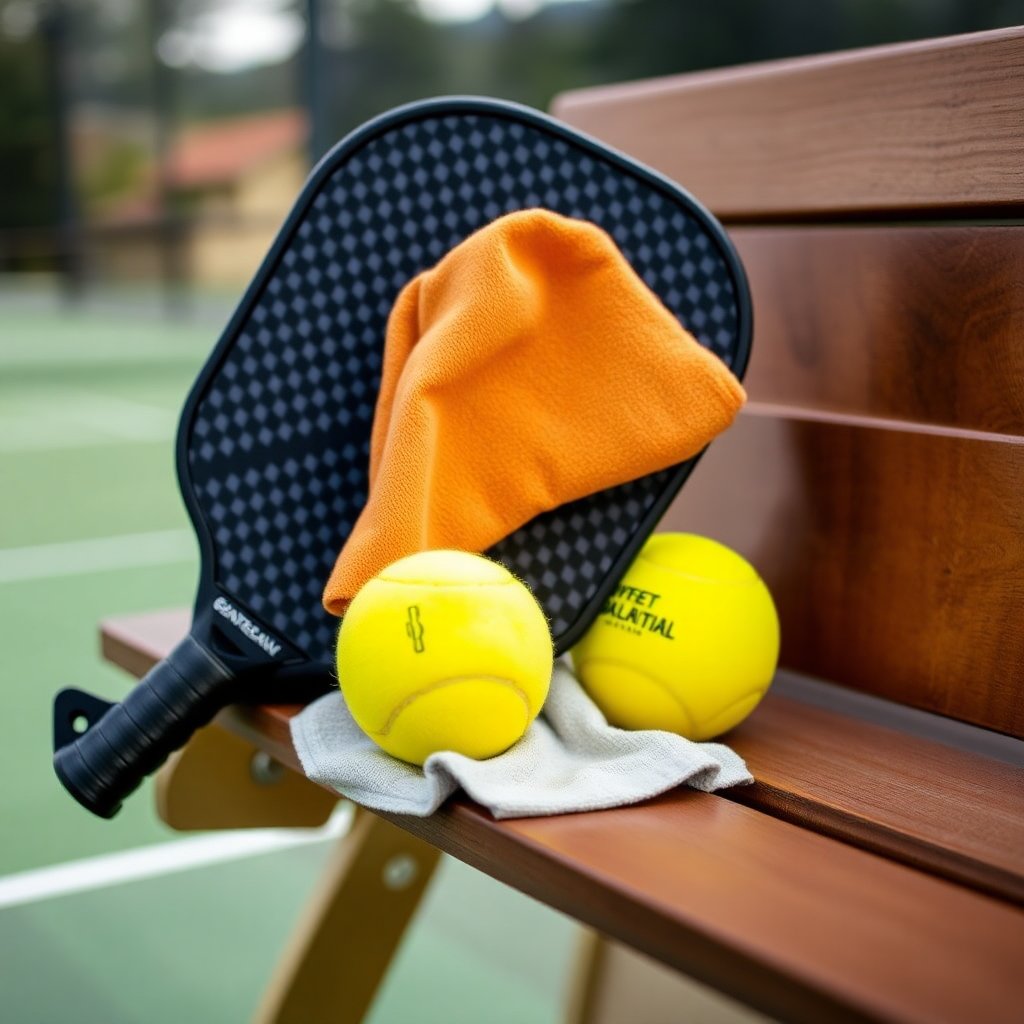
Most players will happily spend 150 dollars or more on a paddle and then toss it in a hot car trunk, never wipe the face, and keep playing with it long after the core has gone soft. A little routine care keeps your paddle playing the way it did on day one, protects its spin, and tells you when it is truly time for a replacement instead of guessing.
This guide covers the full maintenance picture: cleaning the face, restoring grit, protecting edges, storing your paddle through hot summers and cold winters, and the specific signs that a paddle has reached the end of its life.
Affiliate disclosure: As an Amazon Associate we earn from qualifying purchases. Some links below are affiliate links, which never change what we recommend or what you pay.
Why Paddle Care Matters More Than It Used To
Modern paddles are built differently than the flat, smooth models of a few years ago. Most mid and upper tier paddles now use a raw carbon fiber or textured fiberglass face over a polymer honeycomb core, and many are thermoformed with foam-injected edges. Those materials deliver more spin and power, but they also pick up ball residue, lose texture with use, and respond poorly to extreme heat.
There is also a rules angle. USA Pickleball's newer spin rate testing, which we broke down in our guide to the 2,100 RPM spin rule, means texture and surface condition are under more scrutiny than ever. You should never try to add grit or alter a paddle surface to gain spin, since altered paddles can be ruled illegal in sanctioned play. Cleaning a face to remove residue is fine. Sanding, spraying, or applying aftermarket grip coatings is not. You can check whether a model is approved on the official USA Pickleball equipment list.
How to Clean a Pickleball Paddle Face
Ball residue is the silent spin killer. Outdoor balls in particular leave a thin film of plastic and dust that fills in the texture of a raw carbon face. After a few weeks of regular play, you will notice the ball skidding off the face on serves and rolls instead of grabbing.
The Quick Post-Session Wipe
After every session, wipe the face with a slightly damp microfiber cloth and let it air dry. This takes 30 seconds and prevents most buildup from bonding to the surface. Keep a small cloth in your bag so it actually happens.
The Weekly Deep Clean
Once a week for regular players, use a dedicated paddle eraser or cleaning block. These are rubber blocks that lift residue out of the texture without abrading the surface. Rub in small circles across the whole face, paying extra attention to the sweet spot where most contact happens. Then wipe with a damp cloth and dry.
→ Shop pickleball paddle erasers and cleaning kits on Amazon
What to Avoid
- Harsh solvents such as acetone, paint thinner, or strong alcohol solutions, which can damage the resin and graphics.
- Abrasive pads or sandpaper, which remove texture and may make the paddle non-compliant.
- Soaking the paddle or running it under the tap, since water can work into the edge seam.
- Magic erasers on raw carbon, which are mildly abrasive. Some players use them on painted fiberglass faces, but test a small area first and check the manufacturer's guidance.
If your paddle maker sells or recommends a specific cleaner, use that. Several brands now publish care instructions and may void a warranty if the face has been treated with unapproved products.
Protecting the Edges
The edge guard takes a beating from low scoops, ground contact on digs, and accidental clashes with your partner's paddle. A chipped edge is mostly cosmetic at first, but cracks can let moisture into the core over time.
Edge guard tape is a cheap insurance policy. It is a thin protective strip that wraps around the perimeter and absorbs scuffs. It also adds a small amount of weight to the head, which some players like for stability and plowthrough. If you add tape, add it evenly around the whole perimeter or at matching positions so you do not throw off the balance, and remember that it slightly increases total weight.
→ Shop pickleball paddle edge guard tape on Amazon
Edgeless paddles are a separate category. They skip a traditional guard entirely and are more vulnerable to chips, so a protective cover becomes more important.
Grip Maintenance
Your grip is the part of the paddle you touch the most, and it wears out the fastest. A slick, compressed grip makes you squeeze harder, which costs you touch on dinks and can contribute to forearm strain.
Overgrips should be swapped every few weeks to a few months depending on how often you play and how much you sweat. Replacement grips underneath should be changed when they lose their cushion or start to unravel at the butt cap. We cover wrapping technique, thickness, and grip sizing in our full paddle grip tape guide.
Between changes, let the handle air out after play rather than zipping it into a bag while damp.
How to Store Your Paddle
Storage is where most paddles get quietly damaged.
Heat Is the Biggest Enemy
A car interior can climb far above outdoor air temperature on a sunny day. Prolonged heat can soften adhesives, stress the bond between the face and the core, and in thermoformed paddles may contribute to warping or delamination. Many manufacturers specifically warn against leaving paddles in hot vehicles. Bring your paddle inside with you, and keep it out of direct sunlight on court during breaks.
Cold Weather Storage
Cold is less damaging than heat, but it does change how a paddle plays. Polymer cores and the balls themselves get firmer in the cold, so the paddle can feel stiffer and less forgiving. Avoid storing paddles in an unheated garage through winter, and let a cold paddle warm up to room temperature before hard play. Our cold weather pickleball gear guide has more on keeping your hands, balls, and body ready when temperatures drop.
Use a Cover or a Padded Bag Sleeve
A neoprene or padded paddle cover protects the face from scratches by keys, shoes, and other paddles in your bag. If you carry two paddles, keep them in separate sleeves so the textured faces do not grind against each other.
→ Shop padded pickleball paddle covers on Amazon
Signs Your Paddle Is Dead or Damaged
Every paddle eventually wears out. How fast depends on how often and how hard you play, the build quality, and how well it has been cared for. A recreational player on the court twice a week may get a year or more from a quality paddle, while a daily competitive player might notice changes in a few months. Treat those as rough ranges, not guarantees.
Here are the signs to watch for.
1. A Sudden Jump in Power and Pop
This sounds like a good thing, but it is often the first warning sign of core crush. When the honeycomb cells under the sweet spot break down, the face can flex more and act like a trampoline. Balls start flying long on drives and your soft game becomes harder to control. If your paddle suddenly feels hotter than it used to, pay attention.
2. A Dead Spot or Inconsistent Feel
The opposite problem also happens. A patch of the face that feels mushy, quiet, or lifeless compared to the rest is a classic symptom of internal damage. Bounce a ball gently on different areas of the face and listen. A healthy paddle sounds fairly uniform across the sweet spot. A damaged area often sounds duller or has a distinctly different pitch.
3. Rattling or Buzzing
Shake the paddle next to your ear. Any rattle means something has broken loose inside, such as debris from a cracked core or a separated edge foam. A buzzing feel on contact can point to a delaminating face.
4. Visible Bubbles, Soft Spots, or Separation
Press gently around the face with your thumb. If you feel a soft area that gives way, or see a raised bubble or a line where the face is lifting off the core, the paddle is delaminating. Check the area just above the throat and around the edges, which are common failure points on thermoformed paddles.
5. Texture Is Gone
If your face is clean but the ball still slides off on serves and topspin rolls, the texture has likely worn smooth. This is normal wear, and it is often the deciding factor for spin-heavy players. Since you should not re-texture a paddle yourself, a smooth face means it is time to retire it to a practice role or replace it.
6. Cracks in the Handle or Throat
Any visible crack in the handle, throat, or frame is a safety and performance concern. Stop using the paddle in hard play.
Warranty Before You Replace
Before buying new, check the manufacturer's warranty. Many brands cover delamination and core failure for a set period, often six months to a year or more, and some have extended programs for premium models. Keep your receipt or order confirmation, register the paddle if the brand offers it, and avoid modifications that could void coverage. Photos of the damage and a short description of when it started usually speed up a claim.
A Simple Paddle Care Routine
To keep it easy, here is a routine that works for most players:
- Every session: Wipe the face with a damp microfiber cloth, let the grip air dry, store the paddle in a cover.
- Weekly: Use a paddle eraser on the face, inspect the edges, and do a quick tap test for dead spots.
- Monthly: Check the grip and overgrip, look for bubbles or soft spots, and shake test for rattles.
- Always: Keep it out of hot cars and direct sun, and never sand or chemically treat the surface.
When to Retire It to Backup Duty
A paddle that has lost some texture but has no structural damage still has value. Plenty of players keep an older paddle as a drilling paddle, a loaner for friends, or a backup in the bag for tournaments. A paddle with core crush, delamination, or cracks is a different story, since it plays unpredictably and may not be legal in sanctioned events.
The Bottom Line
Paddle care is not complicated, and it pays off in consistent spin, predictable power, and a longer life for a piece of gear that is not cheap to replace. Wipe it after every session, deep clean it weekly, protect the edges, keep it out of hot cars, and learn the warning signs of a dead core. When those signs show up, check your warranty first, then shop for a replacement with confidence that you are not throwing away a paddle that still had plenty of games left in it.
As an Amazon Associate we earn from qualifying purchases. This article contains affiliate links; if you buy through them we may earn a small commission at no additional cost to you.