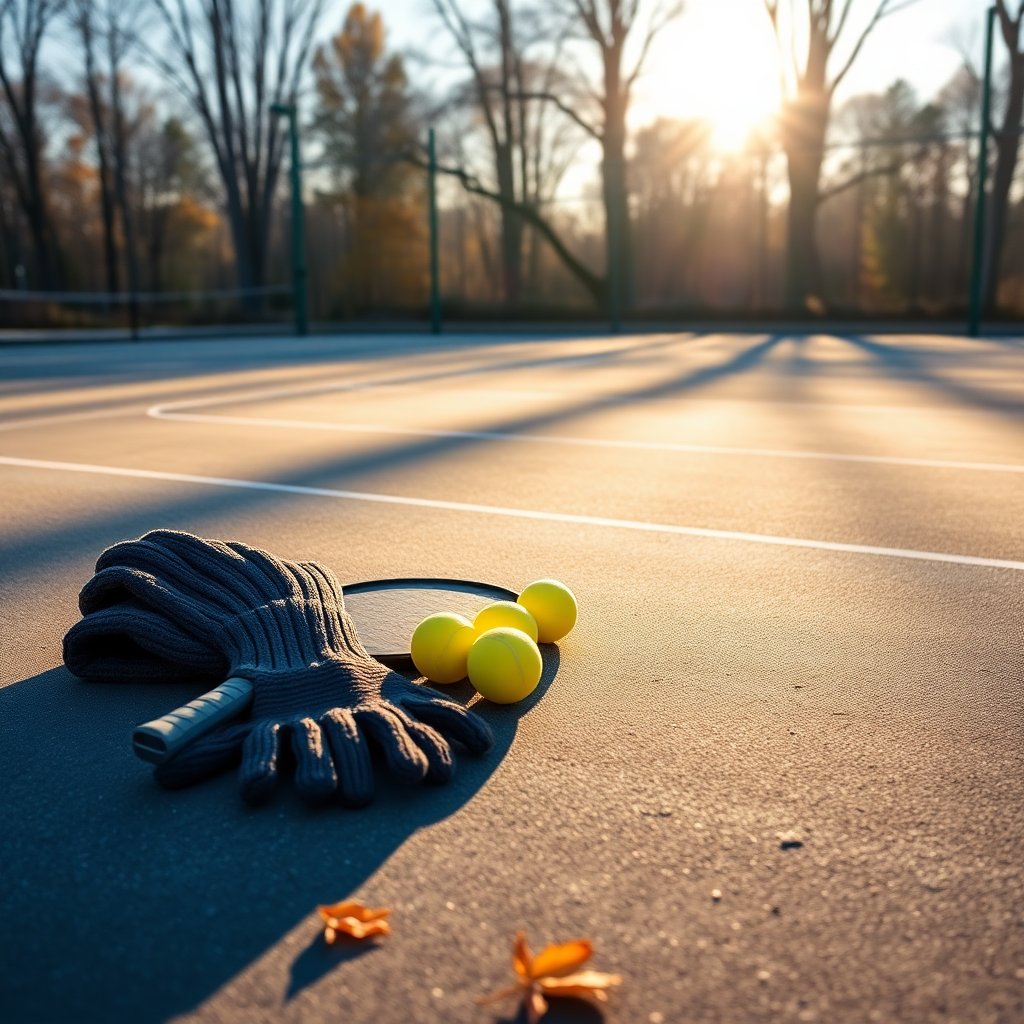
Cooler mornings are already creeping into the fall schedule, and for a lot of outdoor players that raises the same stubborn question every year: keep playing outside as the thermometer slides, or pack it in until spring? Plenty of pickleball players refuse to quit, and the ones who stay comfortable through November and December are not tougher than everyone else. They are simply better equipped.
This guide covers the cold-weather gear that genuinely changes whether an hour on a frosty court is miserable or fun, plus a few things that matter more than most players expect once the temperature drops below comfortable.
As an Amazon Associate we earn from qualifying purchases. If you want the short version, a pair of racquet-friendly gloves, a moisture-wicking base layer, and a fresh sleeve of outdoor balls will get you most of the way there. You can → Shop cold-weather pickleball gear on Amazon and read the listing details before you commit.
Start With Layers, Not One Heavy Coat
The single most common cold-weather mistake is dressing like you are going sledding. A thick coat feels warm for the first two minutes, then traps sweat, restricts your swing, and leaves you clammy and cold by the third game. Pickleball is active. You need to manage heat, not just block it.
The reliable formula is three thin layers you can shed and add back:
- Base layer. A snug moisture-wicking top pulls sweat off your skin. Cotton is the enemy here, because once it soaks through it holds the cold against you for the rest of the session.
- Mid layer. A light fleece or quarter-zip traps warmth without bulk and unzips fast when a long rally heats you up.
- Outer layer. A wind-resistant vest or thin shell blocks the breeze that does most of the actual chilling on an exposed court.
The beauty of layering is control. You peel the shell during a hard game and pull it back on between matches when you cool down. If you want to build the base of that system properly, our full breakdown of pickleball apparel and clothing walks through fabrics and fit for court movement.
→ Shop moisture-wicking base layers on Amazon
Gloves Are the Gear That Makes or Breaks the Day
Cold hands are the number one reason players quit early. Fingers stiffen, grip strength fades, and paddle control goes with it. A good pair of gloves designed for racquet sports solves this without turning your hand into a mitten you cannot feel the paddle through.
Look for gloves that prioritize dexterity and grip over pure insulation. You want to still feel the handle and adjust your grip mid-point, so bulky ski gloves are the wrong tool. Many players use a single glove on the paddle hand, or thin full-finger gloves on both. On the coldest mornings, a pair of disposable hand warmers tucked in a jacket pocket between games keeps your fingers loose enough to actually play.
What to prioritize: thin insulation, a tacky palm, full-finger coverage, and a snug fit that does not bunch when you close your hand around the grip.
→ Shop pickleball and racquet-sport gloves on Amazon
The Ball Changes in the Cold, So Change Your Ball
This is the part newer players almost always overlook. Cold temperatures make the plastic in a pickleball more brittle, which means balls crack far more easily in freezing conditions than they do in summer. A ball that survived three months of July play can split on the first hard drive in December.
For cold outdoor sessions, stick with a hard outdoor ball, which handles low temperatures and rough courts better than a soft indoor ball. Bring more of them than you think you need, because a cracked ball in the cold is not a rarity, it is the norm. If you want the current picks, our guide to the best outdoor pickleball balls covers which ones hold up.
The ball will also play a touch differently when it is cold and stiff. Expect a slightly deader bounce and a bit less pop, so plan for a hair more swing and give long rallies a little extra patience.
Footwear and Traction Matter More Than You Think
Cold outdoor courts get slick. Morning frost, dew, and the occasional damp patch turn a familiar court into a slip hazard, and cold muscles are more injury-prone to begin with. According to OrthoCarolina, cold-weather play raises the risk of foot and ankle injuries, which makes traction and a proper warm-up non-negotiable rather than optional.
Two practical moves make a real difference:
- Inspect the court first. Wipe away frost or standing water with a towel before you start. A wet baseline is an ankle waiting to roll.
- Wear shoes with real court traction. Worn-out outsoles that were fine in summer become genuinely dangerous on a cold, damp surface. If your current pair is smooth, it is time. Our roundup of the best pickleball court shoes covers models with the grip you want.
Thermal, cushioned, moisture-wicking socks round this out. Cold feet ruin footwork, and footwork is most of pickleball.
→ Shop thermal athletic socks on Amazon
Warm Up Longer Than Feels Necessary
Warm muscles are the cheapest injury insurance there is, and cold air means the warm-up you skip in summer becomes essential in fall. A brisk walk or a couple of minutes of light jogging before you pick up the paddle primes your legs and shoulders so the first hard sprint to the kitchen does not pull something.
Once you are playing, cold hands and stiff joints reward a slower, more controlled game early on. Ease into your power shots. Let the dinks and resets get your timing dialed in before you start ripping drives, and your body will thank you an hour later.
Don't Forget the Small Stuff
A few inexpensive extras punch above their weight in the cold:
- A beanie or ear cover. You lose real heat off your head, and cold ears are a surprisingly effective way to end a session early.
- Hand warmers. Cheap, disposable, and the difference between playable and painful on a sub-40 morning.
- A thermos. Warm fluids between games keep your core temperature up better than an icy water bottle.
- A gym-floor backup plan. When it gets genuinely too cold or the court stays frozen, moving indoors is the smart call. If you make that jump, remember the ball changes again, and our guide to the best indoor pickleball balls covers what to swap to.
→ Shop pickleball cold-weather accessories on Amazon
How Cold Is Too Cold
There is no official cutoff, and a lot depends on wind, sun, and how you dress. As a rough guide, most reasonably geared players stay comfortable down into the 40s, start to struggle in the 30s, and hit the point of diminishing returns once the surface risks staying frozen or icy. Below freezing, court safety and brittle balls become the real limiters, not your willingness to tough it out.
The honest rule is to listen to your body and the court. If the surface is slick and will not dry, or your hands go numb through good gloves within a few minutes, that is the day to head indoors rather than push it.
The Bottom Line for Fall and Winter 2026
Staying on the court as it gets cold is mostly a gear problem, and it is a solvable one. Layer thin and shed as you heat up, protect your hands first because cold fingers end more sessions than cold anything else, switch to a hard outdoor ball and carry spares, and respect the traction and warm-up that cold, damp courts demand.
Get those four things right and there is no reason to hang up the paddle in October. → Shop cold-weather pickleball essentials on Amazon and you will still be playing while everyone else is waiting for spring.
This article is for general informational purposes and reflects gear available as of publication. It is not medical advice. Cold-weather exercise carries injury risk, so warm up properly and talk to your doctor if you have any health concerns. Prices, availability, and product specs change frequently, so verify current listing details before purchasing.
As an Amazon Associate we earn from qualifying purchases. This article contains affiliate links; if you buy through them we may earn a small commission at no additional cost to you.