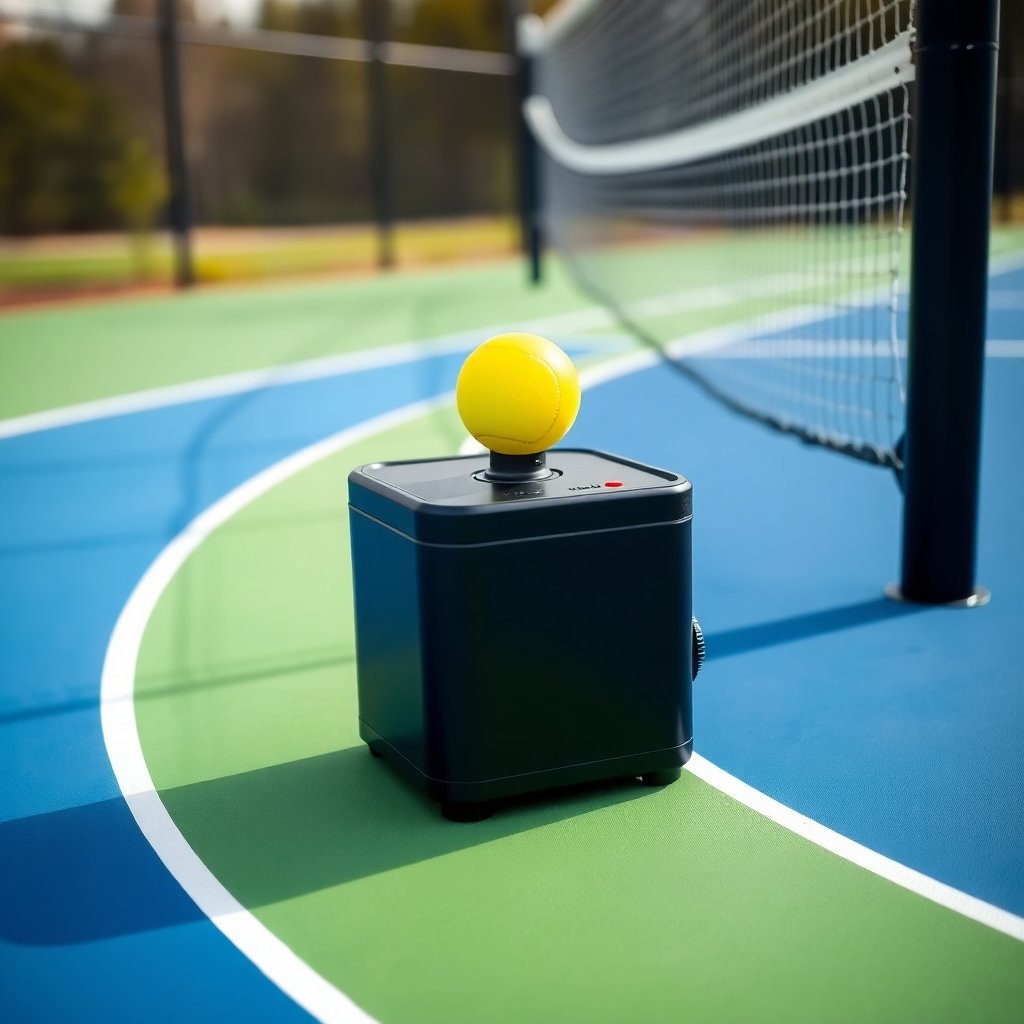
Every serious pickleball player eventually hits the same wall: the drills that actually move your game forward are the hardest ones to practice alone. You can shadow-swing a third shot drop a hundred times, but nothing replaces hitting real balls fed to the same spot until the motion becomes automatic. That is exactly the gap a ball machine fills, and 2026 has been the strongest year yet for options at nearly every price point.
A machine is not a small purchase, so the goal here is to help you match the right one to how you actually play, not to talk you into the most expensive box with the flashiest app. This guide breaks down what matters, walks through the standout models for 2026, and flags the traps that turn a training tool into an expensive closet ornament.
As an Amazon Associate we earn from qualifying purchases. If you already know you want one and just need a proven all-rounder, you can → Shop pickleball ball machines on Amazon and compare current listings, then come back for the details that separate a good buy from a regret.
Who Actually Needs a Ball Machine
A machine earns its keep for players committed to improvement who cannot always find a partner at the level or schedule they need. According to Pickleheads, machines are especially valuable for anyone who wants to work a specific skill repeatedly without waiting on a live hitting partner. That is the honest use case: repetition on demand.
Where a machine shines is grooving the shots that reward volume. Resets, dinks, drives to a fixed target, and the notoriously fussy third shot drop all improve dramatically when you can feed yourself two hundred reps in twenty minutes. Where it helps less is reading pace, spin, and disguise from a live opponent, which no machine fully replicates. Treat it as a drilling tool, not a substitute for real games.
If you play three or more times a week, take lessons, or find yourself the strongest player in your regular group with no one to push you, a machine likely pays for itself in a season. If you play casual social pickleball twice a month, the money is better spent on paddles, shoes, and court time.
The Specs That Actually Matter
Marketing sheets bury the four numbers that decide whether you will love a machine or resent it.
Ball capacity. More balls means fewer interruptions to reload. Entry machines hold around 45 to 85 balls, while club-grade units carry 125 to 150. A larger hopper matters more than beginners expect, because stopping to refill every ninety seconds breaks the rhythm that makes drilling effective.
Maximum speed and spin. Look for a top speed of at least 30 mph, with premium machines reaching 60 to 75 mph. Spin is the bigger differentiator in 2026. Topspin and backspin let you rehearse realistic dinks and drives, and the better units add sidespin. Cheaper models often feed flat only, which is fine for footwork but limited for shot realism.
Oscillation. This is how the machine moves the ball around the court. Random or two-line oscillation forces you to move and reset your feet between shots, which is where the real training value lives. A machine that only fires to one spot is useful for grooving a single stroke but will not build the movement patterns you need in a game.
Battery life. Cordless is the norm now, but runtimes vary from about two hours to eight. If your courts have no outlet, that number is not a footnote, it is the difference between a full session and packing up early. Many premium machines sell an external battery pack that roughly doubles playtime.
→ Shop pickleball ball machines with spin on Amazon
Budget Picks Under Roughly $700
You do not need to spend two thousand dollars to get real training value. Entry machines have improved sharply, and for many recreational players they are the smart buy.
The Lobster pickleball machine is the workhorse you will spot in clubs across the country. Depending on the model it carries roughly 125 to 135 balls, reaches around 60 mph, feeds topspin and backspin, and offers random or two-line oscillation, typically landing in the $660 to $700 range. It skips the app and gives you knobs instead, which plenty of coaches actually prefer because there is no menu to fight through mid-session.
For an even lighter option, the Erne Dink and Drop Pro sits around $949 but weighs only 17 pounds, holds about 45 balls, and tops out near 32 mph, which is aimed squarely at soft-game and reset practice rather than driving. It is a specialist, not an all-rounder, so buy it for what it does well.
The one rule at this tier: avoid the sub-$300 novelty machines. Their tiny hoppers and inconsistent feeds frustrate more than they train, and the money is wasted. A reliable outdoor ball collection and a decent machine beat a cheap machine every time.
→ Shop Lobster pickleball ball machines on Amazon
Premium and App-Controlled Machines
At the top end, machines have turned into programmable training partners. Expect prices from roughly $1,800 to $2,200, app control, custom drill sequences, and speeds that push a genuinely competitive pace.
The standout of the year is the Titan ONE, a portable suitcase-style unit that pairs an intuitive app with deep drill customization, a base capacity around 85 balls, and speeds up to 75 mph, usually near $2,049. The Erne machine competes closely at about $1,899 with a larger 150-ball hopper, spin, variable oscillation, and a four-to-eight-hour battery that makes it a favorite for long solo sessions. For the tech-forward buyer, AI-adaptive machines now adjust their feed pattern in response to where you are on the court, which turns a drill into something closer to a rally.
The premium tier makes sense if you drill often, want to program specific practice sequences, and value repeatable, precise feeds. If you mostly want to groove one or two shots, you are paying for software you will not fully use.
Battery, Portability, and Where You Will Actually Use It
The best machine on paper is useless if you dread hauling it to the court. Weight ranges from around 17 pounds for the lightest units to about 50 pounds for full-capacity models, and that gap decides whether the machine lives in your trunk or your garage. Look for a genuine wheel-and-handle design if you will move it any real distance.
Runtime deserves a second look too. If your local courts have power, a corded or hybrid option removes battery anxiety entirely. If not, prioritize a machine with four or more hours of runtime, or budget for the add-on battery pack most premium brands sell. Nothing kills a training habit faster than a machine that dies halfway through your session.
Do not forget the balls themselves. A machine chews through them, and cracked or out-of-round balls feed erratically. Keep a fresh supply on hand so the feed stays consistent.
→ Shop pickleball balls for machine practice on Amazon
How to Drill Without Wrecking Your Arm
A machine makes it easy to hit far more balls than you would in a game, and that volume cuts both ways. Repetitive high-rep sessions are exactly the pattern that can aggravate the elbow and shoulder, so ramp up gradually rather than firing off five hundred drives on day one. If you are prone to soreness, our guide to preventing and recovering from pickleball elbow is worth a read before you go all-in on machine drilling.
Structure beats mindless hitting. Pick two or three skills per session, run focused blocks with short rests, and mix soft-game work like dinking with harder drives so you are not hammering the same joint the same way for an hour straight. The point of the machine is quality repetition, not maximum repetition.
Making the Call for 2026
For most recreational players who drill a few times a month, a reliable sub-$700 machine like the Lobster covers the essentials without overspending. Players who train seriously, want programmable sequences, and can justify the cost will get more from a premium app-controlled unit like the Titan ONE or Erne. And anyone chasing a soft-game-only trainer has genuine lightweight specialists to choose from now.
Whatever tier you land on, prioritize a hopper large enough to keep your rhythm, enough speed and spin to match how you actually play, oscillation that makes you move, and a battery that survives a full session. Get those four right and a machine becomes the most consistent practice partner you will ever have.
Ready to start drilling on your own schedule? → Shop pickleball ball machines on Amazon and match the specs above to your game.
This article is for general informational purposes and reflects models and pricing available as of publication. It is not medical advice, and high-volume repetitive practice carries injury risk, so warm up, build volume gradually, and talk to your doctor if you have any health concerns. Prices, specs, and availability change frequently, so verify current listing details before purchasing.
As an Amazon Associate we earn from qualifying purchases. This article contains affiliate links; if you buy through them we may earn a small commission at no additional cost to you.