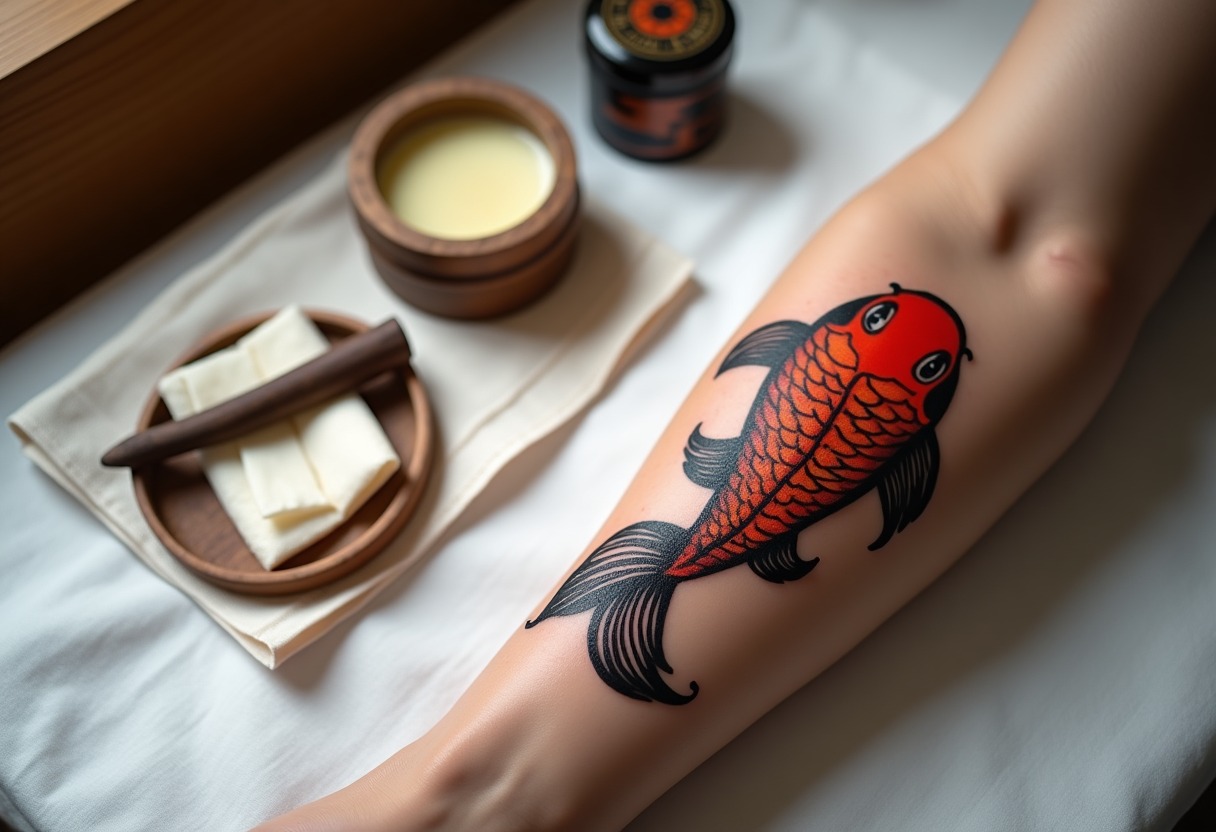
Your fresh irezumi represents months of planning, significant investment, and hours under the needle—but the work isn't finished when you leave the studio. Traditional Japanese tattoo aftercare methods, refined over centuries, offer proven approaches that protect your investment while honoring the cultural significance of your piece.
Why Japanese Aftercare Methods Excel for Large-Scale Work
Japanese tattoo tradition emphasizes patience and gradual healing—principles that align perfectly with modern wound care science. Unlike Western tattoos often completed in single sessions, traditional irezumi typically requires multiple sessions spanning months or years, creating a healing methodology focused on long-term skin health rather than quick recovery.
The American Academy of Dermatology recognizes three distinct phases of wound healing: inflammatory, proliferative, and maturation. Traditional Japanese aftercare naturally accommodates all three phases through gentle, consistent care practices that avoid disrupting the healing process.
Japanese masters historically used natural ingredients readily available in their environment: rice water for gentle cleansing, seaweed extracts for mineral content, and specific oils for moisture retention. These ingredients complement rather than interfere with your skin's natural healing mechanisms.
The Four Pillars of Traditional Japanese Tattoo Care
Gentle Cleansing Rituals
Traditional Japanese aftercare begins with the concept of "kiyome"—purification through gentle cleansing. This involves washing your fresh tattoo twice daily with lukewarm water and mild, fragrance-free soap. The key difference from Western approaches lies in the technique: pat-washing rather than rubbing, using only fingertips rather than washcloths or sponges.
Modern antibacterial tattoo soaps work excellently within this framework. → Shop tattoo soap antibacterial on Amazon for products specifically formulated to cleanse without stripping natural oils. Apply soap to wet hands first, create a gentle lather, then apply to the tattoo with light patting motions.
Controlled Moisture Application
Japanese tradition emphasizes "shitsudo kanri"—moisture control—applying just enough hydration to prevent drying without creating excess moisture that breeds bacteria. Traditional practitioners used refined camellia oil, but modern alternatives provide superior results.
Apply a thin layer of → Shop healing ointment tattoo on Amazon twice daily during the first week, then transition to unscented moisturizer for weeks two through four. The amount should be barely visible—if you can see the product on your skin after application, you've used too much.
Breathing and Protection Balance
Traditional Japanese garments used natural fibers that allowed skin to breathe while providing protection from environmental contaminants. Modern aftercare maintains this balance through strategic use of breathable bandages during initial healing, then loose, natural-fiber clothing.
→ Shop tattoo bandages breathable on Amazon for medical-grade options that protect without creating moisture buildup. Remove bandages after 2-4 hours initially, then use them only when necessary for protection from clothing friction or environmental exposure.
Rest and Recovery Scheduling
Japanese culture emphasizes "yasumi"—purposeful rest—particularly crucial for large irezumi pieces that stress the immune system. Plan tattoo sessions around your schedule to allow 48-72 hours of reduced activity following each appointment.
Traditional vs. Modern Aftercare Methods Comparison
| Aspect | Traditional Japanese | Modern Western | Best Practice | |--------|---------------------|----------------|---------------| | Cleansing Frequency | Twice daily, gentle patting | Often excessive scrubbing | Follow traditional frequency with modern products | | Moisture Application | Minimal, natural oils | Heavy ointment layers | Thin layers, breathable formulas | | Bandaging Approach | Natural fiber wrapping | Plastic wrap or heavy bandages | Breathable medical bandages, limited duration | | Activity Restrictions | Complete rest for 3 days | Return to normal quickly | Modified activities for 48-72 hours |
Essential Products for Japanese-Inspired Aftercare
The right products bridge traditional wisdom with modern safety standards. Your aftercare kit should contain five essential categories, each serving a specific function in the healing process.
For cleansing, pharmaceutical-grade antibacterial soaps provide the gentle purification traditional methods sought through natural ingredients. These formulations remove bacteria and debris without disrupting the skin's pH balance or natural protective barrier.
Healing balms replace traditional oils while offering superior protective qualities. → Shop tattoo aftercare balm on Amazon for petroleum-free options that won't clog pores or interfere with oxygen exchange crucial for healing.
Once initial healing progresses past the weeping stage, transition to dedicated tattoo moisturizers. → Shop tattoo moisturizer unscented on Amazon for products specifically formulated to maintain skin elasticity without interfering with ink settling.
High-quality bandages serve as your modern equivalent to traditional cloth wrapping. Medical-grade, breathable options provide protection during vulnerable initial hours while allowing necessary air circulation for optimal healing.
Finally, loose, natural-fiber clothing completes your aftercare setup. Cotton and linen garments prevent fabric friction against healing skin while allowing air circulation—principles Japanese practitioners understood centuries before modern wound care science confirmed their effectiveness.
Advanced Techniques Most Aftercare Guides Miss
Temperature Therapy Integration
Traditional Japanese healing incorporates controlled temperature exposure to promote circulation and reduce inflammation. Modern application involves cool (not cold) water during cleansing for the first week, which constricts blood vessels and reduces swelling. After day seven, switch to lukewarm water to promote healthy blood flow.
Avoid hot showers entirely for the first two weeks. Hot water increases inflammation, opens pores excessively, and can cause ink to blur during the critical settling period.
Positioning Strategies for Large Pieces
Traditional irezumi often covers extensive body areas, requiring specific positioning strategies during healing. For back pieces, sleep on your stomach or side using multiple pillows to prevent direct pressure on the tattoo. Leg pieces benefit from elevation during rest periods—prop your leg above heart level for 15-20 minutes several times daily to reduce swelling.
Arm pieces require attention to clothing choice during healing. Sleeves should be loose enough to avoid fabric friction but not so loose that they catch on the healing tattoo during movement.
Nutrition Support Protocol
Japanese tradition recognizes the connection between internal health and external healing. Increase protein intake by 20-30% during active healing phases to support tissue repair. Traditional Japanese diet staples—fish, seaweed, and fermented vegetables—provide omega-3 fatty acids, minerals, and probiotics that support skin health.
Avoid alcohol completely for the first week and limit intake through week four. Alcohol impairs immune function, increases inflammation, and interferes with collagen synthesis necessary for proper healing.
FAQ
How long should I follow traditional Japanese aftercare methods for my irezumi? Traditional Japanese aftercare extends through the complete healing cycle, typically 4-6 weeks for surface healing and up to 4 months for deep tissue recovery. The first two weeks require the most intensive care with gentle cleansing twice daily and careful moisture management. Weeks 3-4 involve transitioning to regular moisturizing routines while maintaining protection from sun exposure and excessive moisture. Many Japanese tattoo masters recommend following modified aftercare practices for up to six months, particularly for large pieces that stress the immune system significantly.
Can I use traditional Japanese ingredients like rice water or camellia oil for aftercare? While traditional ingredients have cultural significance, modern pharmaceutical alternatives offer superior safety profiles and consistent results. Rice water can harbor bacteria if not prepared properly, and natural oils may contain impurities that interfere with healing. If you choose traditional ingredients for cultural reasons, ensure they're prepared in sterile environments and sourced from reputable suppliers. However, modern tattoo-specific products provide better infection prevention, controlled ingredient concentrations, and FDA oversight that traditional preparations cannot match.
What makes tebori tattoos require different aftercare than machine tattoos? Tebori technique creates different wound patterns than machine tattoos, requiring modified aftercare approaches. Hand-poked tattoos typically penetrate skin at more consistent depths and create less overall trauma to surrounding tissue. This often results in less swelling and shorter initial healing periods. However, tebori sessions frequently last longer than machine sessions, requiring more attention to aftercare consistency throughout extended healing periods. The hand-poked technique may also create different ink settling patterns, making proper moisture balance even more critical for optimal color retention.
Should I adjust aftercare based on the specific imagery in my Japanese tattoo? The imagery itself doesn't require different aftercare, but placement and size considerations do matter significantly. Large background pieces (backgrounds with clouds, waves, or wind patterns) often require multiple sessions and extended healing management. Dragon pieces that wrap around limbs need careful attention to movement restrictions and positioning during sleep. Cherry blossom or other detailed work may require extra attention to preventing picking or scratching, which can damage fine line work. The cultural significance of your piece should motivate consistent, respectful aftercare practices rather than requiring different products or techniques.
How do I know if my Japanese tattoo is healing properly using traditional methods? Proper healing follows predictable stages regardless of aftercare method. Days 1-3 show mild swelling, some fluid weeping, and tenderness—normal inflammatory responses. Days 4-7 involve scabbing formation and reduced swelling; scabs should remain flexible, not hard or cracked. Weeks 2-3 show gradual scab shedding and possible light peeling, similar to sunburn recovery. Any signs of excessive redness, increasing pain after day 3, pus formation, red streaking from the tattoo, or foul odors indicate infection requiring immediate professional medical attention. Traditional methods should produce the same healing timeline as modern approaches—the difference lies in gentleness and long-term skin health rather than healing speed.
Traditional Japanese tattoo aftercare honors both your investment and the cultural heritage of your irezumi through patient, consistent care that prioritizes long-term skin health over quick healing shortcuts.
Some links on this page are affiliate links. We may earn a small commission if you purchase through them, at no extra cost to you.